Making Fruit Snacks Without the Synthetic Dye
A painstaking initiative to eliminate synthetic food dyes from the lunch box staple pays off at just the right time.
A painstaking initiative to eliminate synthetic food dyes from the lunch box staple pays off at just the right time.
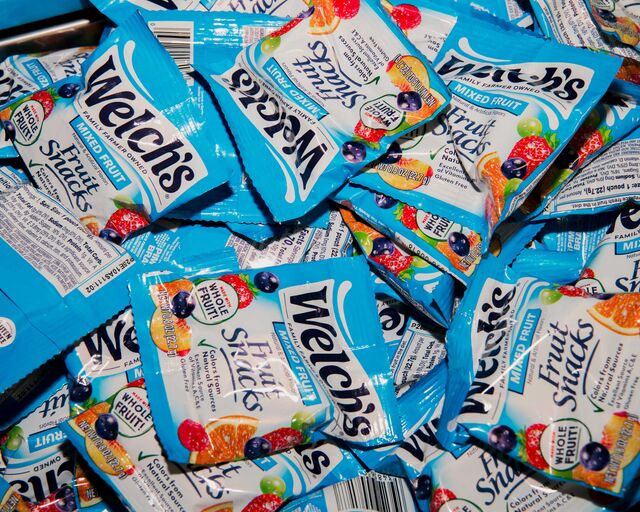
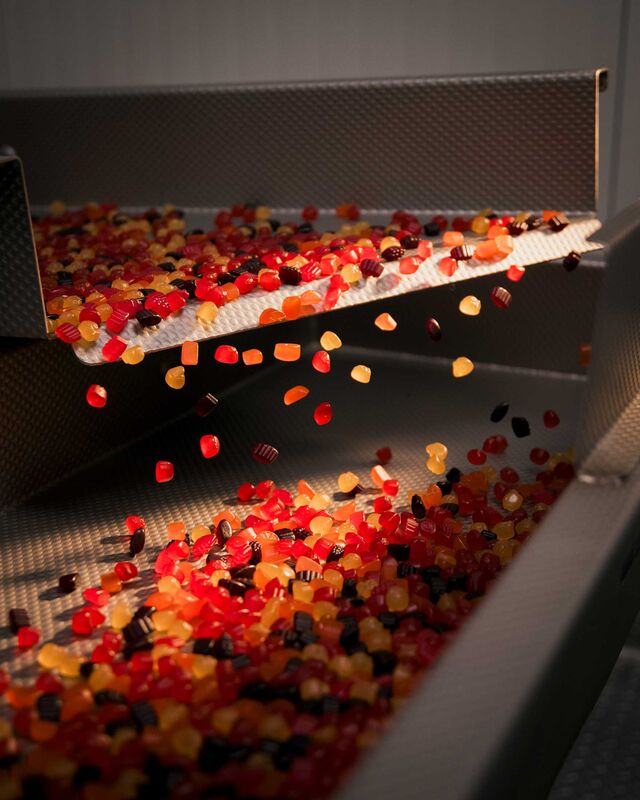
In one of the anonymous industrial parks that dot New Jersey between Newark and Trenton, as many as 10 billion pouches of Welch’s Fruit Snacks fly off the conveyor belts every year. For almost a quarter century, many of the vibrant gummies derived their brightness in part from artificial colorings like Red 40 and Blue 1. Pretty soon, they’ll all be artificial-dye-free.
PIM Brands Inc., the maker of the American lunch box staple, says it will cut synthetic colorings from its full lineup of fruit snacks by early next year. Some varieties advertising colors from natural sources—think fruit and vegetable juices—began hitting US shelves in July. That includes the top-selling mixed fruit variety; the remaining fruit snacks are close behind. (PIM also makes colorful treats like Sour Jacks candies, which it will reformulate without artificial dyes at an unspecified later date.)
There’s been lots of talk about the potential harmful effects of artificial dyes since Secretary of Health and Human Services Robert F. Kennedy Jr. took his “Make America Healthy Again” agenda to the national stage. A swell of US packaged food companies, including Kraft Heinz, General Mills and Kellanova, the maker of Pop-Tarts and Pringles, have pledged to cut the use of artificial colors in the next few years. Big Food has maintained that synthetic dyes are safe, but tweaking their recipes will allow the companies to keep up with changing consumer preferences—in addition to staying on Kennedy’s good side. It’s also a necessity for any company that wants to remain on the shelves in West Virginia, which has banned artificial food dyes, effective Jan. 1, 2028.
Changing ingredients in popular snacks isn’t easy. Although the newest naturally hued versions are just hitting shelves now, PIM has been working on the shift for a decade: The brand is simply “in the right place at the right time,” says Chief Executive Officer Michael Rosenberg.
In 2015 the company—which licenses the Welch name from juice and jelly maker Welch Foods Inc.—started using turmeric and annatto instead of Yellow 5 in its fruit snacks, in part because synthetic dyes were losing favor abroad, says Bhavna Ramani, chief officer for R&D and production. And since the snacks also get some color from the fruit purees, PIM was using a relatively limited amount of synthetic dyes, according to Ramani.
“I was thinking, ‘If we can reduce that, why not?’ ” she says. Three years later, all of its fruit snack product launches, like a new mix of superfruit flavors introduced in 2018, were created using only natural dyes. But reformulating long-standing favorites was harder. Ramani estimates PIM conducted around 300 trials to find suitable alternatives for the snacks’ 30 fruit flavors before settling on replacements that won’t visibly alter their look.
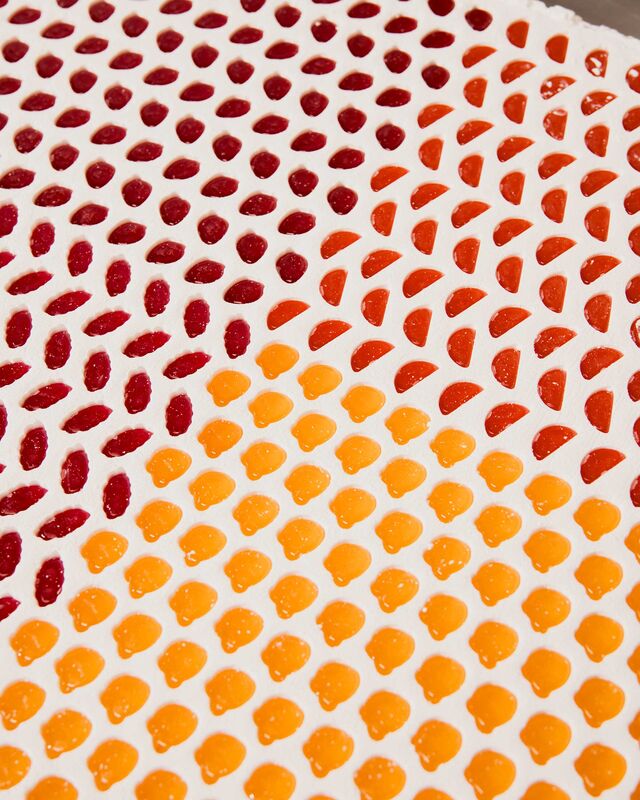
On its own, the new raspberry snack looks nearly identical to its predecessor. But place it directly next to the outgoing version, made with petroleum-based Red 40, and you can see that it’s slightly paler, the result of a switch to a dye derived from red grapes, purple carrots and other organically occurring pigments. (The fruit purees used in the recipes lend some color too.) “It came out even a little bit better than the original red shade,” says Ramani, noting that the final product, which required years of tinkering and close to 50 different trials, “mimics the real raspberry.” Blues were also tough, since shades of the color are less abundant in nature. The fruit snacks now use huito, a fruit found in South and Central America, and spirulina, a type of blue-green algae.
The company had to work with suppliers on a new process to limit the pH sensitivity of the natural dyes, in part to prevent the snacks from turning brown over their one-year shelf life as a result of the dyes’ interaction with the acidic fruit ingredients. Today, PIM has to check in with its suppliers almost monthly to make sure they still have enough of the colorants, Ramani says. And while PIM says it hasn’t raised prices as a direct result of the natural colors—at press time, a 40-count box of mixed fruit gummy pouches retails for around $9 at Walmart Inc.—she says the new dyes are “a lot more expensive.”
Fortunately, PIM got the switchover done, and just in time for what its marketing team calls the fruit snack industry’s Super Bowl—the back-to-school rush.