
Two-Night Minimum Milan
Forget the Milan you know, the one dominated by the fashion hordes and global business set in gleaming towers. The Milan to love is the one you haven’t met—until now.
Welcome back to Two-Night Minimum, a series of city guides for those who want to get to the heart of a place in a short time—be it on a business trip or a weekend vacation. For this Milan edition, we independently scoped out more than 280 venues and distilled the list down to the very best of the best: Every recommendation below has earned our most discerning stamp of approval.
If Milan’s social scene is a game, you have to beat three levels to win. The first is dining among the pretty people at the city’s IYKYK scenester restaurants. The second is securing an invitation to some kind of ultra-chic fashion or design industry event, at one of the many galleries or perhaps at a disused textile factory that’s been transformed into a ravishing evening affair.
I vanquished the third and final boss—the intimate house party—with an invitation to the home of David Prior, a friend of Bloomberg Pursuits who recently launched a Milan office for his eponymous travel company. It was a spaghettata—a pasta feast—prepared by the duo of culinary heroes behind a recent pop-up phenomenon that had everyone in town raving.
Your Next Destination
My intention is not to tease you, dear reader, with things you can’t do around town (though that would be very Milanese of me). My point is that Milan reveals its magic when you chuck your list of Instagrammy trattorias and train your eye instead on the city’s of-the-moment happenings. Sure, there are museums and high-end shopping galore—but this is a place to prioritize the ephemeral over the perennial, and Milan’s nonstop events calendar, which draws both business and leisure visitors from around the world, is the perfect way to tap into its unique social scene.
This much has been true about Milan since the city’s earliest days. Its name has Celtic roots that mean “the middle of the land”—as in the center of the action—dating to the Roman Empire in the fourth century. During the Renaissance it was a leading trading center. And now, post-Brexit, it’s reemerging as a business powerhouse as investment banks and other financial companies relocate from London to continental Europe.
If Italy generally clings to its history, Milan is a metropolis perpetually reaching toward the future—its Roman ruins lie in the shadow of glass towers, and the city is never afraid to evolve as new ideas and investments pour in from all over the globe. You could say that makes it Italy’s least Italian destination, and not in a bad way.
Here are the tools to help you level up your Milan foray, whether you’re going for two nights or two weeks.
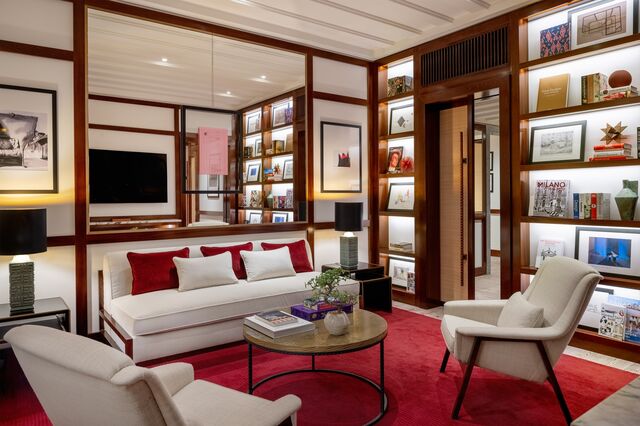
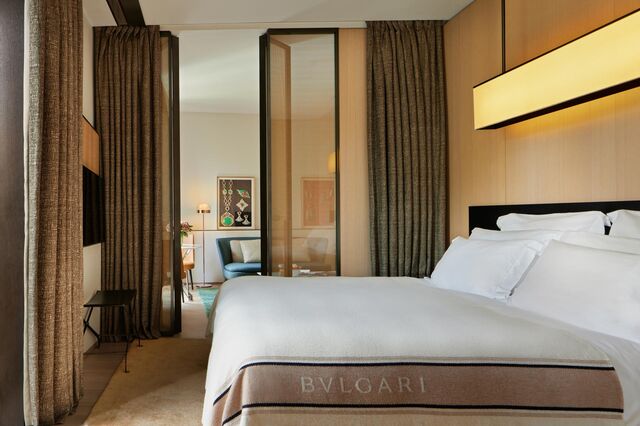
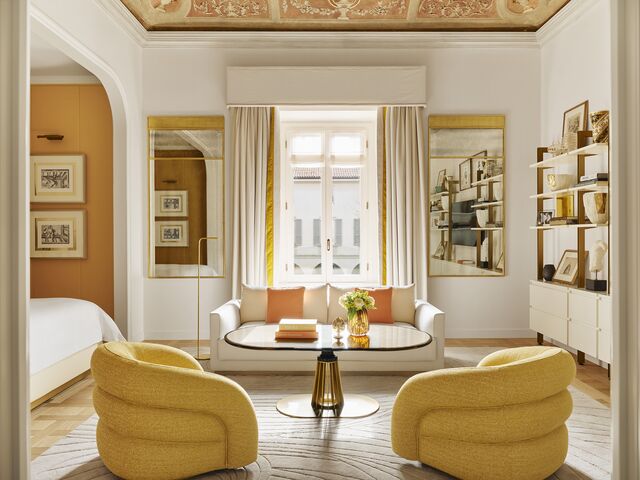
Top Rooms in Town
The details you really need to know to stay in comfort
All-Day Dining
Our favorite restaurants for every meal
Milan’s culinary rhythms sync with its corporate clock. Pasticcerie—pastry shops—pop around 8 a.m. as commuters file through for coffee and pastries. Come 11 a.m., swap your cappuccino for espresso macchiato. Then step out of the office for your midday meal around 1 p.m.; when you’re done eating, it will be time to switch from saying buongiorno to buenasera. On the weekends, leisurely, convivial restaurant lunches stretch long into the afternoon.
Milan is the birthplace of the aperitivo, which means postwork cocktail culture isn’t a suggestion but an imperative. Call it aperacena—an aperitivo dinner—if the snacks are particularly abundant; otherwise, plan to move on to a proper supper from 8 p.m. onward.
But eating in Milan isn’t always about the food. I’m lookin’ at you, Langosteria. In a fashion city par excellence, Milanese may be loyal to a restaurant for its vibe or crowd instead. (And social media will steer you more toward chic backdrops than quality eats in this city.) If you’re serious about the cuisine, work off trusted recommendations like the ones below, or try small group dining tours by Fazool. Its founder, Elizabeth De Filippo-Jones, is a veteran of the James Beard Foundation who truly knows her way around the best panettone, gorgonzola and Negronis.
● Marchesi & Cucchi
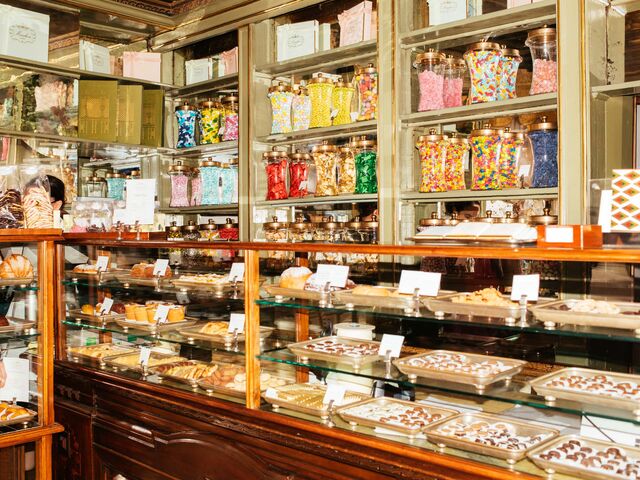
Pasticcerie are where regulars take their morning coffee al banco (standing at the counter), and then return after work for aperitivo drinks with friends. That makes them much more than just places to procure a quick breakfast—they’re the backbone of Milan’s social scene.
Nowhere is that more obvious that the delightfully time-warped Marchesi 1824, a local institution on Via Santa Maria alla Porta. It was acquired by the Prada family in 2014 and has since spawned multiple outposts. I’m partial to the Via Monte Napoleone location, which has the most wickedly chic olive green wallpaper adorning its backroom lounge; the touristy one on Galleria Vittorio Emanuele II offers a stunning bird’s-eye view of the ornate shopping arcade alongside its “monoportions”—miniature cake slices in classic flavors like pear and chocolate or ricotta and sour cherry.
Cucchi, occupying a bustling corner in the Ticinese quarter, is where gaggles of expats and artsy types savor ice-cold shakeratos (frothy espressos with milk and sugar) and the best baked goods in town. I’m still daydreaming about its fluffy colomba Easter bread studded with candied citrus peel and topped with almond slivers; the panettone, its Christmas cousin, is served here year-round.
Oh, and here’s a pro tip for the morning crowd: Don’t try ordering cornetti here. The Italian croissant-cousin is simply called brioche in Milan.
● Macelleria Popolare
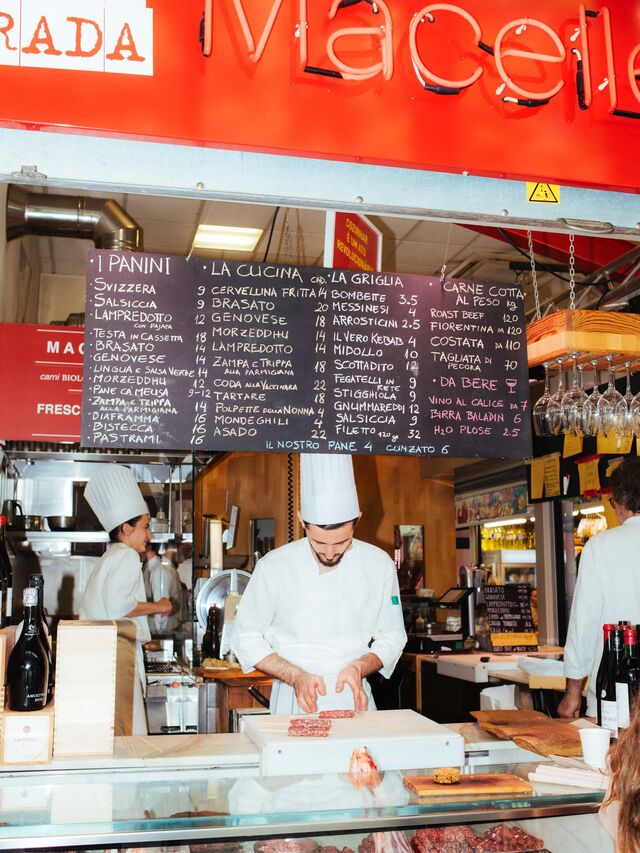
If you’re going to take only one suggestion from this entire list, make it Macelleria Popolare, a butcher’s stall in a glass-enclosed market along the Navigli waterway that doubles as a standing-room-only restaurant. (It’s the go-to spot for the city’s best chefs.)
Politely insert yourself among the gathering crowd, and pretty soon you'll catch the attention of friendly owner Giuseppe Zen or one of his staff members. They’ll highlight options that can be cooked up on the spot from a massacre of animal parts in the glass cases. I’d recommend the mutton burger: It’s courageously served on a warm bun without a single fixing, a true testament to the quality of the meat and the care with which it’s cooked. Get it with a side of the crunchy giardiniera (pickled veggies), and don’t miss the best tiramisu in town, assembled individually for each diner.
● D’O
Much of Milan’s Michelin offering rests heavily on its laurels. Not D’O, where the dishes feel like little revelations. Some lean into theatrics—a lit candle melts into dippable olive oil for the homemade bread—while others are just good sense, like a risotto that’s augmented with a splash of vinegar to relieve some of its richness. And all are made with local Lombardian ingredients, earning two of those golden Michelin stars as well as a green one, for sustainability. Also sustainable is the cost of eating here, particularly if you come for lunch, during which you’ll cut the city’s standard price tag for a fancy meal—€220 ($258)—in half. Given its suburban location, make it your last stop in town before catching an evening flight out of Malpensa; it’s the perfect way to bid Milan arrivederci.
● Giannasi dal 1967
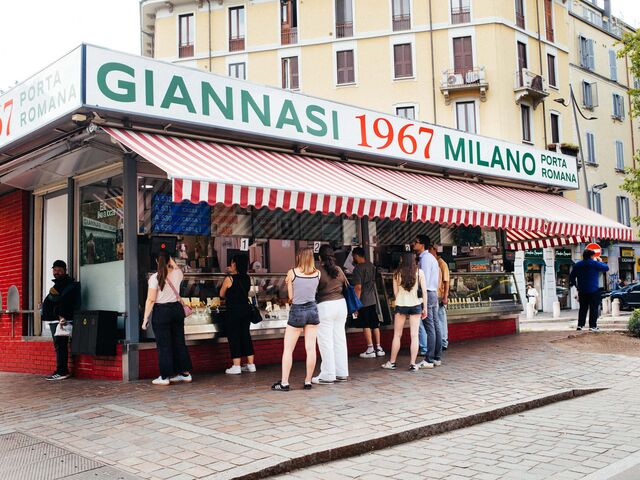
Whether you’re blue-collar or blue-blooded, Giannasi dal 1967 is the city’s great democratizer where all stripes and types line up for to-go cartons of juicy roast chicken and sides of croquettes and spiced potatoes. Enjoy it all on one of the grassy lawns nearby, or take it back to your hotel if you wanna wow your concierge with a Milanese deep cut.
● Confine
True pizza aficionados will steer you away from Le Specialità—one of those places where Milan’s pretty people go—and toward Confine for baked-then-fried pies that don’t disappoint. Skip the hard sell on the prix fixe menu and opt for the margherita di bufala, or—if you’re feeling adventurous—the “Botox,” smothered in a variety of rich, tangy cheeses.
● Trattoria Madness
In Milan, you can’t swing a Fendi purse without hitting an old-school trattoria, be they mom-and-pop shops straight out of the 1960s or upscale outfits where waiters don white aprons. Most (if not all) specialize in the coveted trinity of heavy Milanese favorites: cotoletta (a fried, breaded cutlet of veal or pork), ossobuco (braised veal shanks) and saffron-tinged risotto. Every local can passionately lay claim to their favorites, yet many of them are hard to tell apart. These are some standouts:
A long-standing hole-in-the-wall beloved by the city’s fashion elite, walk-in-only La Latteria was recently purchased by one of the Loro Piana heiresses, but nothing’s changed (yet)—the original owners still run the place, calling guests “bambini” (kiddos) as they rush you through formidable versions of spaghetti al limone and seasonal veggies, like steamed artichokes and stewed chicory.
Ten minutes outside the city center by car—and worth the trip—the wood-beamed Al Garghet serves a cotoletta so large it looks like an elephant’s ear. Painted in forest green, decorated with red tartan accents and filled to the brim with knickknacks, it feels like Nonna’s charming countryside chalet, but with a rambling labyrinth of indoor and outdoor dining rooms.
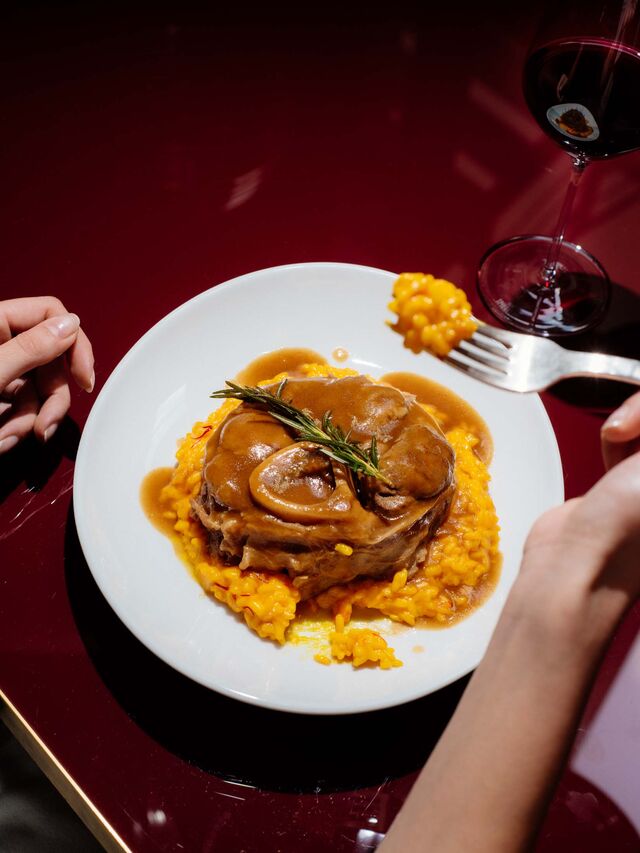
Trattoria del Ciumbia stays loyal to the canon of traditional Milanese recipes, but it takes a hard left when it comes to design, rejecting tired trattoria tropes for a stylish reinterpretation of the city’s eateries in the ’70s (think: deli chic) with art deco light fixtures, warm wood paneling and multicolor tilework on the floor. It’s filled with fashion types who then dance off their risottos in the speakeasy basement discotheque.
And then there’s Trippa, easily the city’s most popular spot, which eschews gut-busting Lombardian standards for more southerly Italian cuisine. If you don’t set an alarm for when it opens reservations two months out, you will either have to sell your firstborn to get a table or scrounge for last-minute cancellations. Is it worth it? The much-talked-about tagliatelle in a buttery sauce will be the best pasta dish you have in Milan, and the panna cotta, made with an acrid fig syrup, is a true sleeper hit. The rest of the menu—and ambience—is no-frills.
● Il Verzeratt 1919
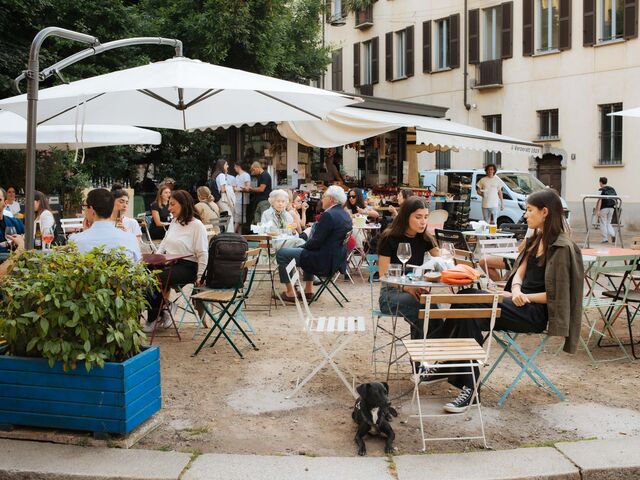
Only in Milan would the city’s coolest bar not be a bar at all. Situated in the center of a small cobblestone piazza, this fruit and vegetable stand transforms into a lively outdoor drinking spot when it’s aperitivo o’clock. In-the-know locals gather on its surrounding scatter of foldable tables and chairs for fresh cocktails mixed with the kiosk’s daily produce, like a classic G&T invigorated with grapefruit and mint. The requisite wine, beer and Campari are also available.
● Rovello
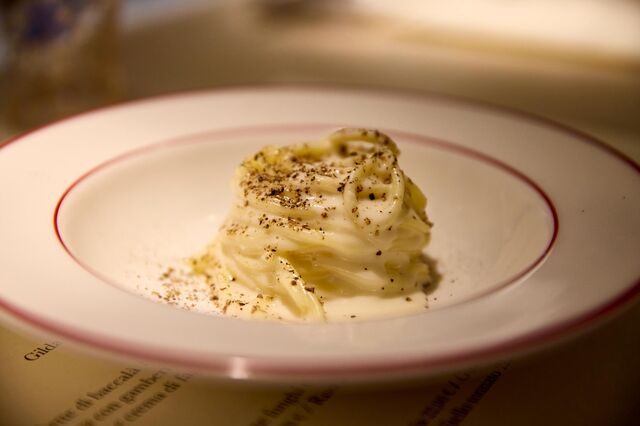
Rovello’s brilliant dishes undercut many of the city’s tired fine dining stalwarts—even before you mention the wallet-friendly pricing. The tuna wrapped in brined peppers and the luscious curls of cacio e pepe are welcome departures from the usual Milanese staples, and all of it is passed across a long, swooshing bartop with the savviness of a higher-end spot. But everything’s wonderfully casual here—book your table for 9 p.m. when the restaurant really starts to buzz with happy locals.
● Trattoria della Gloria
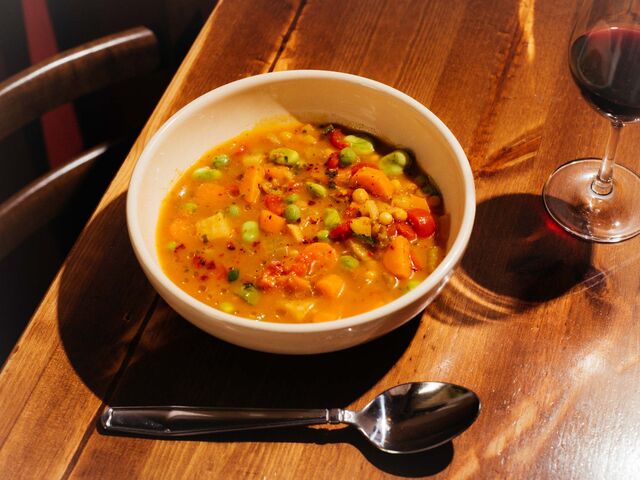
Shortly after anonymously booking a spot at this Navigli neighborhood haunt, I received a WhatsApp message from Luca, one of its young owners. He wanted to know if I was feeling sociable, in which case I could swap out my one-person table for a makeshift seat at the kitchen pass, where cooks hand dishes to servers in a form of restaurant ballet. (I very happily obliged.) That thoughtfulness extends to the food too, which is more inventive and empirically delicious than what’s on offer at comparable neighborhood spots. Among the best dishes of my research trip were its perfectly tender veg in a rich minestrone broth, a decadent snail Caesar salad brimming with crunch and zing, and a soothing risotto with squab and peas, all washed down with a glass of natural white wine.
● Lubna
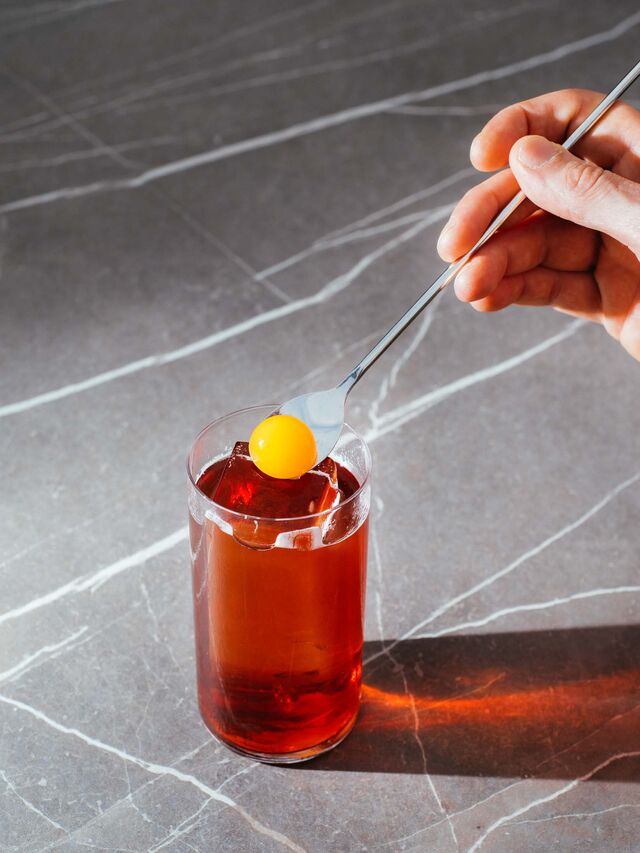
Join the Italian in-crowd—all dressed in black—at Lubna, a nightlife spot with a lot going on: sculpted concrete walls, floor-to-ceiling video art installations, a menu of meat and seafood cooked on an open fire, and—best of all—a genius-level cocktail program designed by the mixologist from globally recognized Moebius across town. Try the Tropical Americano, a riff on the Campari-and-vermouth cocktail with a splash of passion fruit. A stop here dovetails nicely after a late-in-the-day visit to Fondazione Prada—and it’s a much better option than the Wes Anderson-designed bar at the museum, which these days is filled to the brim with selfie-takers.
On the Town
Activities to squeeze into any schedule
● Villa Necchi Campiglio
There are tons of “house museums” in Milan—mansions once owned by the city’s most elite families. Villa Necchi Campiglio is the best. (You might recognize it as the setting for Luca Guadagnino’s 2009 film, I Am Love, starring Tilda Swinton.) It was built with art deco motifs in the early 1930s for the bourgeois Necchi Campiglio family, whose prominence came in part from manufacturing professional sewing machines. Sumptuous green and yellow fabrics and tropical wood warm the capacious interior spaces—the glass-encased winter garden is a particular highlight. The boxy, bunker-like facade stands in contrast to the private outdoor swimming pool—the city’s first—encased in travertine and bordered by raised flower beds. It’s the perfect spot to relax with a book on your lunch break—you won’t be the only one.
● A Library of Trees
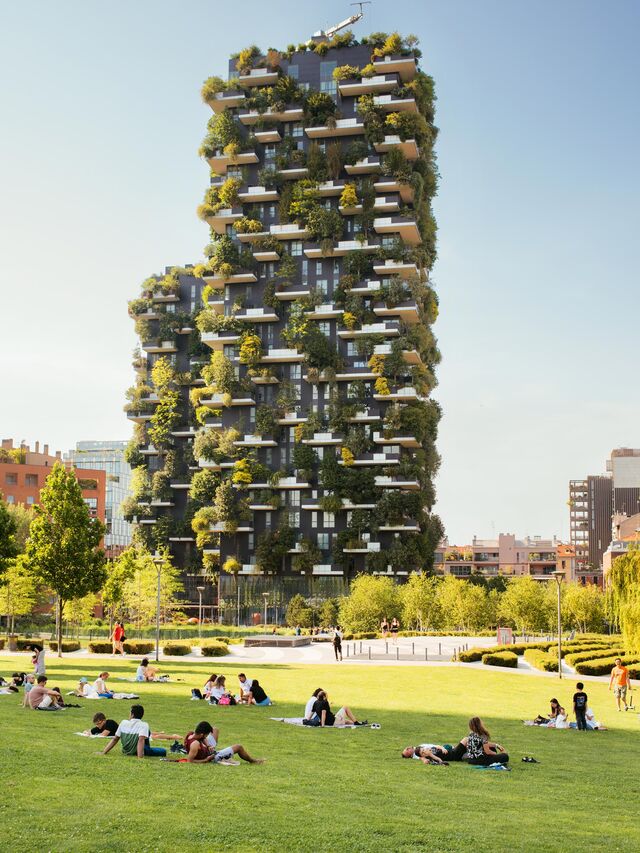
Few places have cracked the code on urban renewal as seamlessly and stylishly as Milan. The green, tree-lined lawns and terraces of BAM—the Biblioteca degli Alberi Milano (or the Library of Trees, so named for its diverse collection of plants)—neatly prove the point. What was once a contaminated brownfield site is now the city’s most compelling park, anchoring a slew of modern architecture including the Bosco Verticale, a pair of shrub-draped residential towers, and Piazza Gae Aulenti, a futuristic, glass-lined take on the traditional Italian square. Sure, you can come for a bunch of programming that includes workout boot camps or outdoor theater performances, but just being here is a prime example of how good design is enough to make you feel happy.
● Made in Milan
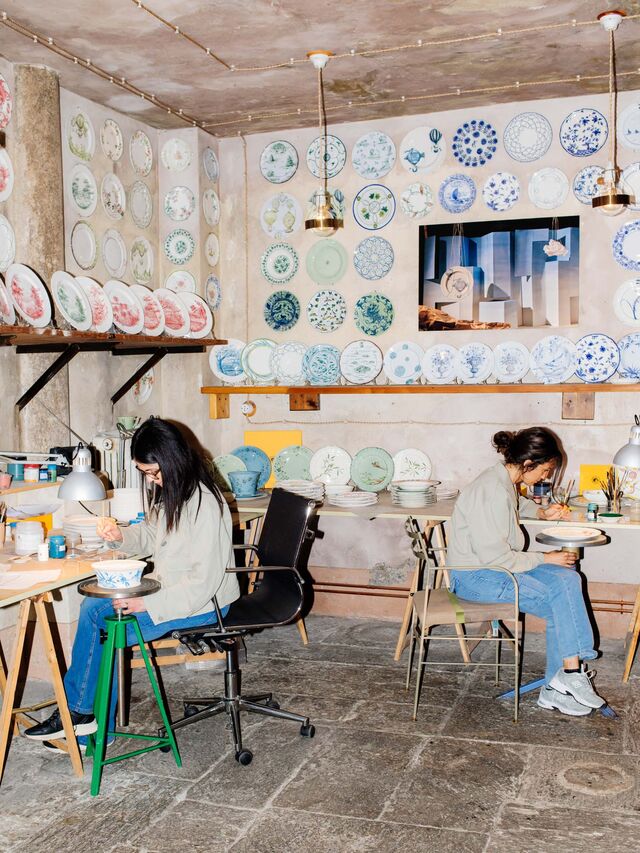
Haute couture label mongers flock to Via Monte Napoleone, Milan’s high-end shopping artery where dozens of brands—from Armani to Zegna—loudly stake their claim with a flagship store. Opt for something quieter. Real fashionistas know that a true totem of the city’s luxury design scene is a set of hand-painted dishes from Laboratorio Paravicini. Housed in a few ground-floor units of a residential building, the family-run boutique doubles as an art studio where you can chat with the friendly Costanza Paravicini and her daughters as they decorate each plate in floral, cosmic and geometric motifs with surgical precision. Rather than select from the pre-painted plates on display, discuss your dishware dreams with the Paravicinis—who will custom-make your order and ship it to your home within a few weeks.
● On the way to The Last Supper
Locals joke that securing a 15-minute viewing of Da Vinci’s renowned masterpiece, which adorns the former Dominican convent of Santa Maria delle Grazie, is the hardest reservation to make in town. (You have to get timed tickets at least two months ahead or leverage the skills of a seriously connected concierge.)
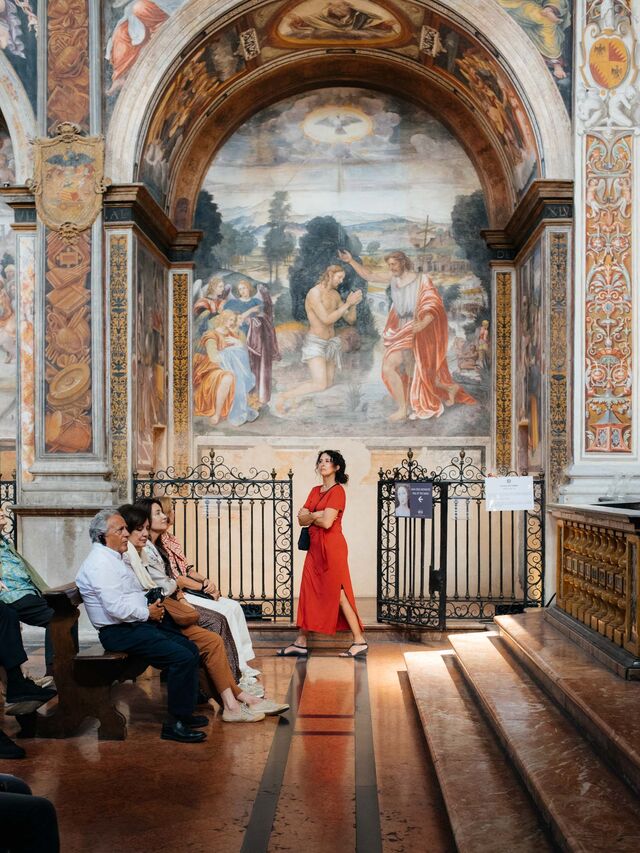
A few blocks away along Corso Magenta, however, is—dare I say—the even-more-marvelous Chiesa di San Maurizio al Monastero Maggiore, whose interior is a kaleidoscope of brilliant 16th century frescoes that wallpaper practically every surface, all painted by Da Vinci’s less famous contemporaries. The church is still a consecrated space, erected atop Roman ruins and attached to a rambling abbey that doubles as an archaeological museum—though regular services have been discontinued. As for the frescoes: The highlights include tableaus depicting scenes from Noah’s Ark, an alcove bathed in the deep blues of a celestial night lit with stars, and enough intricate ceiling detail to call this Milan’s Sistine Chapel. Even for the greatest of church-tourism skeptics (like yours truly), this place is nothing short of breathtaking.
Neighborhoods to Know
Half-day walking tours around two vibrant areas
● Duomo to Navigli
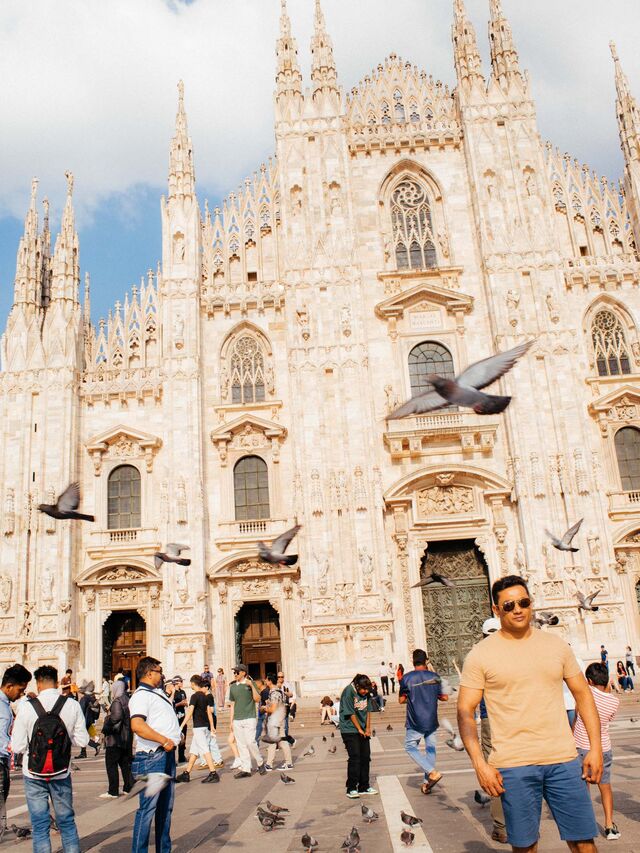
All roads lead to the Duomo di Milano. The ultra-ornate behemoth took more than six centuries to build and is the largest church in Italy (surpassing even St. Peter’s Basilica in Vatican City). It’s unmissable—the center of Milan’s compass.
Almost as iconic (and directly across the street) is Galleria Vittorio Emanuele II, a dazzling four-story shopping arcade with iron-and-glass vaulted roofing. While you’re here, give into one more touristy thing: the aperitivo cornerstone Camparino, which launched Campari to international acclaim. Get the perfectly balanced Campari Seltz; it’s like a Campari soda, but better.
OK, fine, make it two touristy things: One block north of the Galleria, you’ll find a line (it moves quickly) at Luini, which slings fried panzerotti (think: Italian empanadas) stuffed with warm tomato and mozzarella. Take your order to go as you loop through Piazza Cordusio, easily Milan’s most scenic square.
Now veer south for more local finds, starting with Chiesa di Santa Maria Presso San Satiro. In the shadow of the Duomo, this smaller, oft-overlooked church comes with a big deception. From the entrance, its interior looks like it stretches almost forever. But from the transepts you can spot what is actually a false apse: a mural that tricks you into believing there’s more space where there’s really just a flat wall.
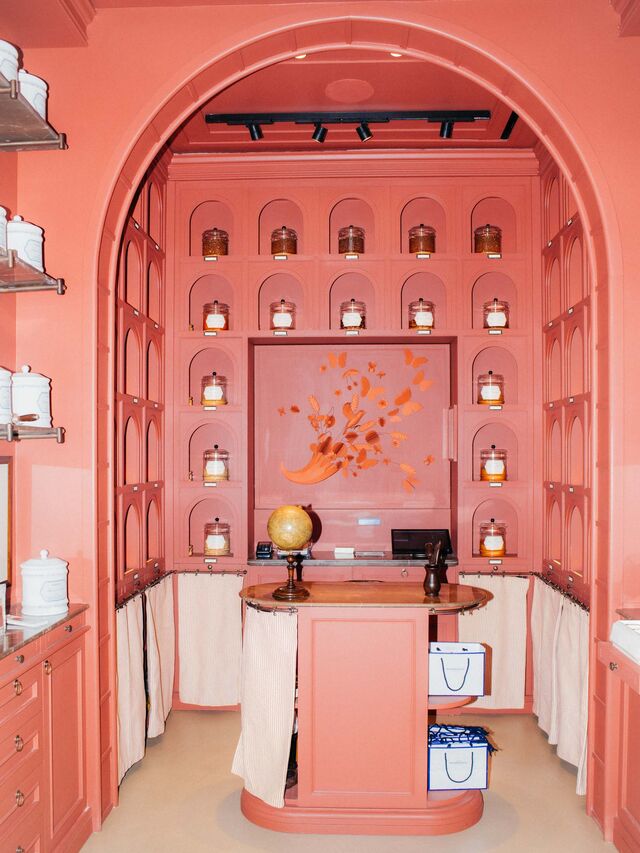
Then treat yourself to some of the city’s best retail therapy. Start at Foto Veneta Ottica, where you’re guaranteed to find a unique pair of glasses, be it a vintage conversation starter or one of the shop’s proprietary geometric designs. To score a pair of espadrilles or fuzzy friulane slippers, look no further than Calzature Gallon. And for a sweet souvenir, sample the Genovese candies and jams at centuries-old Antica Cofetteria Romanengo Milano; it’s an equally great idea to rest your feet at the tea parlor secreted in a residential courtyard next door.
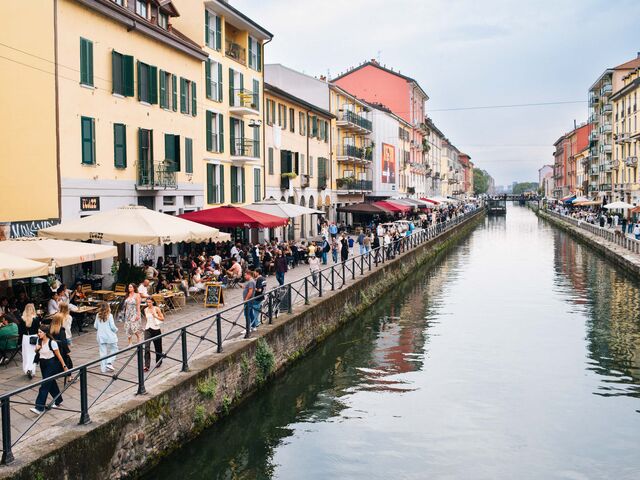
Finally you’ll reach the Navigli, a district of interconnected canals that date back to the Middle Ages. Today the cobbled walkways flanking the remaining waterways are littered with bistro furniture tumbling out of the rows of restaurants and bars. Grab a chair anywhere among the weekend crowds of both locals and tourists, and enjoy an Aperol spritz. Then consider that until the advent of cars in the 1930s, when the Fascists paved Milan’s many waterways, this entire city looked a whole lot like Venice.
● Brera & Chinatown
The Pinacoteca di Brera is Milan’s most popular museum, known mainly for its large collection of Italian Renaissance and baroque paintings. But most visitors know nothing about the institution’s most compelling public spaces: the Biblioteca di Brera, a vaulted library and reading room filled with old tomes, and the Orto Botanico di Brera, a garden with 3,000 plant species that’s secreted among the neighborhood’s high mansion walls.
Let those be your insidery starting points to the charming Brera district, which serves as a reprieve from Milan’s more industrial corners. It’s an area known for its OG bohemian attitude, which persists through a handful of excellent vintage shops like Cavalli e Nastri. It still has the best selection of pre-loved Gucci and Ferragamo, and if you’re lucky, you’ll find an Hermès Kelly bag for half what it costs on the RealReal.
The rooftop at Casa Brera hotel spins a more Ibizan version of boho chic with rattan accents and bright orange parasols shading poolside tables. But the main draws are sweeping views of the city’s spires—church and bank towers—best enjoyed with an Aperol spritz.
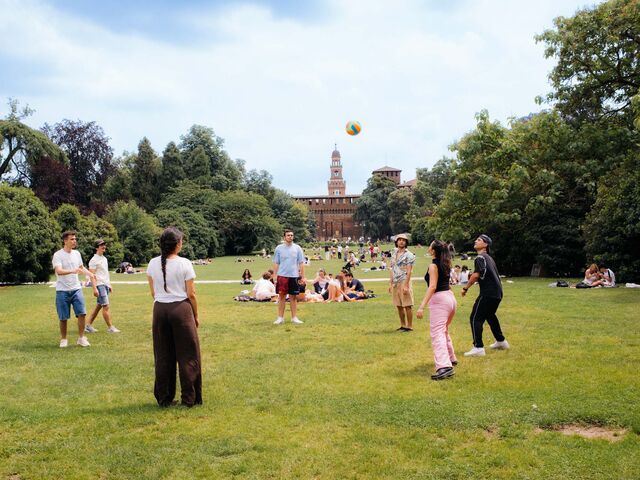
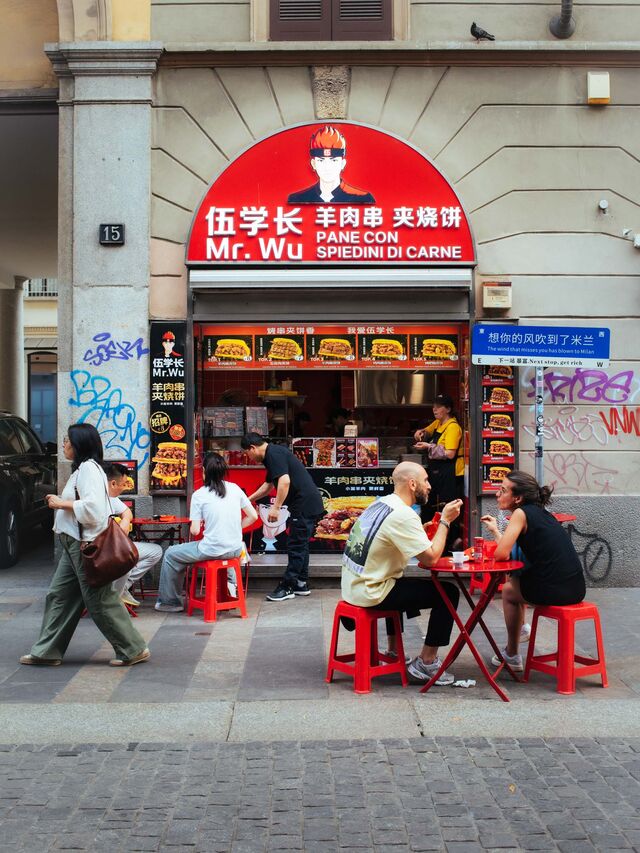
Swing through Parco Sempione—the city’s largest green space—to reach Milan’s Chinatown, home to the oldest and largest Chinese community in the country. Walking down the lantern-lined Via Paolo Sarpi, you’ll find ample reminders that the city is not strictly an Italian one, but a global hub. The small restaurants all along the street mostly peddle dumplings, appropriately translated by Italians as “ravioli” on most signs. (They’re both stuffed pasta pockets, after all.) Standouts include Ravioleria Sarpi and Mo.
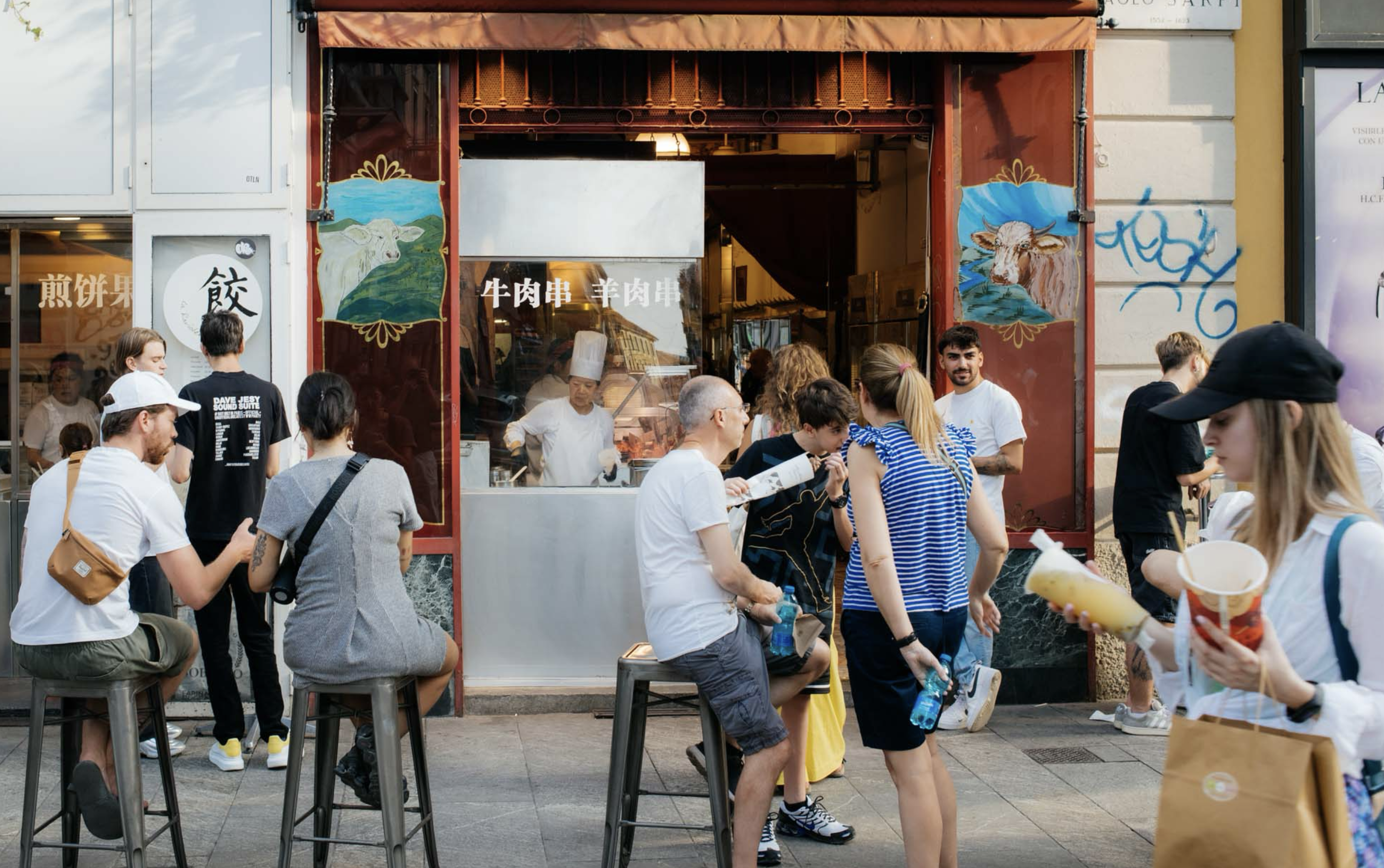
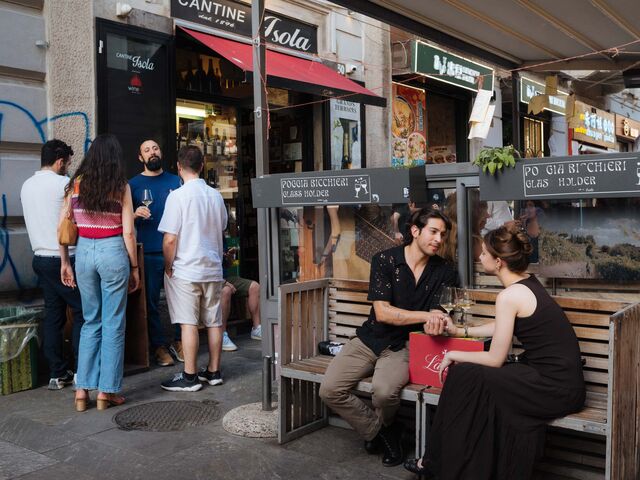
Across the street, the wine warren Cantine Isola dal 1896, predates the Chinese leather tanners who arrived in the neighborhood after World War I. Shelves cluttered with a wide array of bottles reach all the way to the ceiling—you can take your choice to go, but it’s more fun drinking on-site with the friendly, snack-peddling barkeeps.
Walk 10 more minutes, and you’ll arrive at 10 Corso Como. When it opened in the ’90s, it was a space to showcase emerging artists. But the boutique later evolved into one of the world’s first concept stores where everything, from the cafe to the sneaker section, remains perfectly on-trend. (Don’t miss the book annex upstairs.)
Extend Your Trip
Adventures beyond the city limits
Milan delivers on many things, but you’ll need to venture elsewhere for that storybook Italian fantasy you may be craving. To scratch the itch, rent a car and head to darling Bergamo and its surrounding valleys, only 45 minutes away. (The train is oft-delayed.)
Start with a morning tour and tasting at Tenuta Castello di Grumello, a sprawling, sustainably managed winery on a 1,000-year-old estate in the township of Grumello del Monte that was once the castle for a local noble family.
Nearby, three-Michelin-star Da Vittorio in the village of Brusaporto is a point of culinary pilgrimage for tourists and Milanese locals alike. Bypass the main dining room and its overhyped multicourse feasts in favor of a casual à la carte concept (opening fall 2025) right on-site: It too will serve paccheri alla Vittorio, the best thing on Da Vittorio’s menu. Wherever you order it, you’ll get the same oversize, tubular noodle lavished in a buttery tomato sauce, its spiciness sublimated by a blizzard of Parmesan.
After lunch, drive into downtown Bergamo. Park your vehicle in the city center and take the funicular up to Città Alta, the medieval quarter perched high on a hill and surrounded by 16th century fortifications. After exploring its narrow laneways, continue walking (or take a second funicular) up to the ruins of Castello San Vigilio; then pause for an aperitivo on the cobbled patio at Baretto with sweeping views over the city and the sprawling farmland beyond.
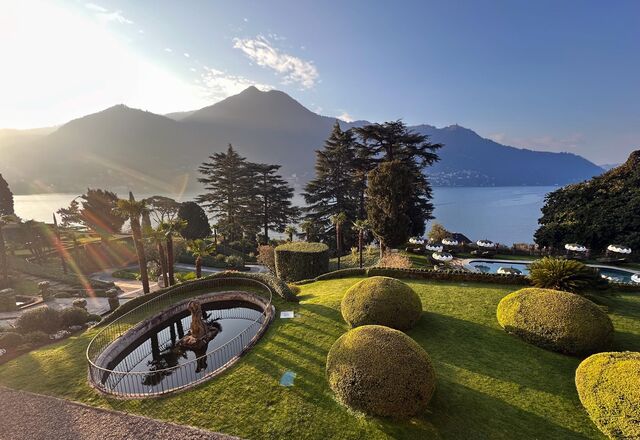
Another option, of course, is Lake Como, which is also remarkably easy to reach from Milan’s downtown—it’s 40 minutes whether you go by direct train or car. For those who can, a weekend at Passalacqua is the pinnacle of the classic Italian villa holiday with the requisite service and style updates that helped it earn top spot on the first World’s 50 Best Hotels list in 2023. Highlights include a semi-secret indoor pool tucked into an underground grotto and a new teak-lined Riva speedboat to zip around the lake.
One More Thing
A final tip before you’re on your way
Want to know the weather in Milan? Don’t check your weather app; look out your window to see how the sciure are dressed instead. A fixture of Milanese culture, the sciure are older affluent women, vestiges of the city’s aristo families. The sciure don’t break a sweat—they saunter while the rest of Milan marches along at a Gotham clip. And unlike most youth-obsessed cities, it’s the sciure who run point on the cultural output in Milan. This is why you get tickets to the Teatro alla Scala—not for the opera or ballet, but to scout the latest fashion.
And if you want to blend in with the best of ’em, here’s one sciure-approved tip to help you get started: It’s all about the details. Sure, luxury labels are great (the Italian ones, duh), but proper tailoring will take you that extra mile. As for your Bottega handbag? It may as well be a bodega baggy if the hand carrying it isn’t neatly manicured. Same goes for your shoes: scuff-less please—this isn’t France!
Read next: Two-Night Minimum: Kyoto