Two-Night Minimum Kyoto
With international travel to Japan at an all-time high, it’s easy to get lost in the sea of tourists. But the country’s culture capital is bursting with hidden culinary treasures and alluring artisanal experiences. Here’s how to find them.
Welcome back to Two-Night Minimum, a series of city guides for those who want to get to the heart of a place in a short time—be it on a business trip or a weekend vacation. For this Kyoto edition, we independently scoped out more than 350 venues and distilled the list down to the very best of the best: Every recommendation below has earned our most discerning stamp of approval.
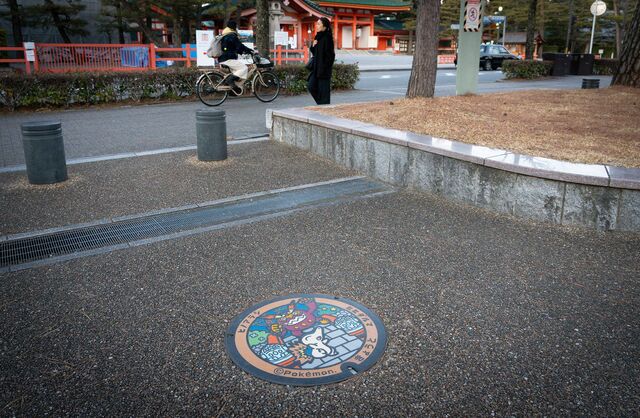
I’m heading toward the orange torii gates of Heian Shrine, and a friend of a friend, Sophia Drake, is leading the way. As we eagerly approach the entrance, our eyes are trained not on the imposing landmark in front of us, but on sewer grates.
“Found it!” Drake shouts, calling me over. The manhole cover is brightly decorated with the cartoonish faces of two beloved Pokémon monsters: Darmanitan and Cyndaquil. Throughout Japan, so-called Poké Lids like this one are hiding in plain sight, designed for scavenger hunts that encourage tourists to venture beyond the country’s main attractions and discover some of its less-trod corners. Drake has become an expert at finding them—not only is she a tour guide by day, but she’s also a Pokémon Master who plays the card game competitively at night.
Your Next Destination
She’s among the Kyoto trip leaders who work for the standout operator Inside Japan Tours. As tourism to the country continues to surge, true experts like Drake are increasingly hard to find and book; I was lucky to catch her on one of her rare days off. When we set out exploring Japan’s old capital, her deck of cartoonish cards is still in her purse, freshly used from a tournament the night before. And she’s quick to point out that her two passions—Kyoto and Pokémon—have much more in common than anyone would guess.
Many Pokémon characters, it turns out, are anime interpretations of the kami deities of Japanese Shinto folklore and Buddhism, which flourished in Kyoto starting in the eighth century. Darmanitan from the sewer cover, for example, is inspired by a daruma, a doll modeled after the founder of Zen Buddhism. There’s also Ho-Oh, the golden phoenix, which can be found perched on top of Kinkaku-ji—the Golden Pavilion—one of the city’s most popular tourist attractions. Even Kyoto itself serves as inspiration for Ecruteak City, one of the fictional settings within the Pokémon game.
In real-life Kyoto, most people trying to “collect them all” are looking for famous sights and shrines rather than Pokémon, though. Follow them to such famed spots as the terraced verandas of Kiyomizu-dera temple and the forests of bamboo in Arashiyama, and it’s easy to believe Japan’s cultural capital is completely overrun with visitors.
It’s not. Kyoto has more than 2,000 places of worship—double the number of Pokémon you can collect—not to mention more Michelin stars per capita than any city in the world, plus a millennium-old tradition of artisanal craftsmanship.
Here’s a cheat sheet to help you avoid the crowds and find your proverbial Charizards (the best Pokémon to catch, according to Drake), whether you have two nights or two weeks.
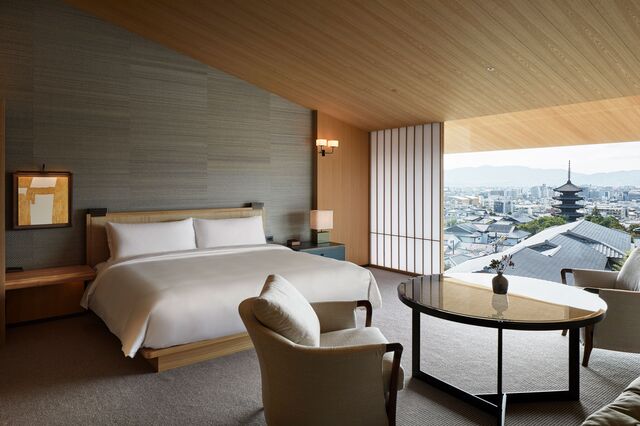
Top Rooms in Town
The details you really need to know to stay in comfort
All-Day Dining
Our favorite restaurants for every meal
Fun fact: Kyoto has three times as many Michelin stars as the entirety of Denmark, yet eating out in the city can often feel like a blood sport. Restaurant reservations can require months of advance planning, casual spots often have depressingly long queues, and some venues simply don’t accept foreign guests. The good news? Most of Kyoto’s kitchens spin dishes at such a high level of deliciousness that you don’t have to prioritize award winners or TikTok-famous establishments to feel like you’re winning at eating here. I was able to book all the spots below with only a two-to-four-week lead time, and many of my favorite places were walk-ins.
And here are some pointers to master another sport: Japanese decorum. Punctuality is extremely important, snapping photos wildly in a restaurant is a no-go, and tipping is considered impolite. Make sure to always carry two things: cash and a sense of humor. Navigating complicated language and cultural barriers always goes over better with a grin. Also, Kyoto is a small city despite its international prominence, so expect limited hours of operation compared with bustling metropolises; lunch generally spans from noon to 2 p.m., and guests typically sit for dinner between 6 p.m. and 7 p.m., with many spots closed on Tuesdays and Wednesdays.
Read this to set yourself up for more dining success in Kyoto and all throughout Japan.
● Tan
With a large, fire-scorched hearth and dark wooden pantries, Tan feels like a hallowed shrine honoring the bounty in Kyoto prefecture’s northern Tango region—from vegetables to vinegar, and even the rice. Open for every meal of the day along a tranquil canal flanked by blooming trees, the small open-concept venue offers its daytime guests set menus served on elegant trays. Skip your hotel breakfast to try heshiko—salt-preserved sardine and mackerel (a Kyoto-specific delicacy)—or come for lunch to savor the signature stewed beef bowl with mouth-warming sansho pepper. This is, perhaps counterintuitively, a place to book ahead.
● Something Sweet
Wagashi is a dainty Japanese confection primarily made from bean paste and usually served with green tea. Try it at Saryo Housen, a light-filled wooden villa where guests sit on tatami floors facing a private garden. Many of Kyoto’s famous dessert spots have pivoted to mass-producing their treats, but these are homemade, with seasonal designs resembling whichever flowers are currently in bloom. In a hurry? Toraya, long the official confectioner of the imperial family, packages up biscuits and even miniature cakes to take home as edible omiyage—souvenirs.
If Japanese treats aren’t your bag, Kyoto gives Paris a run for its money when it comes to pastries. I’ve never had a more balanced gâteau nantais (almond-and-rum pound cake) than at Nowhereman; the moist madeleines and financiers at this teeny, to-go bakery are equally as divine. For something cross-cultural, hit up Kurs (pronounced like “ku-ru-su”), where supersmiley staff will point you toward a raisin loaf made with sakekasu—a sake byproduct with a bright, fruity flavor.
● Suba
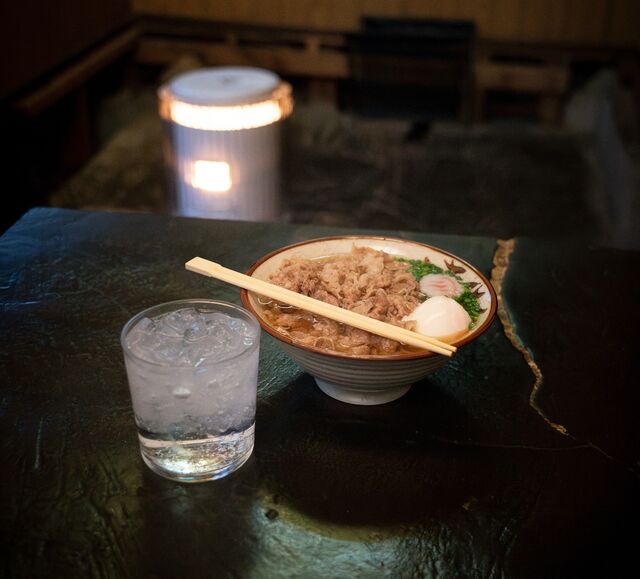
When a ramen or soba shop gets TikTok famous, it’s raison d’être is ruined forever; the whole point of noodle shops is that they should make for excellent quick eats, not eternal queues. Suba is the rare exception. Despite its deliciousness and popularity, it remains expeditious, getting people in and out of its standing-room-only space at a steady clip. The egg-topped meat soba is what put this bamboo-and-concrete-walled joint on the map—you order from the small kitchen window at the back—but I loved the steaming noodle soup with a flash-fried enoki mushroom blossom. Scrumptious and photogenic!
● Muromachi Wakuden
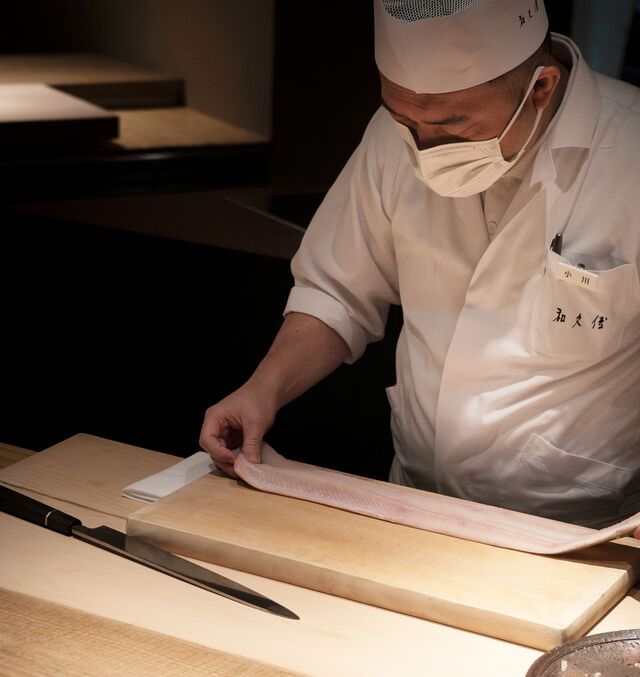
Kyoto’s finest multicourse menus can easily exceed $500 per person despite the fumbling yen. But visit at lunchtime, and your meal will cost a fraction of the dinner price. After some exhaustive research (poor me), the standout was Muromachi Wakuden. Its service is particularly friendly, and its kaiseki meals—the ultimate expression of fine Japanese cooking—make unfamiliar, micro-seasonal ingredients more delicious than daunting: Think crab and ginkgo nuts on a silken bed of tofu, or crisped taro root sprinkled with sesame.
● Sojiki Nakahigashi
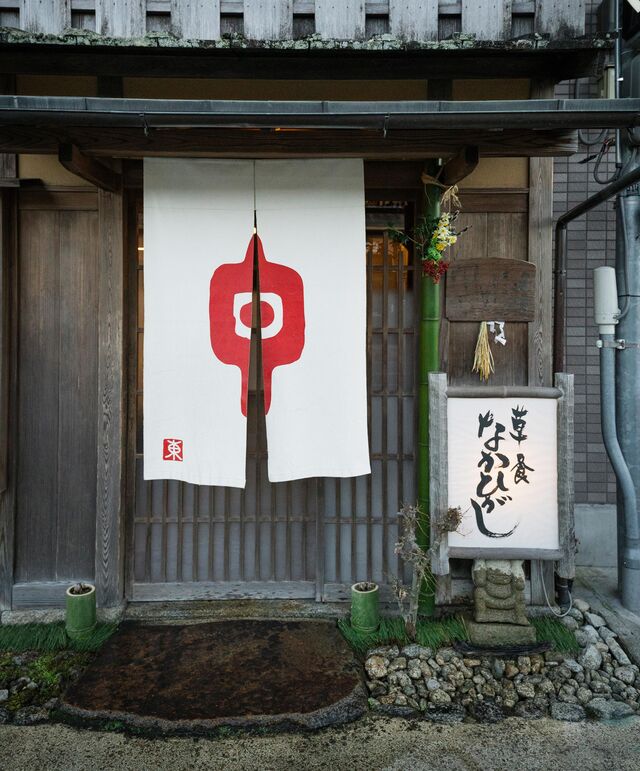
One of the biggest mistakes culinary pilgrims make in Kyoto is booking too many kaiseki dinners. These parades of intricately prepared courses can also be esoteric exercises in intellectual eating. Limit yourself to one great kaiseki meal at Sojiki Nakahigashi, where namesake chef Hisao Nakahigashi—the granddaddy of Kyoto cuisine and mentor to legions of the city’s best young chefs—showcases produce that he personally forages or sources daily from the farmers market in nearby Ohara. All of it gets served on bright red lacquered chargers for just 13 nightly guests. Many of them are local devotees, including one gentleman next to me who’d already eaten there 40(!) times. Reserve as far out as you can for dishes that are perfectly executed and never overwrought, like mushroom and scallion miso soup or the signature dry-grilled sardine, served with rice cooked in a donabe earthen pot.
● Cenci and Yoroshiku Pizza
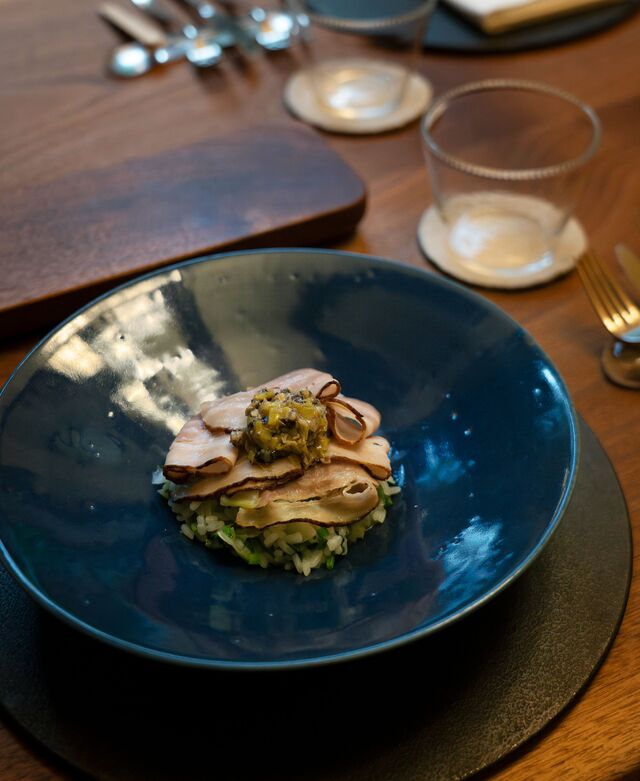
Despite the breadth of Japan’s culinary canon, you’ll be forgiven for taking a break from local cuisine, especially if you’re pivoting toward Italy. Monk, Kyoto’s temple to pizza, is on the verge of expanding, which could make it easier to get into—it’s been mobbed since being featured on Netflix’s Chef’s Table. If you just want a darn good Neapolitan pie—brightly flavored and perfectly charred—look no further than Yoroshiku Pizza, tucked into a teensy turquoise abode in the back of a parking lot. But don’t sleep on Cenci, which has begun its own worthy ascent into international prominence as chef Ken Sakamoto draws inspiration from Italy to inform his creative dishes, like crab fettuccine and a rich chestnut-and-sesame risotto.
● Get Your Sushi Fix
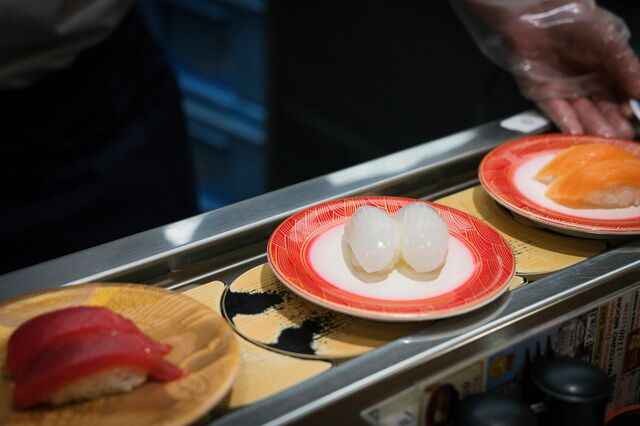
Inland Kyoto isn’t really a sushi stronghold, but that hasn’t stopped tourists and locals from craving it. For premium fare, the no-nonsense Matsumoto in Gion adeptly marries warm nori from Kyushu with top-quality rice and only the finest cuts of fish. Each bite is so delicate and fresh you’ll have a newfound appreciation for high-end nigiri. On the other side of the spectrum—’cause let’s face it, even budget soosh in Japan beats the best anywhere else—try 50-year-old conveyor-belt stalwart Musashi, which spins everything from squid to scallops.
● Furek and Ixey
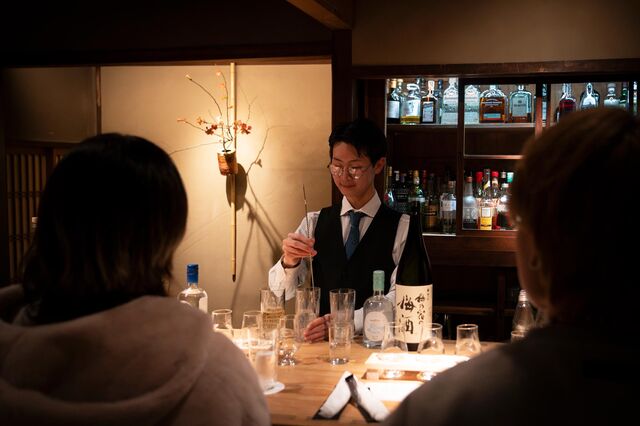
There are dozens of intimate bars—especially in the Pontocho area—where you can do your best Bill Murray impression and brood over a craft cocktail made with the precision of a brain surgeon. Instead, check out Kyoto’s burgeoning trend of “chemistry chic” establishments where mixology goes microscopic. At Furek, the bar team has lovingly restored a traditional machiya home and outfitted it with a small laboratory and cocktail stand where classic beverages get enhanced with aromatic hints of hinoki cypress or wildflowers. Ixey is similar in that it’s also housed in a renovated machiya, but its home brews use cedar, lavender and even mushrooms to create nonalcoholic spirits that truly emulate liquor. (High-caliber cocktails are also available.)
● Izakaya 101
A meal at an izakaya—a Japanese gastropub—should be as much of a culinary (and cultural) priority as anything else. Maybe even more. Wow Wow Tonight offers the full social experience without the typical language barrier: Its Japanese owner speaks flawless English and genuinely chats up each guest. For the best yakitori in the center of town, slink down a skinny side street to reach Yanagi Koji Taka, where the namesake chef spins skewers of juicy meat in a delightfully cramped tachinomi—a standing-only bar. His heaping tempura chicken florets are like the best chicken fingers you’ll ever have. And then there’s Sakaba Ikura Mokuzai, where masterful riffs on crab fried rice are served with deep sake pours on makeshift tabletops built from stacked milk crates, all in a space that operates as a lumberyard by day. You’ll be pals with the other patrons by the end of the evening.
On the Town
Activities to squeeze into any schedule
● Properly Peaceful Temples
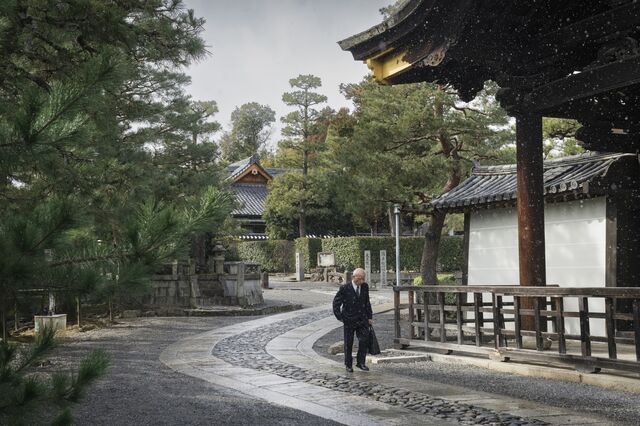
A highway of tourists zigzags on busses between a handful of Kyoto’s most famous places of worship, snapping scenic photos en masse without pausing for context or contemplation. Break the cycle and block out the morning for Daitoku-ji, a sprawling complex with more than 20 diverse subtemples. Think of it like an Oxford University of Buddhism: one central campus that contains many smaller schools of learning.
Among those myriad temples, prioritize Hoshun-in’s elaborate bonsai collection, which is older than the Magna Carta; Ryogen-in and Zuiho-in’s perfectly raked Zen gardens; and Sangen-in, which features the burial site of nefarious warlord Ishido, made famous in FX’s Shogun miniseries. Bookend your tour with a breakfast of green tea and roasted mochi (aburi) at the thousand-year-old, family-run Ichimonjiya Wasuke next door, and lunch at on-site Izusen, which serves vegetarian temple cuisine. Oh, and in case you’re wondering about the difference between temples and shrines, the former are Buddhist, and the latter are Shinto.
● Crafts and Conversation
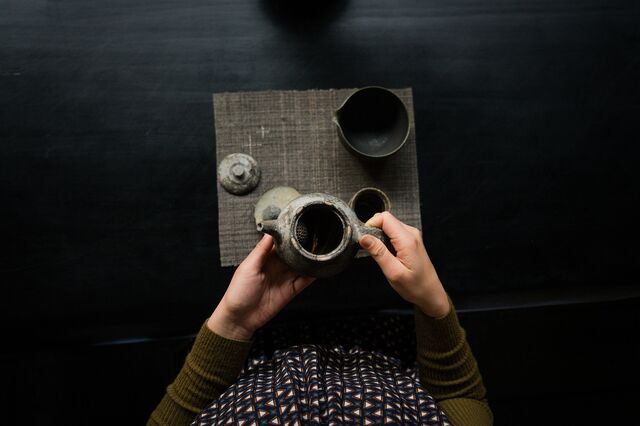
Kyoto’s many creative traditions tend to span more than a thousand years, from pottery to Zen gardening. But tapping into them can feel like a grade-school demonstration, even when conducted by a lifelong master. Wabunka does better. The booking platform nurtures relationships with more than 100 local artisans, and as a result, it’s the best place to look for workshops on myriad craft traditions, be it dying kimono stoles, learning kogin-zashi embroidery or forging knives. (English translators are always included.) Another worthy option is Maana Atelier, a new creative space where small groups can make everything from botanical teas to earthen wall art.
● Hike the Kyoto Trail
Long ago, Kyoto was chosen as the locus for Japan’s capital because of its strategic position shielded on three sides by mountains. Today the old hillside walking routes that meander through the city’s envelope of nature have been collectively organized as the 80-mile Kyoto Trail. It rings around the perimeter connecting a variety of temples and religious landmarks, and it can be easily tackled in small sections.

Take the ultra-gratifying, 2½-mile walk up to the Daimonji Burn Mark: It leads to a bonfire site that’s lit for a Buddhist holiday in mid-August. It’s also one of the best viewpoints in the region. From here you can see the entirety of the city below, sprawled across the valley floor. Start at the large wooden placard just north of Kinkaku-ji (the Golden Pavilion) that illustrates the route with a red etching. Soon into your walk, you’ll reach a small bridge that goes over a stream—cross it and stay to the right, continuing up. From there the wayfinding is completely self-evident.
● Sake Sipping
The family behind Matsui Brewery has been making some of the country’s finest sake for 15 generations. Stop by to purchase a flight of premium brews to taste at your leisure, or book a tour and have Jorge Navarrete, a former Wall Street exec turned master brewer, explain the intricacies of rice fermentation. Or grab a stool at Sake Bar Yoramu, where polyglot owner (of Israeli extraction) Yoram Ofer treats each order like a mini-lesson in sake sipping, chatting with his guests about the rainbow of different brews in his collection the way a passionate somm discusses the nuances of wine.
● Here’s the Deal With Geishas
The Gion district is where visitors go hoping to see geisha—or geiko, as they’re properly called in Kyoto—as they furtively flit between appointments via laneways that are fully closed to foreigners. (Generally the women you’ll spot in floral kimono are cosplaying tourists.) And yet meeting a geisha has become a lot easier with the weak economy causing loyal corporate clients of private entertainment clubs (ochaya) to reduce their spending. Today some geisha houses (okiya) make half their earnings on meet-and-greets with international visitors, one geiko recently told me.
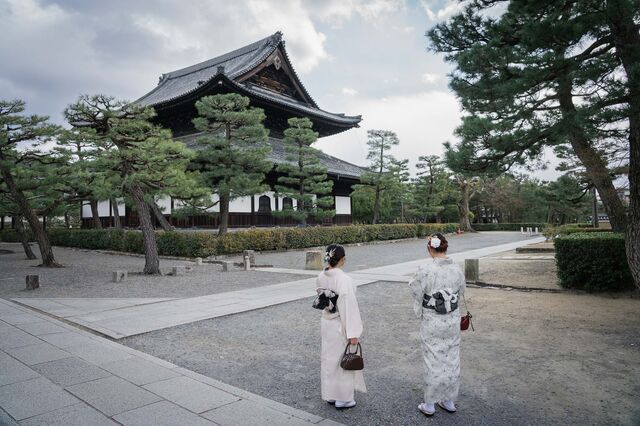
Although most tour operators can now book private experiences, they remain exorbitantly expensive. So a new spate of small-group offerings has emerged, like this one that’s bookable on the GetYourGuide app. It includes a walk through Gion and an abbreviated 45-minute chat with a geisha-in-training (maiko). Generally it’s a much more engaging experience than a full performance at the famed Gion Corner, given that traditional geisha dances and shamisen lute-playing can feel rather arcane to foreign visitors.
Neighborhoods to Know
Half-day guides to two areas you should hit: One central and one worth the (short) detour
● Gosho-Minami
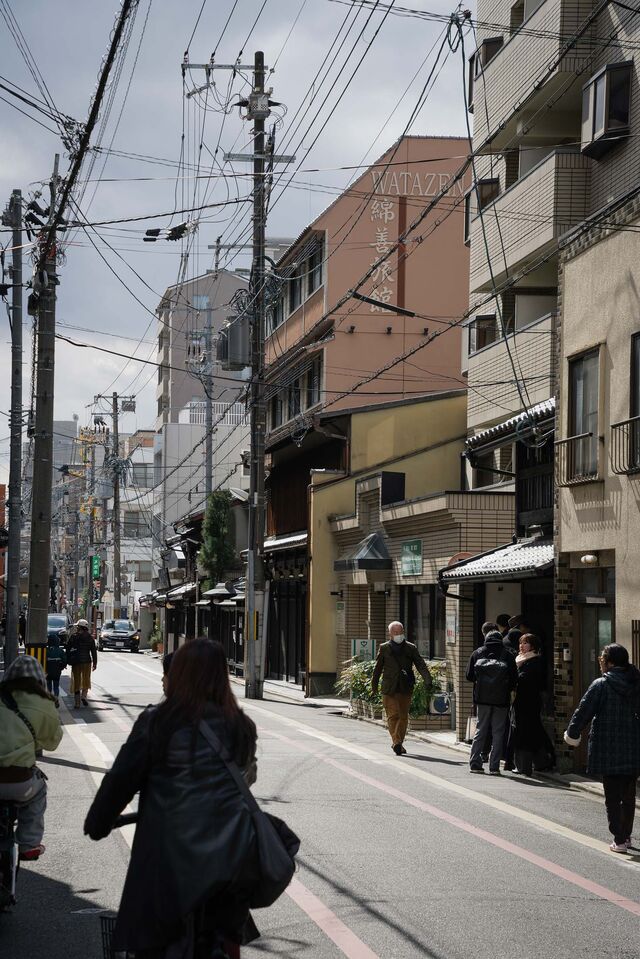
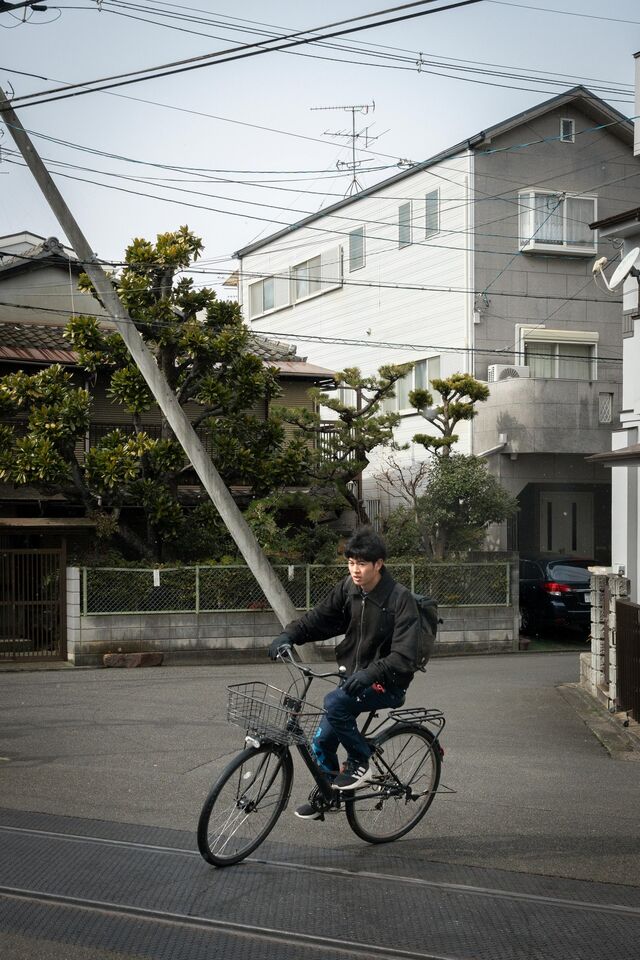
If you plan on hitting up some of the city’s most popular attractions—the wooden fortifications of Nijo Castle, the bustling food stalls of Nishiki Market, the banks of the languid Kamo River—you’re going to end up in the grid of streets just south of the Kyoto Imperial Palace. Visitors often rush through this area, but it actually contains some of the city center’s best hidden treasures.
Start with a latte and a slice of cake at the city’s hippest hangout, Café Bibliotic Hello!, where the owners have refashioned a traditional machiya home into a two-story living room filled to the rafters with jungle plants and old books. For something more substantial, the bare-bones dumpling and beer spot Ebisugawa Nakajima Gyoza makes the perfect foil for Kyoto’s fancier dining establishments. (Ask about their speakeasy onsen!)
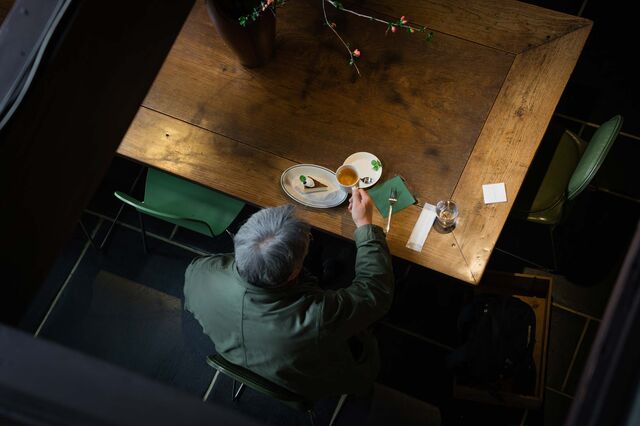
Toward the Kamo River, you’ll pass hundreds of shops lining the arcades of Teramachi. Among them, the ultra-mod stationer Kyukyodo has great goshuin-cho notebooks in which you can collect stamps from the different temples you visit. And don’t miss the tiny boutique Misuyabari, hidden in an interior courtyard with a pond and bonsai trees, and accessible only through a narrow passageway. It specializes in sewing needles decorated with small resin figurines on the tip, such as cats and owls—they’re the perfect souvenir when your luggage is already overflowing.
The 300-year-old green tea icon Ippodo is a more multisensory shopping experience, where you can sample rare blends and buy pretty bamboo whisks. If it’s too crowded, nearby Ninshu produces proprietary teaware for the Ninna-ji temple complex. Its secret Zen garden (in the back of the store) is Kyoto’s most relaxing spot for a mug of hot matcha.
Finally, back near Karasuma Oike Station, you’ll spot a thin path next to a Starbucks and a Family Mart that snakes behind a block of office buildings and into the temple complex of Rokkaku-do. It’s considered not only the birthplace of ikebana flower arranging but also the spot where Kyoto was founded, as marked by a hexagonal “navel stone” located just south of the main pavilion.
● Northern Higashiyama
When you need a break from the throngs of selfie-taking tourists, head north to check out the city’s mellow college town side. This is where you’ll find Kyoto University, or Kyodai, as it’s called locally, and its population of 23,000 students.
The neighborhood’s 2-mile-long Philosopher’s Path walkway is a fitting way to explore the area. It follows a gushing brook through a peaceful residential area filled with small boutiques, soba shops and cafes. Start at Nanzen-ji temple and give yourself ample time to wander along the stone footpath, stopping at the Otoyo Shrine (with its coterie of guardian animal statues) and the 15th century Ginkaku-ji temple. The latter was built as a dream retirement villa for a shogun who famously wanted its wooden exterior to be wallpapered in silver foil. That never happened, but his lavish nickname for the project, “the Silver Pavilion,” stuck anyway.
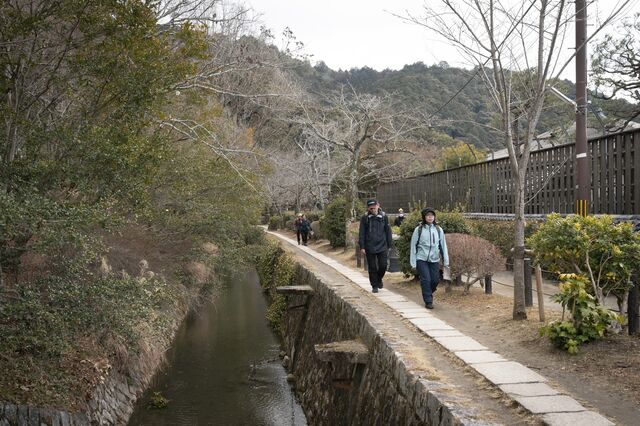
As the rivulet swerves west, check out the trove of unique ceramic works at Robert Yellin Yakimono Gallery. The namesake American expat has lived in Japan for decades and welcomes visitors into the foyer of his traditional Japanese home to show off his latest finds—from antiques to contemporary wares—all while Bob Dylan plays in the background. (Contact him in advance to make sure he’s home.)
Around the corner, minimalist wine bar Howene is the perfect pre-dinner pit stop—it pairs vinyl beats with the latest vintages of Hokkaido chardonnay and natural pours from France. But you should also do as the students do and slurp velvety chicken ramen at the no-frills Tenkaippin.
If you’re exploring over the weekend, chef Masayo Funakoshi, a veteran of New York’s Blue Hill at Stone Barns, serves eclectic lunchtime nibbles with home-brewed teas at her little cafe Farmoon. At night her witchy kitchen of herbs and cauldrons turns into a secret, invite-only restaurant serving locally harvested fare in inventive ways. (I was floored by a puree of gobo—a local root vegetable—that bore the exact taste and consistency of chocolate mousse.) If it’s of interest, showing face during cafe hours will help score you a reservation for her cozy, multicourse dinners.
Extend Your Trip
Adventures beyond the city limits
The possibilities for day trips and overnight stays from Kyoto are as endless as they are diverse, from the modern glass towers of Osaka to the sprawling tea fields of Uji to the ancient wooden temples of Nara. Consider prioritizing Kinosaki Onsen, a small hot-spring town on the northern shores of Hyogo prefecture that’s been a coveted center of well-being for more than a thousand years.
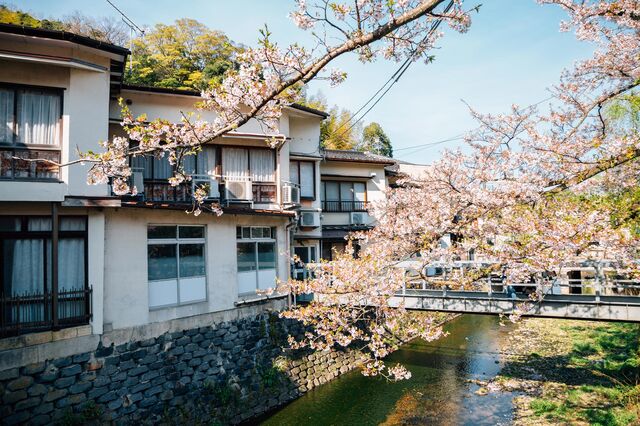
Leave your luggage in Kyoto—all you’ll need is a dopp kit—and take the JR Hashidate train line for 2½ hours to check into the historic Nishimuraya Honkan. It’s a traditional ryokan inn with shoji paper walls and straw-woven tatami mats that puts as much emphasis on its perfect kaiseki cuisine as it does on the mineral-rich waters that flow through the property. Upon check-in you’re instructed to change into your yukata cotton robes and given a ticket that grants you entry into the handful of onsen baths around town. After dinner, set out on foot to do a meguri—walkabout—of the different soaking pools in the vicinity alongside the rest of Kinosaki’s visitors, all traditionally clad as well, their geta sandals clip-clopping on the cobblestones.
Read this for a short list of memorable places to break up the journey between Kyoto and Tokyo.
One More Thing
A final tip before you’re on your way
In Kyoto, Google Maps isn’t your friend. It does an OK job for wayfinding, but operational hours listed for individual businesses can be frustratingly incorrect, and the user reviews are terrible indicators of a place’s actual quality. For details such as opening and closing times, head to a venue’s social media accounts; to validate your dining choices, try Tabelog, where four-star spots are considered truly brilliant by local standards. If you do end up down the Google Maps rabbit hole of reviews, you’ll find lots of accidental raves: people who couldn’t get into the famous spot nearby and stumbled upon something great by chance. Take that as a lesson. Japan is a place to get your face out of your smartphone and let your senses do the driving, whether you’re following the sound of morning prayers to a tiny temple or letting the smell of toasted buckwheat guide you to a soba shop peddling hand-pulled noodles.
Read next: Two-Night Minimum: Melbourne