
Video poster
Illustration: Oelhan for Bloomberg Businessweek

The directors, artists, executives, musicians and others who are reshaping the business of entertainment, putting their stamp on the culture and changing our perspective on Hollywood, technology and the creator economy.

Have you ever listened to the Giggly Squad podcast? Do you watch Vampire Siblings on YouTube? If the answer is yes, your cultural literacy is impressive. If the answer is no, then keep reading: The people we’ve selected for this list are also helping influencers cash in, running AI music companies—and teaching Jeremy Allen White to cook. A year from now, they could be household names.

Hannah Berner & Paige DeSorbo

Hannah Berner & Paige DeSorbo

Podcasters

When Berner and DeSorbo starred in Bravo’s hit reality show Summer House, they were known to peel off from their housemates, chatting and laughing. A co-star called them “the giggly squad,” and the name stuck. The women now host the Giggly Squad podcast, where they chat with each other about, really, anything: passing a driving test, traveling, pasta. “No one talks about how cute raviolis are—like, adorable for no reason,” Berner said on a recent episode. DeSorbo responded: “I’ve been getting ravioli every single night for dinner.” In the male-dominated comedy podcasting space, they’re giving thirtysomething women a place to hang out and laugh with friends.

Giggly Squad was never a formal business plan,” Berner says. “It’s our passion project.” Still, it’s led to a book (the New York Times bestseller How to Giggle: A Guide to Taking Life Less Seriously), a Netflix comedy special (Berner’s We Ride at Dawn, which has been viewed more than 3 million times) and a fashion line (Daphne, DeSorbo’s collection of pajama sets, which quickly sold out). Berner and DeSorbo have also toured the US together, doing live versions of Giggly Squad that filled venues.

In the second quarter of this year, about 430,000 people on average per week in the US listened to the podcast, according to Edison Research. That puts it just outside the top 100 podcasts, the show’s highest ranking to date. Although the pair didn’t want to share news about upcoming projects, they have no plans to slow down. “I see a world where we’re doing Giggly Squad when we’re 80 years old,” DeSorbo says, “and talking about which denture glue is best.” Ashley Carman
Cameron Brink

Cameron Brink

WNBA forward

The 2024 draft was arguably the WNBA’s most transformational, anchored by No. 1 overall pick Caitlin Clark and No. 7 pick Angel Reese, who became All-Stars and household names. Brink was no less heralded going into the draft, where she was chosen second by the Sparks. The 6-foot-4 forward had helped Stanford University win a national championship in her freshman year, and she’d gone on to earn numerous All-American and All-Pac-12 Conference awards. After draft day, though, there wasn’t much to celebrate on the court: Fifteen games into Brink’s rookie season, she tore her anterior cruciate ligament. After a yearlong recovery, she returned to play in late July.

Off the court, Brink continued to emerge as a major star. Stylish and self-assured, she now has 1.4 million Instagram followers. This has led to deals with New Balance Athletics Inc., where she’s the first women’s basketball player on its roster; trendy prebiotic soda company Olipop Inc.; Gorjana & Griffin Inc., a jeweler; and Mattress Firm. (In a Reel for the bedding company, she says she takes a two-hour nap before games.) She also has a podcast, Straight to Cam, that she co-hosts with her godsister, Sydel Curry-Lee, the sister of NBA players Stephen and Seth Curry. The duo talk about pop culture (favorite ESPY Awards looks, RuPaul’s Drag Race) and basketball with Lonzo Ball, Sue Bird, Dwyane Wade and other guests.

Brink also has a deal with Unrivaled, an upstart three-on-three league that runs during the WNBA offseason and was founded by fellow pros Napheesa Collier and Breanna Stewart. With the WNBA, Brink makes $78,000 a year; Unrivaled’s player contracts aren’t public, but the floor is about $100,000 and the average is $220,000, thanks to a $100 million media rights deal, brand-name sponsors and a smaller number of players. “I think it’s revolutionary for women’s basketball,” she told Axios San Francisco in February. Brink missed the inaugural season because of her injury but is scheduled to play in 2026. For now, she seems happy just to be back competing for the Sparks. Late in the first quarter of her first game in 13 months, she drained a 3-pointer, raised her arms and cracked a smile. Randall Williams
Kinigra Deon

Kinigra Deon

YouTuber

Of the relatively few creators making scripted series for YouTube, Deon is among the most successful. She posts three videos a week, all of which are installments of series such as Vampire Siblings and The Messy Group Chat. They span genres—teen romance, family comedy, science fiction—and feature predominantly Black actors, earning Deon the nickname “the Tyler Perry of YouTube.”

Since she started the @KinigraDeon channel in 2019 while working as a clinical laboratory scientist at a Veterans Affairs hospital in California, Deon’s videos have gotten more than 2 billion views. Today she works with a 50-person team in more than 50,000 square feet of studio space that includes sets resembling classrooms, apartments and cafes. In the first episode of Messy Group Chat, high school students text and gossip, until a little tea about a flirtation is accidentally spilled in the chat, leading to a fight. Subsequent episodes continue the storyline.

Deon’s content is especially well suited for TV audiences, given that she works in a broadcast TV-like format, with shows right around the traditional 22-minute mark. But she’s already expanding beyond the platform. Recently she signed a production deal with Kevin Hart’s media company, and she began shooting her feature film debut in August. “Creators are moving into Hollywood, and I’m really excited about what the future looks like,” she says. Aisha Counts
Rafa Esparza

Rafa Esparza

Artist

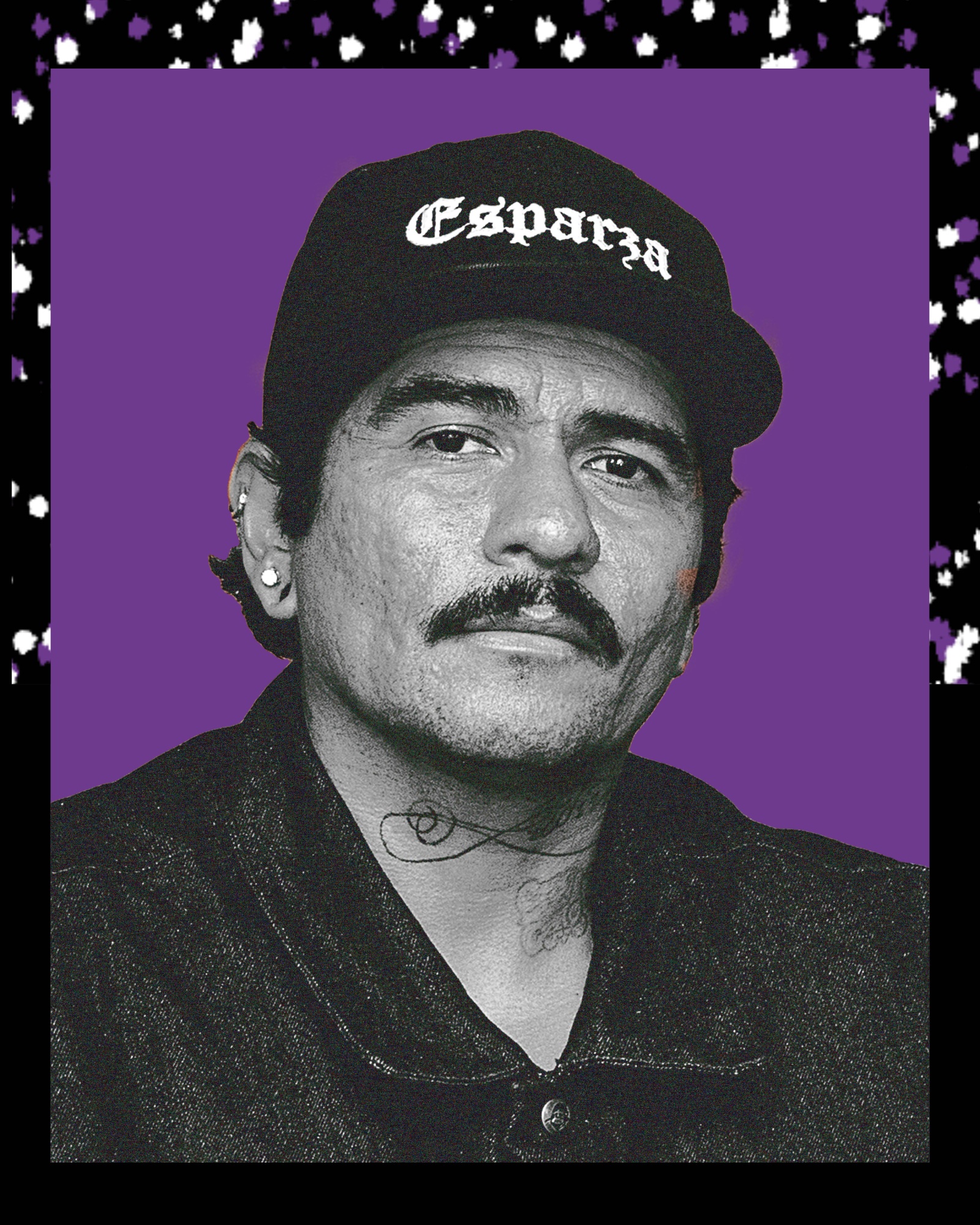
For more than a decade, Esparza didn’t make a single salable object. Instead, he organized performances exploring his connection to history, colonialism and community as a queer man of Mexican descent. For one, he painted himself turquoise and squeezed himself into a wooden crate that forced him into the crouching posture of an ancient Aztec jade statue. Then, in 2014, he put on a performance alongside the Los Angeles River during which family members helped him make adobe bricks using a mix of dirt, water, hay and horse dung. With that, Esparza found his medium. Since then he’s painted portraits and landscapes on adobe and used the material to make sculptures. Esparza had long been preoccupied with themes of forced displacement and land preservation; they became palpable, he says, once he began working with “a material that comes directly from the land.”

Esparza’s pieces have been acquired by museums around the world, including the Whitney Museum of American Art and Solomon R. Guggenheim Museum in New York, SFMOMA in San Francisco and LACMA in LA. Next year he’ll have multiple shows: In Mexico City in February, there will be both a two-person exhibit at the Museo Anahuacalli and a solo show at LagoAlgo, then in the fall he’ll have a large commission for a group show at the Buffalo AKG Art Museum in New York. “These works erode over time,” says Esparza. “Instead of being so paranoid about conservation, trying to make sure they look the same forever, I like working with a material that’s so unruly in terms of its longevity. It shifts and erodes every day.” James Tarmy
Lucy Guo

Lucy Guo

Founder & CEO, Passes

Guo’s billionaire status derives from co-founding Scale AI, which provides training data for self-driving cars and other technologies. Passes, her next project (she’s no longer with Scale), is an entirely different business: The company helps social media influencers diversify their income streams. After seeing friends struggle to survive on inconsistent brand deals, Guo thought she could help them earn money directly from fans who would pay for exclusive photos, direct messages, video calls, merch and livestreams.

If OnlyFans is home to sex workers, comedians and fitness instructors, and Patreon Inc. is for podcasters, Passes is for musicians, athletes, models and other stars of TikTok and Instagram. Since 2022, when Passes started operating, it’s raised $50 million from investors and attracted creators such as former NCAA gymnast Livvy Dunne, who has 8 million TikTok followers; Carrington, a dancer, lip-syncher and comedian with 3.5 million; and actress Bella Thorne, with 5.5 million.

Passes has faced some early challenges in court. A class-action suit filed in February alleges that company employees photographed underage influencers in compromising positions—and then commandeered their accounts to distribute the photos to customers. Another suit by a competitor named FanFixApp Inc. alleges that Passes hired an employee who used proprietary information to lure away creators. Guo said the FanFixApp suit was a “one-sided beef” and, on X, called the accusations about underage influencers “utterly meritless.” Still, the app keeps growing. Thousands of influencers are using it, and some of them have become millionaires. “When you look at kids nowadays, they really want to be creators,” Guo says. “I think more creators are going to become entrepreneurs.” Aisha Counts
Maggie Kang

Maggie Kang

Director

KPop Demon Hunters follows a K-pop girl group that, as the name suggests, hunts demons. The members draw the supernatural powers for their quests from their songs and performances. The movie, which was released in late June, is now Netflix Inc.’s most-watched film ever. Its soundtrack, led by the breakout single Golden, has topped Spotify’s US daily chart and dominated pop music rankings around the world, a rare feat even for real-world K-pop stars.

Kang grew up in Canada and studied animation there before landing a job at DreamWorks Studios in LA and, eventually, working on movies such as Lego Ninjago at Warner Animation. At Sony Pictures Animation, she sought to transform personal memory into cinematic spectacle; she mined summer days spent in Seoul as a child and Korean mythology to create her K-pop-meets-anime genre mashup. “I wanted to show my appreciation for my culture,” Kang wrote in an email. “Every part of the movie was seen through a Korean lens.”

Alongside co-director Chris Appelhans, Kang spent almost seven years making sure the film was as authentic as possible, whether in the choreography, costume design or cast. Demon Hunters is voiced by K-drama star Ahn Hyo-seop, Squid Game actor Lee Byung-hun and Lost star Kim Yunjin. Talks about a sequel are in the early stages. “There’s definitely more stories that could be told in this world,” Kang says. Sohee Kim
<span class="justin">Justin</span><span class="pichetrungsi">Pichetrungsi</span>

JustinPichetrungsi

Chef & restaurateur

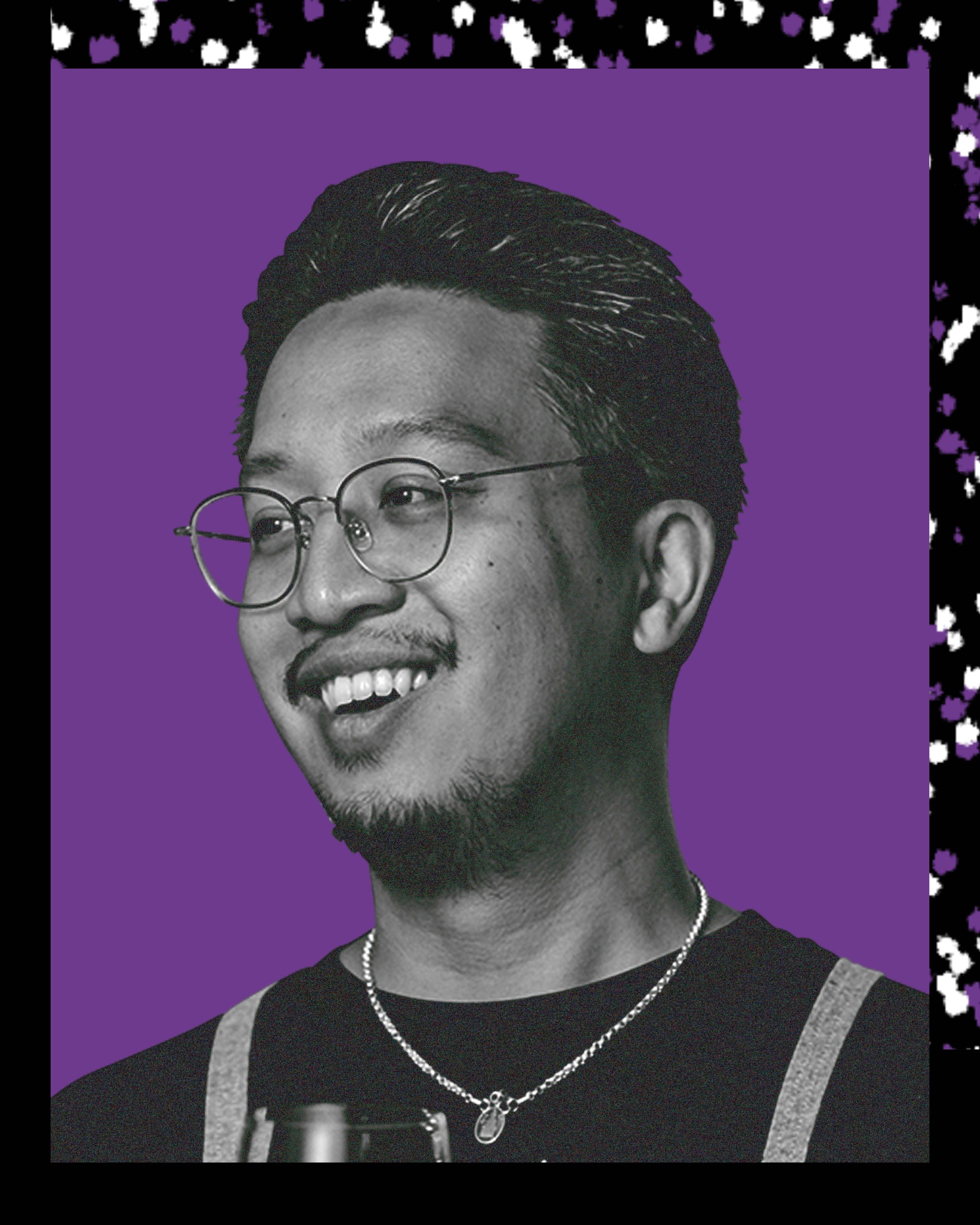
In 2019, Pichetrungsi was at his desk at Walt Disney Imagineering headquarters in Glendale, California. In his job as an art director, he’d worked on Star Wars and Marvel video games and imagined what theme parks would look like in 25 years. Then he got a call that his father, the chef-owner of Anajak Thai, in Sherman Oaks, had suffered a debilitating stroke, and Pichetrungsi took over the kitchen of the 38-year-old establishment.

Six years later, Pichetrungsi, whose culinary training consisted of cooking at Anajak on summer breaks as a student, has turned a formerly unremarkable pan-Asian restaurant into one of the hottest tables in LA. He introduced Thai Taco Tuesdays and added a $195 twentysomething-course tasting menu. In the process, he’s been named best new chef by Food & Wine (2022) and best chef California by the James Beard Foundation (2023), and he was a featured speaker at this year’s MAD food symposium in Copenhagen. Anajak’s menu, once full of standards such as pad Thai, now has hand-cut papaya salad with pluots, pork collar with coriander-soy molasses, and southern-Thai fried chicken with caviar.

This summer, Pichetrungsi closed his restaurant to expand. Now he can handle about 90 customers, and his staff has grown from 7 (including his mom) to more than 50. This expansion comes at a time when dining rooms in Southern California are facing multiple challenges: higher labor costs; a shrinking workforce because of US Immigration and Customs Enforcement raids; food inflation; and declining interest in dining out after the economic hardships of strikes and wildfires. In the face of all this, Pichetrungsi has innovated; one of his latest projects is turning a little house behind Anajak into a creative and culinary hub. “We’ll turn it into an NPR Tiny Desk scenario,” he says, unofficially calling it the “Thai-ny Desk.” The space, which will open next year, will be a test kitchen, a private dining space and a hangout for artists, musicians and chefs. Kate Krader
Brian Rolapp

Brian Rolapp

CEO, PGA Tour

In Rolapp’s two decades at the NFL, where he rose to become chief media and business officer, he was a key figure in quadrupling the league’s annual revenue to more than $23 billion. He led negotiations for its 11-year, $110 billion bundle of TV rights deals in 2021, when the NFL re-upped with broadcast partners at CBS, ESPN, Fox and NBC, and added newcomer Amazon.com—cementing its place as the preeminent American sports league while also beginning the transition to a streaming economy.

Rolapp started his new job in June, joining the PGA Tour in a delicate moment for professional golf. As the NFL was becoming a ratings juggernaut over the past 20-plus years, the tour’s singular force was Tiger Woods. With Woods turning 50 later this year and frequently sidetracked by injuries, the tour can no longer rely on his magnetism. Rolapp will have to find a way to keep golf relevant without him.

At the same time, he’ll have to navigate a potential merger with LIV Golf, the Saudi-backed rival circuit that started in 2021 and lured away some of the game’s top names, including Jon Rahm and Phil Mickelson, with nine-figure contracts. In June 2023, LIV and the PGA Tour announced they’d reached a framework agreement for a merger, but the deal has since stalled over disagreements on player pay and competitive structure.

Last year a group of investors calling themselves the Strategic Sports Group, led by owners John Henry (Boston Red Sox, Liverpool), Steve Cohen (New York Mets) and Arthur Blank (Atlanta Falcons), agreed to inject $3 billion into the tour to boost player pay under a new equity-sharing program. Henry and his fellow billionaires, who helped pick Rolapp for the newly created role of chief executive officer, are counting on him to broker a peace with LIV and use the NFL playbook to make watching golf a routine part of Americans’ weekends. “Working in the sports business as long as I have, sometimes it’s not that complicated,” Rolapp said in his first public comments after taking the job. “If you think, ‘What’s best for the fan?’ it’s usually best for everybody involved. So I think we’re going to keep that mindset here.” Ira Boudway
Mikey Shulman

Mikey Shulman

CEO & co-founder, Suno Inc.

Suno and its competitors are making it easier for anyone to produce music: All you need is a prompt—“yacht-rock-inspired song to play at a backyard barbecue in Brooklyn,” for example—and voilà, here’s your track. Depending on the tier of service you pay for, you can even have it distributed to, say, Spotify. Shulman, who has a doctorate in physics from Harvard University and was the head of machine learning at an artificial intelligence data company before starting Suno, says his product democratizes music creation, which is a good thing.

Sentiment online is less positive about what some consider to be sonic slop. Shulman told the 20VC podcast, “It’s not really enjoyable to make music now. … It takes a lot of time, it takes a lot of practice, you need to get really good at an instrument or really good at a piece of production software. I think the majority of people don’t enjoy the majority of the time they spend making music.” One response: “This is such an absurd mindset.” Another: “Oof.”

The industry’s response is more complicated. Concerned about a flood of AI-generated music hitting streaming services and their copyrighted material forming the backbone of AI companies’ models, the major labels sued Suno and competitor Udio, in coordination with the Recording Industry Association of America, for alleged infringement. (“The labels see a threat to their market share,” Suno argued in a court filing. Udio responded that what it was doing was “quintessential ‘fair use’ under copyright law.”) The labels, however, are talking to Suno about a settlement that could let it keep generating songs. The details aren’t public, and Shulman wouldn’t elaborate. But Suno would presumably be permitted access to song catalogs to train its model, and labels would be paid an upfront fee for that usage, an ongoing royalty or a combination of both. Any settlement could potentially give it a leg up over new competitors who don’t have similar industry buy-in.

Already the company has raised more than $125 million at a reported valuation of $500 million, so it has money to expand. Shulman says he wants to focus on what he calls “sociality,” or making music a part of what people do together online. “I hope you will see us be much more open,” he says, “as there’s more legal clarity around things. More open about who we work with and who uses the tool.” Ashley Carman
Courtney Storer

Courtney Storer

Producer & chef

Storer doesn’t appear on-screen in The Bear, the show that, more than any other, chronicles the physical and emotional realities of restaurant life. But the chef turned culinary and co-executive producer is the key to the dramedy’s verité sensibility—whether the interaction among chefs, the food that’s featured or the way it’s stored (think of those industrial-size bags of carrots and onions).

In a well-appointed kitchen in a converted garage behind her house, Storer taught actors Jeremy Allen White (Carmy), Ayo Edebiri (Sydney) and Lionel Boyce (Marcus) knife skills, sauteeing and more. The space is a commissary kitchen for her catering company, Coco’s to Go-Go, and it was also recently used to produce about 700 meals a day during the LA fires, in coordination with World Central Kitchen.

Storer, who grew up in the Chicagoland area with two brothers—one, Chris, created The Bear—spent nights and weekends working at local establishments, including a sister restaurant to Mr. Beef, which helped inspire the series. After stints in human resources at United Parcel Service Inc. and Whole Foods Market Inc., she went to culinary school in LA and then on to professional kitchens. She cooked at LA’s famed meat-focused Animal, now shuttered, and at Italian American spot Jon & Vinny’s in the Fairfax neighborhood. Now she’s at work on her first cookbook, to be released in spring 2027, called Young Nonnas, which will feature Bear favorites such as rolled beef braciola and chicken piccata, as well as innovations such as chicken soup boosted with collagen.

As for what will happen on the show’s fifth season next year, Storer says she’s not sure what to expect. (Spoiler alert: Carmy leaves the restaurant, The Bear, at the end of Season 4.) “If you know restaurants,” she says, “you know at the drop of a hat anything can change.” Kate Krader
Yu Yang

Yu Yang

Director

As a pharmacy student from Sichuan with no formal film training, Yu made animated shorts on a computer in his bedroom. He switched professions to advertising before pursuing moviemaking full time. His 2008 short film, See Through, about warring kingdoms, gained critical attention and led to a collaboration with China’s biggest distributor. He broke out with Ne Zha—named for a rebellious boy recruited to fight demons and save his community—in 2019. The movie took in $700 million globally.

Now he’s behind the world’s highest-grossing movie this year: Ne Zha 2, which took a half-decade, 4,000 crew members and 100-plus studios to complete. The film has earned more than $2 billion, making it the first non-Hollywood title to crack the global all-time box-office list.

In the sequel, Ne Zha and his enemy-turned-ally Ao Bing are struck by lightning from heaven. Their master uses magic to help them regain their strength, a process that includes temporarily sharing one body; they then face dangerous trials and must stop a coming war. Audiences, including moviegoers in China who lent a lot of grassroots support, have loved the stunning visual effects of both installments.

Yu, who works under the name Jiaozi (Mandarin for “dumpling”), is already at work on the next Ne Zha movie. “I produce every film as if it were the last work in my lifetime, leaving no room for further breakthroughs,” he said in an interview with China Central Television, the major state-run broadcaster in that country. “But we soon move on to challenge a new limit.” Sohee Kim
Lola Young

Lola Young

Singer-songwriter

If you’ve heard one of Young’s indie pop songs, it would be Messy. It went viral on TikTok, topped the UK singles chart and was in the Top 10 or thereabouts in more than a dozen countries including the US. Young told Metal magazine that the song was “an ADHD anthem” about “how I feel about myself in general—being too messy one day and too clean another, struggling to find that balance in myself.” It’s about being imperfect, in other words—a theme, along with heartbreak, that Young returns to often.

Young, who grew up in London, learned to play piano and guitar at an early age. As a teen, she won or almost won several national singing competitions, ultimately capturing industry attention and signing with managers who’d worked with Amy Winehouse and Adele. Her debut studio album, which included Messy, came out in 2024, and she performed the song on The Tonight Show Starring Jimmy Fallon last January. She currently has more than 32 million monthly listeners on Spotify.

On Sept. 19, Young released her second studio album, I’m Only F---ing Myself, whose cover shows Young with a blow-up sex doll that bears a striking resemblance to herself. On Instagram she described the album as “my ode to self sabotage, my chance to claw myself back from the edge of defeat.” (The 24-year-old is good at conjuring vibes that Gen Z might describe as “crashing out.”) In reality, though, she’s racking up wins: Elton John said that one of the singles from the album, an upbeat tune called d£aler, was “the biggest smash hit I’ve heard in years.” And this fall she’s headlining a tour of the US, the UK, Canada and Mexico. Bret Begun

Photo illustrations: 731; Portraits: Berner: David Urbanke. Esparza: Star Montana. Shulman: Barry Chin/Getty Images. Storer: Emma Mcintyre/Getty Images. Young: Justin Goff/Getty Images. Yu: Visual China Group/Getty Images. All others: courtesy subject

(Corrects spellings of names in the photography credit.)

More On Bloomberg