
Kid Rock, MAGA Man
The singer has been golfing and trolling his way into the president’s inner circle.
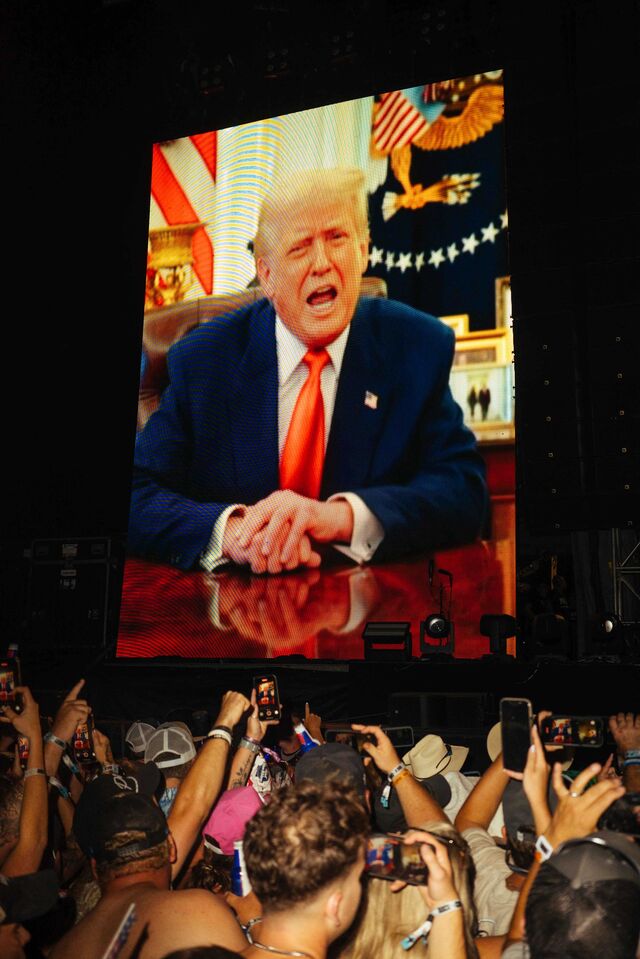
On a sweltering summer night in South Carolina, sweaty concertgoers milled about in a field, awaiting the day’s headliner. Just after 9:30 p.m., screens above the main stage lit up with a recorded message. “This amazing crowd here today must be the most patriotic group in rock music history,” President Donald Trump said from the Oval Office. “We love you all, and Kid Rock is as good as they get. Enjoy the concert.” The audience erupted in applause.
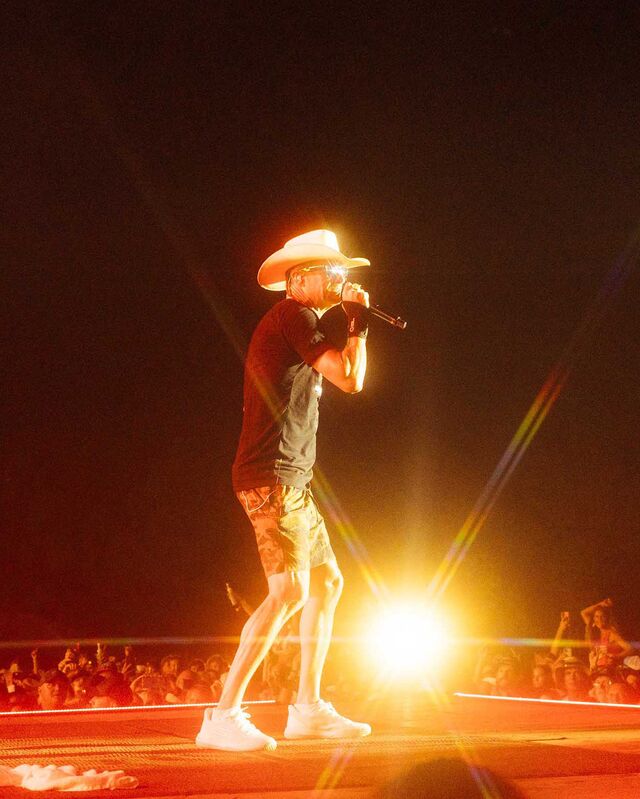
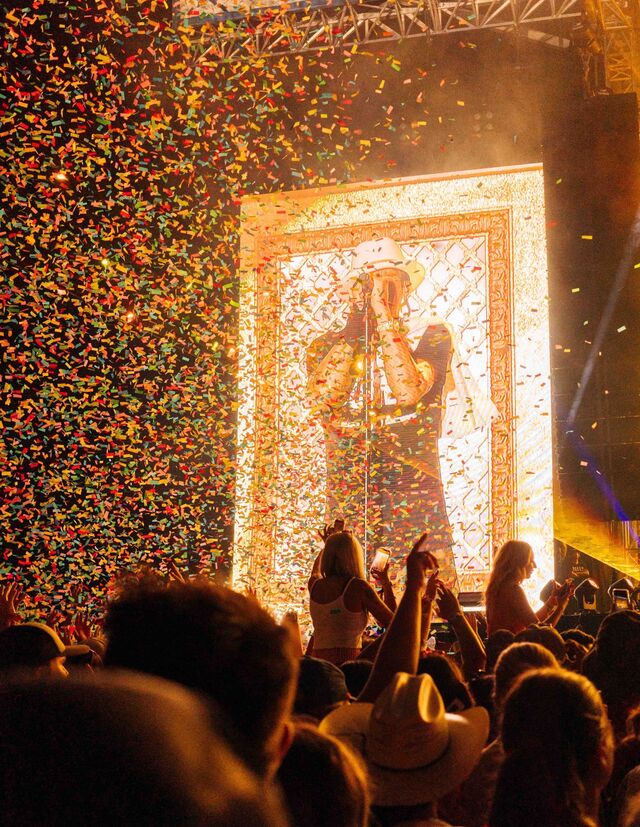
A moment later, Kid Rock, in sunglasses, black T-shirt and camouflage shorts, walked onstage and started in on his first song. For the next hour and a half, the countrified rocker bounced around, singing and dancing with a manic energy far beyond the recommended daily allowance for the knees and vertebrae of a 54-year-old grandfather.
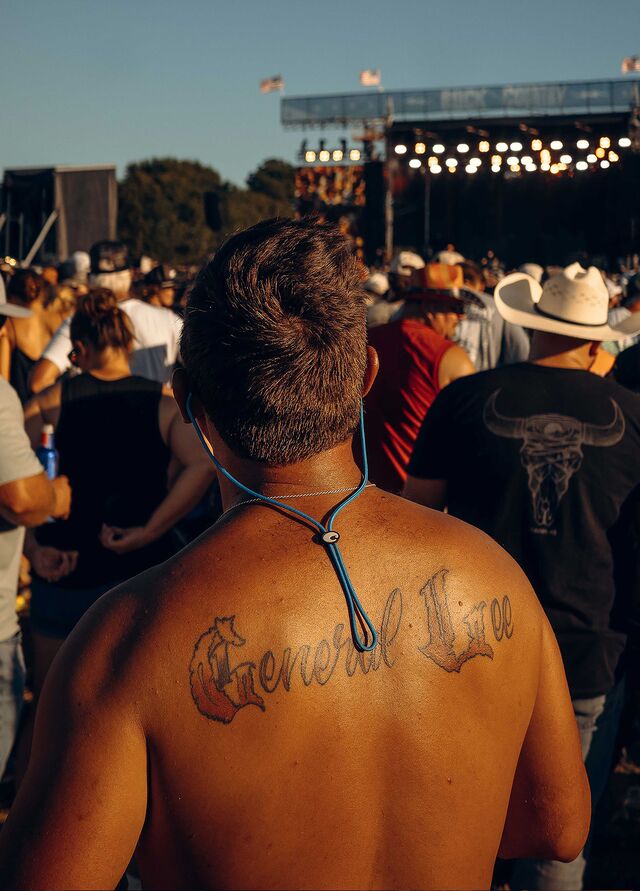
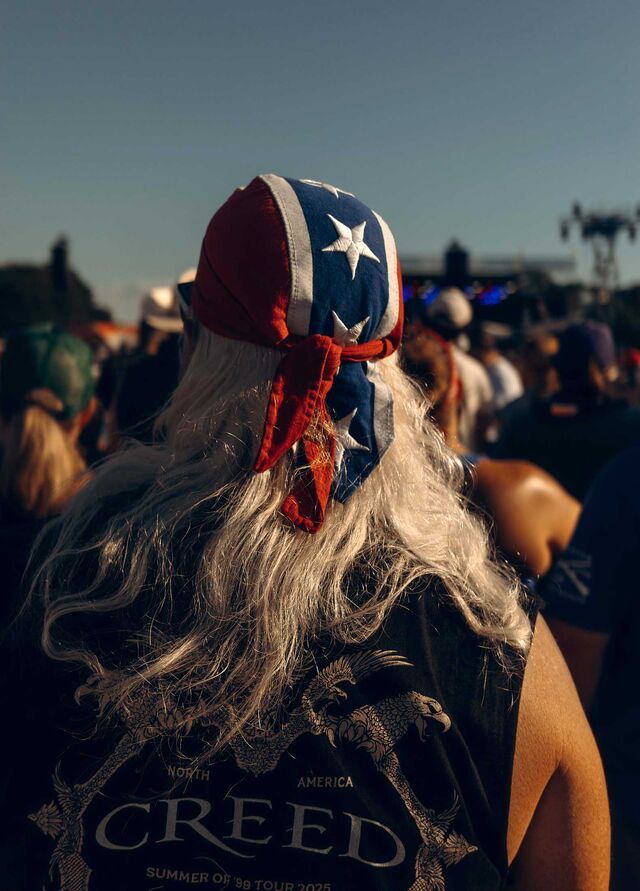
The set list leaned heavily on Kid Rock’s greatest hits, including a couple of classics from his first big album in the 1990s. If the musical vibe harked back to the days of Bill Clinton, the moment itself felt like a distillation of something very Trumpy. This was the “Rock the Country” tour, orchestrated by Kid Rock and unofficially promoted by the president to the duo’s overlapping fan bases. The result was a lively mashup of identity politics and beer-battered revelry that billed itself as “a gathering for the true heart of America,” where “hardworking, God-fearing patriots unite under the open sky.”
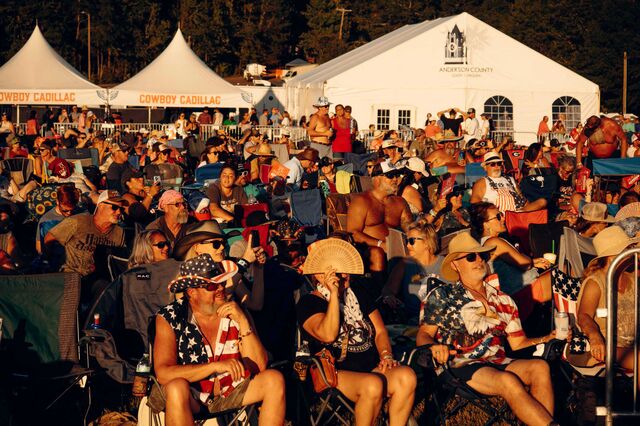
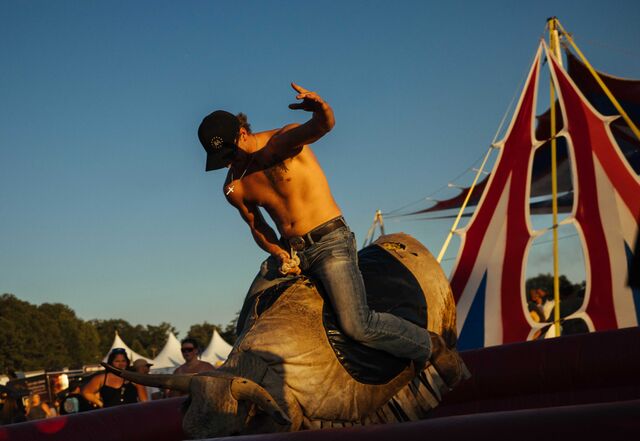
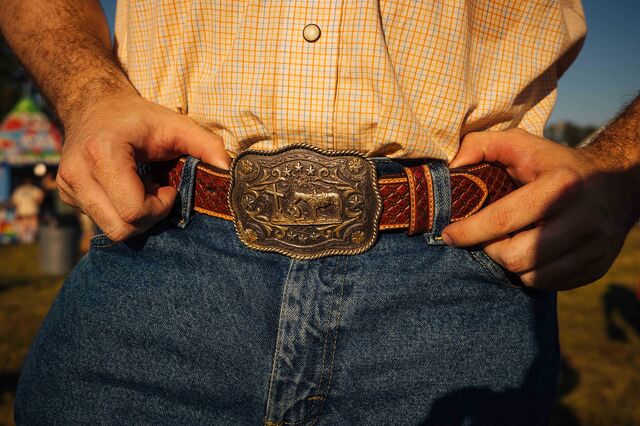
This event, in a bucolic patch not far from the town of Anderson and its prominent Confederate war monument, marked the final stop of the tour. Over the course of two days, sunbaked fans tossed beach balls and posed for photos in front of 20-foot-tall cowboy boots. Women in cutoff jeans and tank tops mingled with men in red, white and blue overall shorts. At one point, everyone removed their headwear, gazed at a giant American flag dangling from a crane and recited the Pledge of Allegiance. Off to one side, people lined up to take turns bucking on a mechanical bull. Between sets, a DJ fired up the audience: “Give it up for No. 47!”
Nearly a year into Trump’s second term, the American music industry remains something of an emotionally triggering unsafe space for his diehard supporters. Recent headlines have been particularly unwelcoming. In early October, well-known Kamala Harris abettor Taylor Swift released an album that quickly broke sales records. A few days later, the NFL announced that Puerto Rican superstar Bad Bunny—a major critic of Trump and US Immigration and Customs Enforcement—would headline the next Super Bowl halftime show. Conservatives raged on social media. Why was the NFL picking an artist who sings in Spanish instead of, say, tapping a famous performer from the heartland of America? In short, why not Kid Rock?
To be clear, Kid Rock’s fans are nowhere as numerous as Bad Bunny’s. This year, as of Oct. 9, Kid Rock has generated 409 million audio and video streams across all platforms, according to Luminate, a data company focused on the entertainment industry. Over the same period, Bad Bunny had 4.7 billion. But if Kid Rock is no longer a Billboard-topper, he does embody a certain type of artist who no longer seeks a middle-of-the road audience to find success. Over the past decade, various entrepreneurs and Trump himself have capitalized on the political polarization of American consumers by rolling out conservative-branded products aimed at the president’s supporters: There are not only cable TV channels, social media networks and podcasts catering to the MAGA demographic but also cryptocurrencies, sneakers, mobile phones, bottled water, coffee, kitchen appliances—and, thanks to Kid Rock, summer music festivals.
For those who don’t want their concertgoing experience tarnished by anti-Trump outbursts from the likes of Bruce Springsteen (or Green Day, Pearl Jam, Eminem, etc.), Kid Rock has created a haven, positioning himself as kingmaker. He’s breathed new life into his music career at a time when many 1990s rap-rock acts have long since shuffled off into cultural obsolescence.
Over the summer, dozens of acts performed at the various “Rock the Country” stops, including Gavin Adcock, Kentucky Headhunters, Lynyrd Skynyrd, Little Texas, Nickelback, Travis Tritt and Kid Rock’s favorite hunting buddy, Hank Williams Jr. At one point during the South Carolina stop, Aaron Lewis, the heavily tattooed lead singer of the alt-metal group Staind, took the microphone. There were two things, he said, that liberals will never take away from Americans: “our God and our guns.” Addressing the crowd of an estimated 20,000, he said: “Look around you. We need to stand up for our children and grandchildren, who are gonna inherit this country.”
Even by the rococo standards of American second acts, Kid Rock’s path to musical adoration among Christian conservative audiences has been a strange trip.
Nearly 30 years ago, Bob Ritchie, who declined to be interviewed for this article, first strutted into the national spotlight as Kid Rock, a cocky singer/rapper with a love of middle-finger salutes. He joyfully spun out sybaritic rhymes about chasing babes and getting wasted. He was like some sort of mythical party creature—part man, part beer funnel.
MTV played his music videos relentlessly. Kid Rock’s 1998 album Devil Without a Cause sold more than 14 million copies, making him a certifiable American pop star. He bought mansions in Florida and California, was briefly married to former Playboy Playmate Pamela Anderson, got a year’s probation after a scuffle at a Waffle House and released a string of albums, largely devoted to unfettered hell-raising as a near heavenly mission. His fans loved it.
But every party eventually ends. And by the mid-2010s, the Kid Rock bender was winding down. Many parts of the music industry that had bolstered his ascent in the 1990s—CDs, MTV, the rock-rap genre—were fading fast. In 2015, when Rolling Stone caught up with him at his estate in Alabama, he was showing off his extensive gun collection, shooting wild hogs and bemoaning the performance of his previous album. “It f---ing flopped,” he said. At the time, the “Kid” was well into his mid-40s.
Not Great, Bob!
Combined audio and video streams

Kid Rock grew up in exurban Michigan. His dad, who ran a thriving Lincoln-Mercury dealership, was a staunch Republican. It was the heyday of Motor City “Buy American,” and the adolescent Kid Rock caught the fervor. As he accumulated musical accomplishments, he also began seeking out political validation. It took a while: At one point in 2005, Kid Rock was booked to play at George W. Bush’s inaugural celebration, at the behest of the president’s daughters. But not everyone in the family-values-branded GOP felt at ease rubbing elbows with the devil-may-care musician. His appearance at the bash never took place.
Undeterred, Kid Rock kept politicking. In 2012, Republican presidential candidate and fellow Michigander Mitt Romney adopted one of Kid Rock’s songs, Born Free, as a theme song. On the campaign trail, the teetoling do-gooder and the bacchanalian stage beast became friendly.

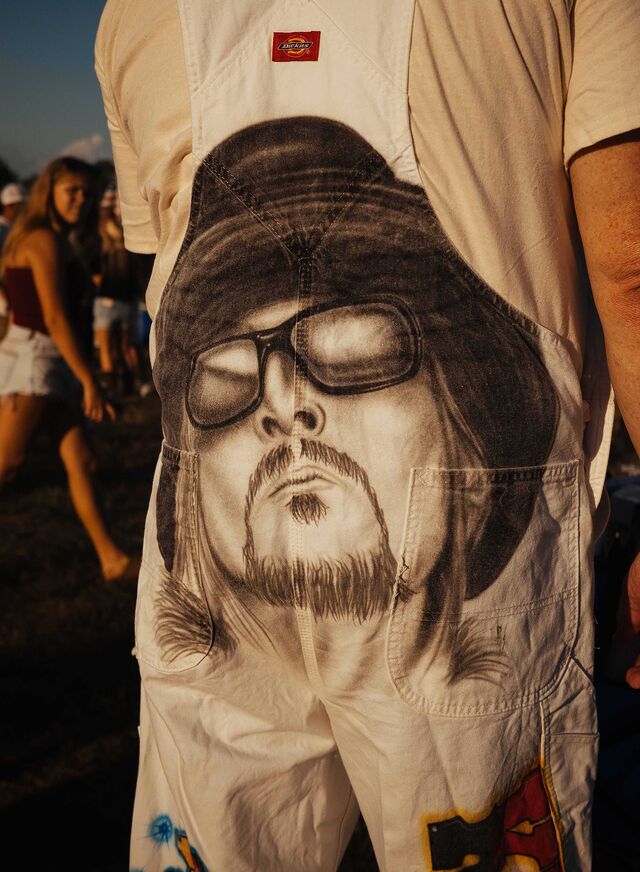
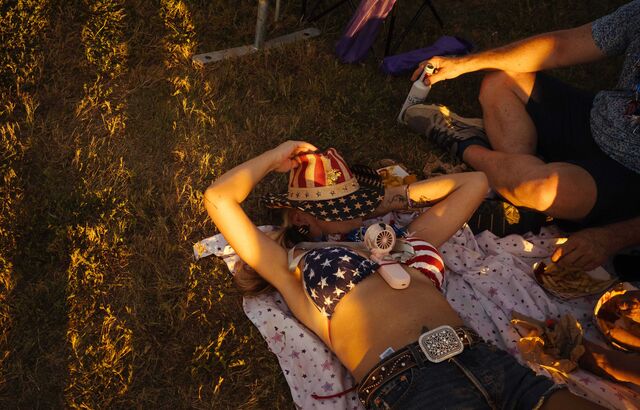
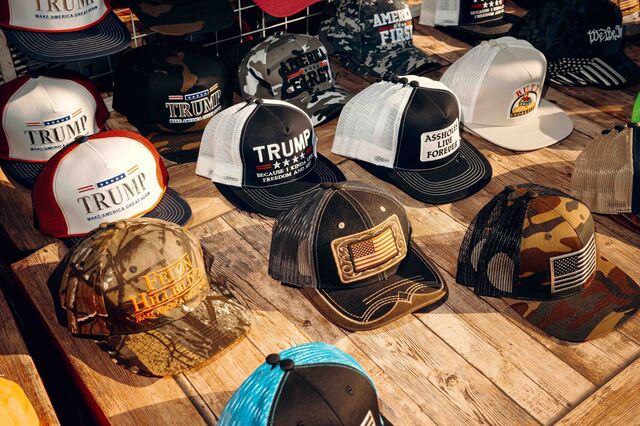
Trump proved to be a more natural fit. While large chunks of the US entertainment industry lined up behind Hillary Clinton, Kid Rock dove headlong into MAGA, selling Trump-branded merch on tour and performing at his rallies. He embodied Trump’s GOP, which positioned Democrats as the party of finger-wagging, killjoy scolds and Republicans as the champions of freewheeling, anything-goes individualists. Before long, Kid Rock had golfed and trolled his way into the inner circle.
Since hooking up with Trump, Kid Rock has released multiple songs decrying woke culture, posed for photos with the president in the Oval Office and praised his policies while attacking liberals during frequent guest spots on Fox News. (In an October interview with the network’s Jesse Watters, Kid Rock was asked about his Halloween costume. Putting on a Covid-style mask, he answered Watters with what critics called an ableist slur. The Special Olympics called on him to “acknowledge the hurt caused”; he has yet to do so.) Along the way, Kid Rock nosed ahead of the likes of Sylvester Stallone, Jon Voight, Kanye West and Chuck Norris as the declassé celebrity entertainer most closely associated with Trump’s presidency.
Tellingly, of all the performers in Trump’s orbit, it’s Kid Rock whom California Governor Gavin Newsom has chosen to poke fun of relentlessly in recent months. “BECAUSE OF HIS HORRIFIC MUSIC, CALIFORNIA WILL INDEFINITELY SUSPEND KID ROCK FROM PERFORMING IN THE GOLDEN STATE,” Newsom joked on X. “YOU’RE WELCOME!”
In early summer, with federal troops patrolling the streets of Los Angeles, JD Vance arrived in Nashville for the grand opening of Kid Rock’s second restaurant, the Detroit Cowboy.
For the occasion, Kid Rock played host to the vice president and other luminaries at the intersection of conservative politics and music: guitarist Ted Nugent, comedian Theo Von, podcaster Benny Johnson, Fox News host Steve Doocy and Redneck Woman singer Gretchen Wilson, according to social media posts. Amid the patriotic, rock-’n’-roll-themed decor, diners ripped into teetering seafood towers, steaming piles of lobster mac and cheese and hulking tomahawk steaks. At one point, country crooner Lee Greenwood sat at a piano and belted out the Trump-world anthem, God Bless the USA.
Throughout his career, Kid Rock has festooned himself in all things Detroit, from championing the Made in Detroit apparel brand to hosting a 40th birthday celebration concert at Ford Field. But as his status in Trump’s cultural cabinet has soared, Mr. Motor City has established a second geographical beachhead several hundred miles closer to the heart of the GOP’s base.
On a hill overlooking Nashville, Kid Rock completed work recently on a massive residence that looks like the White House. The interior is tricked out in Trump-esque splendor, including a golden elevator and a golden bathroom complete with a golden toilet.
Long the heart of America’s country music scene, Nashville has emerged in recent years as a powerful vortex of conservative media, the home of Ben Shapiro’s company, the Daily Wire, and various Republican podcasters, including Brett Cooper. It’s the perfect place, in other words, to fuse music with MAGA politics.
From his hillside perch, Kid Rock acts as a key player in the scene. When the Ultimate Fighting Championship traveled to Nashville’s Bridgestone Arena in July, the company’s chief executive officer, Dana White, also a close ally of Trump’s, spent a Sunday morning with Kid Rock, hosting a brunch at his restaurant. This was not unusual. These days, whenever a business or cultural rainmaker comes to town—FBI Director Kash Patel, Arkansas Governor Sarah Huckabee Sanders—there’s a good chance they’ll wind up breaking bread with Kid Rock and touring his nutty house. “It’s about 27,000 square feet and has two bedrooms,” Joe Rogan said on his podcast. “The rest of the house is just—party!”
Lately, while Newsom is busy fake-banning him from California, Kid Rock has been forging inroads in the rest of the country. Executives who routinely sell boatloads of tickets to audiences south of the Mason-Dixon Line have been eager to partner with him. In May, Kid Rock hosted his second “Rock N Rodeo” at AT&T Stadium, home of the Dallas Cowboys. The extravaganza features top competitors from the Professional Bull Riders (PBR) league squaring off in events such as steer wrestling and bareback riding. And, of course, a performance by Kid Rock.
“Bob is one of the most insightful and inventive marketers that I’ve ever met,” says Sean Gleason, CEO of PBR. “He’s got a very unique eye for what will be entertaining for the audience. You match that up with the creative talent on the music side, and you’ve got a force that lasts for decades.”
Kid Rock’s prodigious connections are also a tremendous asset, Gleason says. This year, Rock N Rodeo received generous coverage on Fox News and was carried live on Fox Nation, the network’s streaming service. Afterward, Fox Nation reached a deal with PBR to air its regular Friday night events. “Bob’s relationships with Fox News and the Fox family helped us get that deal done,” Gleason says.
In 2023 country singer Jason Aldean released a video for Try That in a Small Town. The video’s central backdrop for celebrating salt-of-the-earth patriotism—the Maury County Courthouse in Columbia, Tennessee—was the site of an infamous 1927 lynching of a Black man as well as subsequent race riots in the 1940s. Soon, progressives were decrying his song as racist. Aldean responded on social media that the accusation was “meritless”; conservative pundits knocked the liberal complaints as yet another instance of cosmopolitan groupthink.
Witnessing this, Kid Rock saw a business opportunity. He teamed up with Peachtree Entertainment, a Nashville-based promotion business, to create a new country music festival. The following year, “Rock the Country” made its debut with the initial tagline “7 small towns, 7 massive shows.” At the first stop in Louisiana, Aldean was a headliner.
“I see a huge void for—you can call them right-wingers, MAGA, you can call them whatever you want—I call them hard-working people that love this country,” Kid Rock explained in a recent marketing video for the festival. “I think it’s the greatest movement ever created.” Shane Quick, an executive at Peachtree, said in the same video: “I feel like a lot of festivals are being built for one side of this country. We wanted to build a festival for the other side.”
Since the festival kicked off last year, several conservative bigwigs have graced the stage, from podcaster Tucker Carlson to Larry Rhoden, the Republican governor of South Dakota. On this year’s tour, amid a surfeit of pro-Trump signs and apparel, there was a cultural interloper not always welcome of late among red-state rollickers: Bud Light.
A few years ago, Kid Rock donned a MAGA hat, stacked up several cases of Bud Light and opened fire. The resulting beer-snuff video—a reflection of the singer’s outrage over the beverage’s marketing collaboration with a transgender influencer—helped fuel a conservative backlash that wound up successfully tanking Bud Light sales and temporarily driving down the share price of its parent company.
During the subsequent PR crisis for Anheuser-Busch InBev SA/NV, Kid Rock happened to cross paths with the company’s CEO at a UFC match and hit it off. Afterward, Kid Rock went on Rogan’s podcast and urged conservatives to forgive the wayward beer brand for what he characterized as its brief and misguided bout of wokeness. The ceasefire paid off handsomely. Bud Light was a fixture on the “Rock the Country” circuit, trying to win back conservatives one frosty lager at a time. Naturally, there were freebies too. Throughout the weekend in South Carolina, any fan who successfully tossed a lasso around the head of a plastic bull walked away with Bud Light swag.

“Since Bud Light’s sales were hit really hard, they’ve been trying to reconnect with the core customer, which is that Kid Rock, unapologetic rebel type of personality,” says Anson Frericks, a former executive for Anheuser-Busch InBev. “The Kid Rock crowd, they drink a lot of beer.”
While the Super Bowl halftime show might be beyond Kid Rock’s reach at this point in his career, the singer is focused on another prized venue. In the October appearance with Watters on Fox News, amid a broad uproar over Trump’s demolition of the East Wing of the White House, the host asked Kid Rock about rumors that he’d be the first act to perform inside the planned “big beautiful ballroom.”
“I hope so,” the singer answered. “Ball till you fall, that’s what I say.”