

Industries | The Big Take
One Generic Cancer Drug Costs $35. Or $134. Or $13,000.
Hundreds of hospitals across the US are marking up old cancer treatments — in some cases hundreds of times what Medicare pays.
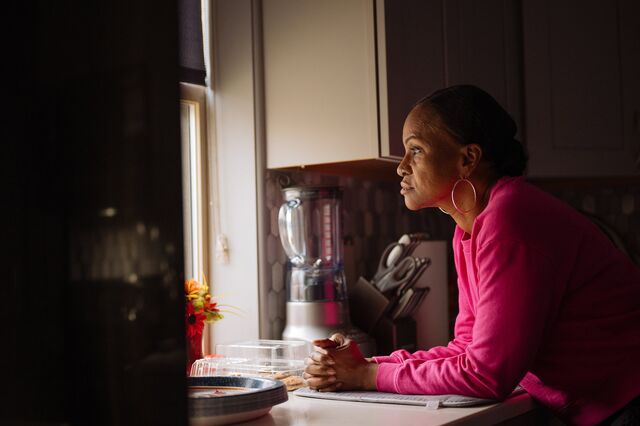
Ida Martin’s first chemotherapy treatment at Rush University Medical Center cost her health plan $13,560. When she went down the street to a clinic for her next infusion three weeks later, the price dropped to $134.
“Same drug, different prices,” said Martin, a 62-year-old cook with colon cancer. The clinic was even still within the Rush system. “It’s ridiculous.”
Health spending in the US now tops $5 trillion a year with families and companies facing their steepest insurance premium hikes in years. Politicians often blame pharmaceutical companies, insurers, wasteful procedures and a bloated system too tangled to tame.
cancer capitalism
This is the fifth story in a series about how the hunt for profit can harm cancer patients. You can read the first story here.
This is the fifth story in a series about how the hunt for profit can harm cancer patients. You can read the first story here.
But beneath those familiar explanations lies a lesser known phenomenon. In the opaque world of hospital pricing, medical systems across the country are able to turn routine, decades-old cancer drugs into money-makers, marking up cheap chemotherapy drugs as if they’re pricey new treatments.
It’s a hidden toll that patients and their employers pay one infusion, and one inflated bill at a time. Hospitals are “taking advantage, basically, of a very sick population that’s undergoing lots of treatment,” said Ivana Krajcinovic, the vice president of health care delivery at Unite Here Health, Martin’s union health plan. “They do it because they can get away with it.”
Martin was on oxaliplatin, a more than 20-year-old cancer medicine long off its patent. Sanofi, the French company that first introduced it, barely makes money off it anymore. Medicare would pay about $35 for Martin’s dosage. Yet nearly 150 hospitals across the US are charging at least one insurer five times that — or more — according to a Bloomberg News analysis of data from Turquoise Health, a company working to bring transparency to health-care pricing. In some cases, like Martin’s, the markup is hundreds of times Medicare rates.
Generic Cancer Drug Shows How High Hospital Rates Can Get
Nearly 150 hospitals have rates many times Medicare rates for oxaliplatin

It’s not just one treatment or insurer. The analysis looked at over 1,700 hospitals, across eight generic cancer drugs and a group of major insurance companies. At 40% of those medical centers, they charged at least one insurer five times what Medicare pays, or more. That’s hundreds of cases across the country among various different insurers and various different drugs.
For these cancer drugs, the rate Medicare pays has dropped considerably over the last 15 years as generic alternatives have entered the market.
Medicare, the US federal government’s insurance plan for older Americans, pays a small markup on what it determines is the average sales price for a given drug. Often private insurers pay more than that. But, according to drug pricing experts, typically just a few times higher than Medicare rates, not the high multiples seen in the data set.
These findings are likely conservative. Turquoise Health limits its data, excluding commercial rates more than 10 times higher than Medicare rates. Unite Here Health has found multiple examples many times more than that, including Martin’s.
Charlie Jolie, a spokesperson for Rush, said the health system “strongly” rejects Unite Here Health’s assertion that it’s taking financial advantage of any patients.
Chemotherapy bills, he added, reflect more than just the price of the drug, including costs like specialized nurses and clinicians. This was the case for the higher price paid for Martin’s oxaliplatin at the hospital, Jolie said in an emailed statement, while overhead costs at the clinic where she got her later infusions are lower. Jolie added that this is a negotiated rate an insurer agrees to that helps “assure the best possible outcomes and affordability.”
Groups like Unite Here Health pay for health-care expenses but rely on outside insurance companies to negotiate rates with hospitals. Those agreed upon rates for any given drug or service often vary by insurer. Hospitals say their charges reflect the costs of acquiring the drugs and running complex medical centers that must serve everyone regardless of their ability to pay.
One New England Journal of Medicine study from 2024 found that hospitals routinely mark up drugs 2.5 to 3 times their estimated acquisition cost – substantially higher than doctors’ offices charge for the same medicines.
Critics say those factors might explain markups two to three times what Medicare pays, but not those that are five or 10, or in Martin’s case, more than 350 times higher. Unite Here Health believes that the most extreme instances it has found at various hospitals looks like price gouging, and has asked state regulators to investigate at least one instance in California.
“They can mark up the price of the drug whatever they want,” said Shawn Gremminger, the chief executive officer of the National Alliance of Healthcare Purchaser Coalitions, which represents employer groups.
Martin’s case was discovered by a small team working to find savings for the Unite Here Health insurance plan. The union’s health group covers about 230,000 people nationwide, hospitality workers in casinos, hotels and universities. It spends about $1.3 billion a year on health care. Krajcinovic said the fund aims to find quality care at the lowest price possible, since every dollar saved can go to members’ wages and pensions.
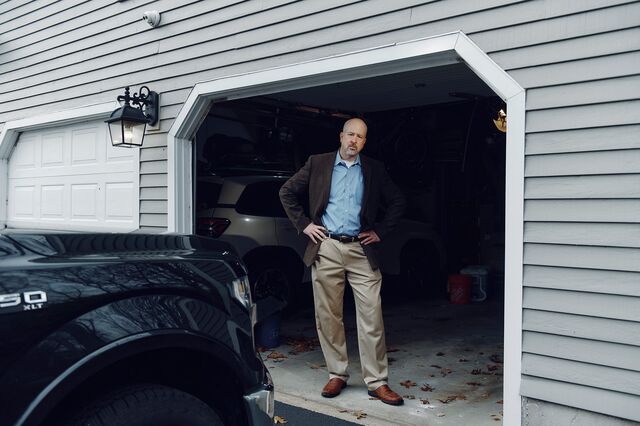
A group of five analysts assembled by the union plan scours claims looking for treatments with widely different prices. When they spot big variations, they try to get patients to go to the lower-cost option, as long as they believe they’ll get similar quality care.
“We're not changing their therapy in any way,” said Brian Cotter, the chief executive officer at Bright Spot Insights who works as a consultant with Unite Here Health. “It’s just switching where they get the therapy.” Cotter survived sarcoma as a child, and his wife is in treatment for the same disease right now – experiences that he said drive his determination to help people find more affordable care.
Ideally, they wouldn’t have to ask people to change providers at all. “These are cancer patients. They are very sick. They rely on their doctor’s judgement,” Krajcinovic said. She’d much rather see the higher prices come down.
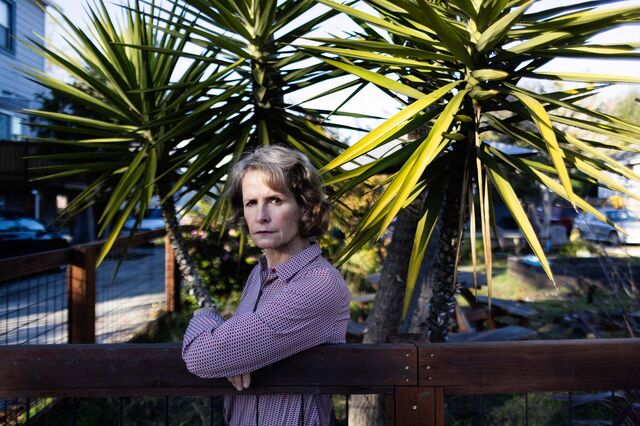
Over the past few years, the group has found that hospitals are a hotspot for outsized markups of all kinds. In one case, the plan paid almost $90,000 for a series of oxaliplatin infusions from Salinas Valley Health in Monterey County, California. By Unite Here Health’s calculations, that’s more than 700 times what Medicare would’ve paid at the time.
Oxaliplatin Price Drops 99% Following Launch of Generics
Medicare rate per 0.5 mg dose

When Krajcinovic asked the hospital about what she called an “extraordinary price discrepancy,” she said a representative told her that the health plan was only paying a small markup on the hospital’s acquisition price. They wouldn’t tell her what that cost was, only that it was comparable to other area hospitals’ rates, she said.
That didn’t seem believable to Krajcinovic: It was much more than Unite Here Health paid for oxaliplatin almost anywhere else in the country and far higher than listed charges at another local hospital. She also pointed out that Salinas Valley Health participates in a federal program for hospitals serving low-income patients that likely lets it purchase drugs at steep discounts.
Krajcinovic outlined all of this in a letter to the California Attorney General last year reviewed by Bloomberg News asking his office to investigate. A representative for the AG’s office declined to comment on any potential investigation and it has made no public indication that it’s pursuing a case.
Salinas Valley Health didn’t comment on the specifics of Krajcinovic’s account. A representative told Bloomberg News that it “understands why the historical charge for this medication raises concern” and that the previous price didn’t reflect the drug’s generic status. The hospital said it identified the pricing “discrepancy” during a leadership transition in late 2023 and responded by adjusting prices of medicines across its system, including lowering the standard charge for the cancer drug to $600 for 50 milligrams.
The acquisition cost ranges from $2 to $44 for 50 milligrams, Salinas Valley Health said; its pricing reflects the cost of staff, equipment and facilities. The hospital also said it loses money on many patients covered by government health programs, which influences how it negotiates with private insurers.
Salinas Valley Health’s public price list still shows the standard charge for oxaliplatin at $14,802 for 50 milligrams, as of the start of 2025. The hospital said the revised price will be posted in January.
For people with decent insurance coverage, the difference in price may not register — they pay a copay, whether the treatment costs the health plan $130 or $13,000. But those costs are eventually passed onto patients and workers. Unite Here Health calculated that markups on chemotherapy drugs specifically increased one of its plan’s per-member costs by almost $10 per month.
In Chicago, Martin only learned about the price discrepancy between the hospital and the clinic from the union health plan. When a Unite Here Health caseworker told her she could avoid a $100 copay by going to the clinic down the street for treatment, where she wouldn’t pay at all, she was happy for the savings. “I would’ve been stuck with a bill,” she said.
Even with insurance, Martin has drained her savings paying for medical and other expenses while on leave from her hotel job, where she made about $27 an hour. Meanwhile, she saved the health plan more than $13,000 on each infusion, which is the equivalent of about three months wages for Martin.
Indeed, the union has had to choose between funding wage increases at the expense of higher health premiums, said Ken Blair, a president of his union local in Connecticut. “In order to get a decent raise we had to lower our health care,” he said. “The prices go up, the copays go up.”
But for the 68-year-old who has multiple myeloma, that means higher health-care costs for him. He owed about $4,000 last year for medical expenses that his insurance didn’t cover. His health plan had to pay almost seven times the Medicare rate for one of his drugs, bortezomib, a drug approved more than 20 years ago that has since gone generic.
A transparency push initiated by the first Trump administration mandated hospitals and insurers reveal prices that had long been kept hidden to keep these very costs in check. Despite the threat of fines, some hospitals have been slow to comply, and when they do the data is often unwieldy.
Even when the costs are out there for everyone to see, some hospitals don’t have much incentive to lower prices. “In certain markets, the providers have such a concentrated position, it’s hard to get a discount or to get lower rates for infused drugs,” said Mark Miller, executive vice president of health care at Arnold Ventures, a philanthropy that aims to lower health-care costs.
Having data is also just a starting point. Krajcinovic and her staff spend hours pouring through claims data to track down “surreal” prices, she said. It can take months to identify excess costs, and either negotiate better rates or encourage patients to switch to lower-cost providers. When Unite Here Health does finally manage to lower its costs in one place, it often discovers another markup elsewhere.
Krajcinovic describes it like a game of whack-a-mole. “It’s a constantly shifting target,” she said. “It’s exhausting.”