The Fix for Solar Power Blackouts Is Already Here
Countries with the most renewables have become vulnerable to outages. Why are so few investing in grid-stabilizing tech?
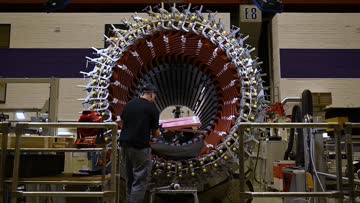
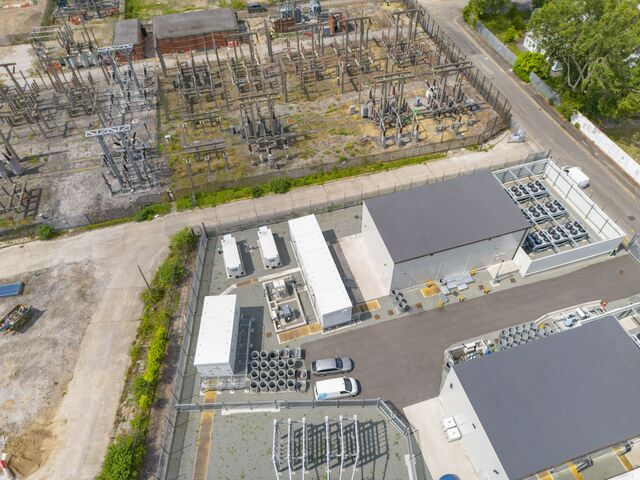
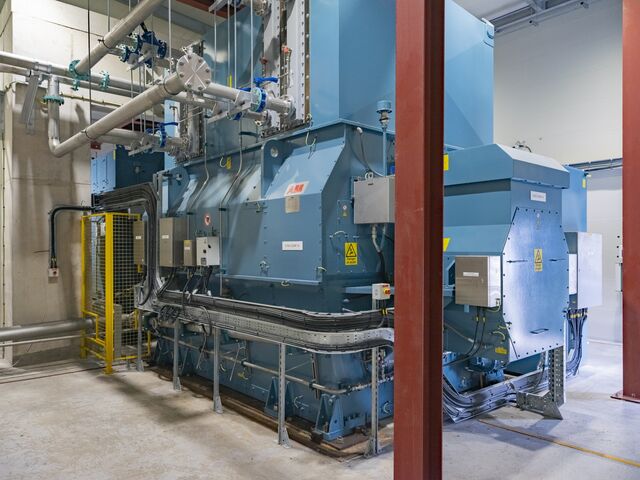
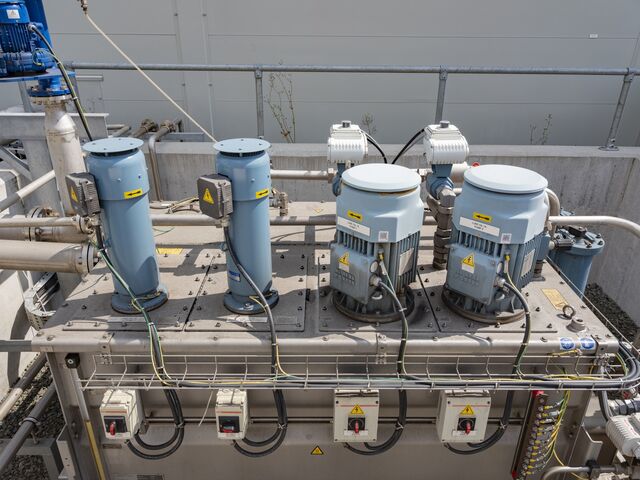
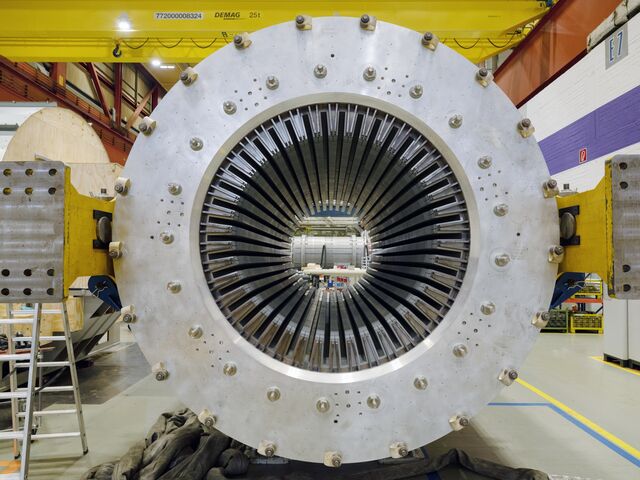
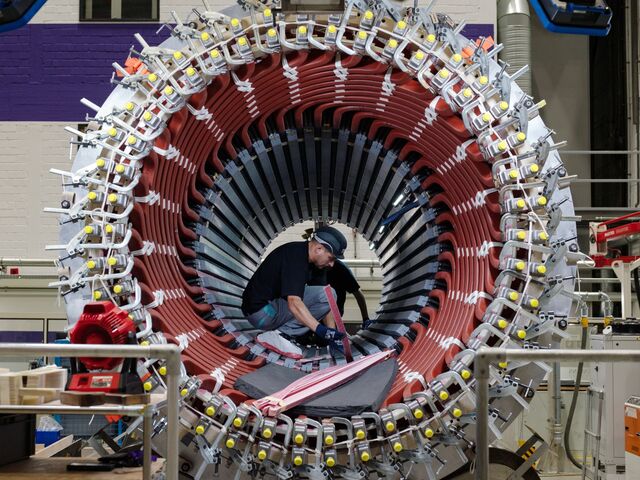
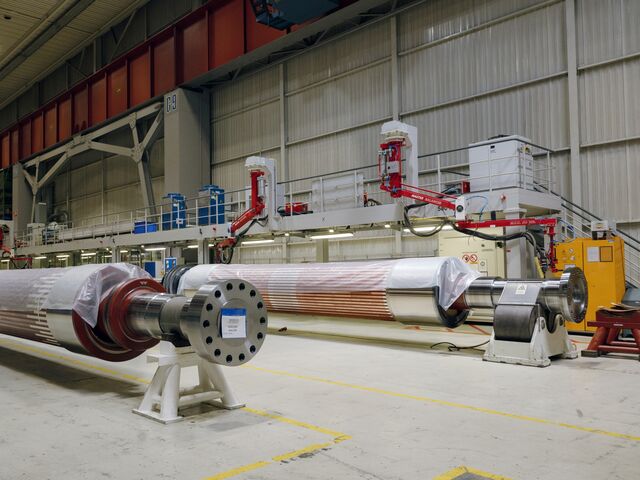
Between an abandoned market and a rusty, decades-old electrical substation in a rundown part of Liverpool sit two buildings with a shiny coat of white paint behind a high-security fence. This ordinary-looking site is considered “critical national infrastructure” because of what’s inside: two 95-ton cylinders with rotors turning 1,500 times per minute. It’s called a synchronous compensator, and it’s northwest England’s best hope of avoiding blackouts.
The UK’s grid operator pays a Norwegian power company to keep the rotors running at a fixed speed. And the service it provides is so valuable to the grid that the company, Statkraft, has nabbed orders to build four more of these around the country.
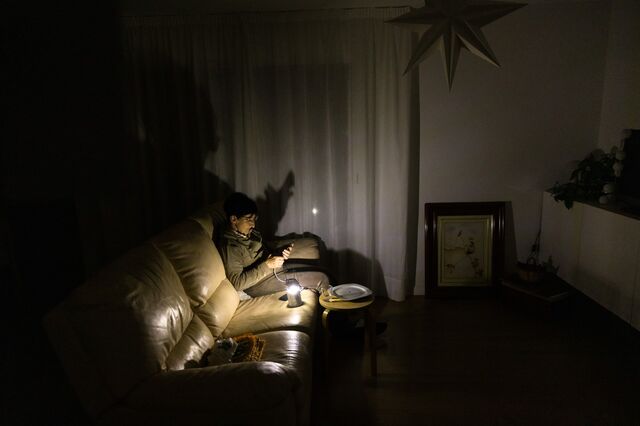
“If Spain had enough of these machines, the countrywide blackout could have been avoided,” says Guy Nicholson, head of zero-carbon grid solutions at Statkraft, while giving a tour of the facility. He’s referring to the April afternoon when Spain’s electrical network came to a screeching halt and the whole Iberian Peninsula went dark for nearly a full day — the worst outage in Europe’s modern history.
Solar farm outages had destabilized Spain’s grid, and there weren’t enough gas plants online to provide stability. Synchronous compensators could have kept clean power flowing at the right frequency and voltage, avoiding the blackout. But continental Spain doesn't have any.
This is the third story in Bottlenecks, a series examining the many obstacles slowing the transition to a cleaner, more electrified future. Read the other stories about the shortage of transformers and shortage of skilled workers.
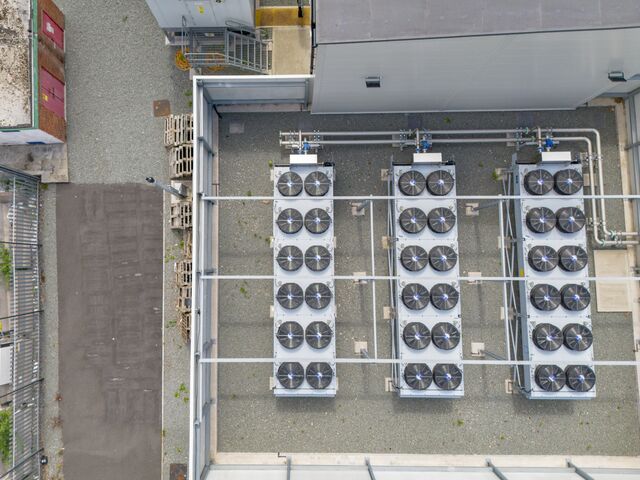
About every two weeks, the Liverpool grid experiences major faults like the one Spain suffered. Statkraft’s spinning machine is set up to react in less than a second. It can absorb excess power, if there’s too much, or inject power into the grid, if there’s too little. The result is a stable grid and no front-page headlines.
Yet the UK is an exception. In a rush to add vast amounts of cheap renewables to their power systems, countries haven’t been as quick to create regulations to help stabilize the grid and cut the risk of blackouts.
This lack of investment in stabilization can’t continue. Electricity's importance in the energy system is growing, with demand for power rising faster than for any other form of energy. At the same time, many world leaders have been forced to reckon with rising costs and climate goals. Solar power is a solution to all those problems.
It’s why countries have set aggressive goals. By 2030, the European Union aims to get 45% of its power from renewables, Australia wants to get to 82% renewables and the UK’s Clean Power Mission is to reach 95% carbon-free power.
The result is huge spending on new wind and solar capacity, but not enough on grids. The 27 members of the European Union and the UK invest on average $0.7 in grids for every dollar spent on renewables, according to BloombergNEF. Spain ranks the lowest, with only $0.3 spent for every dollar.
Blackouts are causing political backlash against renewables that politicians cannot afford right now. “Here’s the problem: Investments in the right infrastructure are not keeping up,” said António Guterres, head of the United Nations, in a July speech. “That ratio should be one to one.”
For some years, researchers have been warning about the increasing risk of blackouts as the share of intermittent renewables rises and spinning turbines, from coal and nuclear retirements, are taken off the grid. But grid operators are only starting to work on fixes after tragedy strikes.
Australia’s 2016 blackout and the UK’s 2019 outage — both initially blamed on renewables — led their respective grid operators to create incentives for the deployment of grid-stabilizing technologies. The result has been the countries have kept adding more solar and wind power. Spain is following suit, with new regulations passed in June after the crippling blackout that will enable more power generators to come to the grid’s rescue when needed.
Blackouts Haven’t Slowed the Renewable Boom
Installed renewable and fossil capacity, historical and projected

But the message is clear: Don’t wait for a blackout. “Grid operators need to update the infrastructure,” says German Kuhn, a grid-stability expert at Siemens Energy. “I wouldn't say ‘refurbishing’ because that’s what you do when something is old and you just have to make it new. Now you have to change it.”

The grid needs to be finely balanced at all times. An excess of supply can fry the network, while too much demand can lead to blackouts. Sudden changes in frequency caused by a power plant going down, say, send shockwaves through the system.

If the shifts are too sharp — more than 1 Hz — power plants or entire sections of a network will shut down. In very extreme cases, like Spain’s, entire countries can be plunged into darkness.
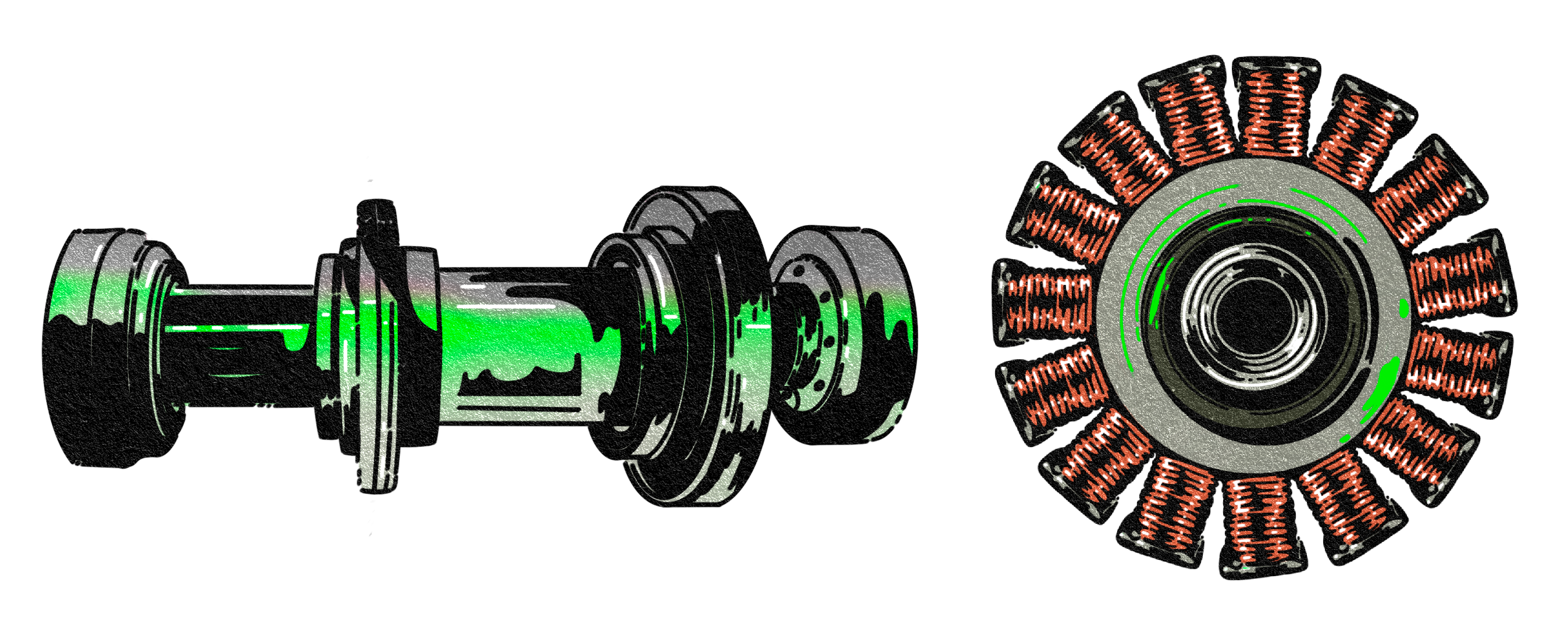
But there’s one thing that helps grid operators manage the frequency: inertia. It’s a fundamental physics principle that an object will remain in constant motion (or stationary), unless an external force acts to change its state. “Inertia provides system strength,” says Nicholson.
The greater the mass of the object that’s moving, the greater its inertia. These spinning turbines often weigh more than 100,000 kg and thus can stay spinning at the same exact frequency and help the grid regain balance, even if a solar or wind farm somewhere unexpectedly shuts down.
Solar photovoltaic cells are the only major source of electricity generation that has no moving parts and thus cannot provide any inertia. They generate electricity when radiation from the sun hits silicon, a semiconductor material, and causes electrons to flow.
As the share of solar power has increased in the grid mix, the amount of inertia has fallen. This is a problem grid managers have seen coming. Companies like GE Vernova Inc., Siemens Energy AG and Statkraft AS saw it as an opportunity to develop a line of products that could help, such as synchronous compensators. But it’s a wonky solution that only grid experts understood, until blackouts forced politicians to reckon with the problem. That was a “huge wake-up call,” says Kuhn.
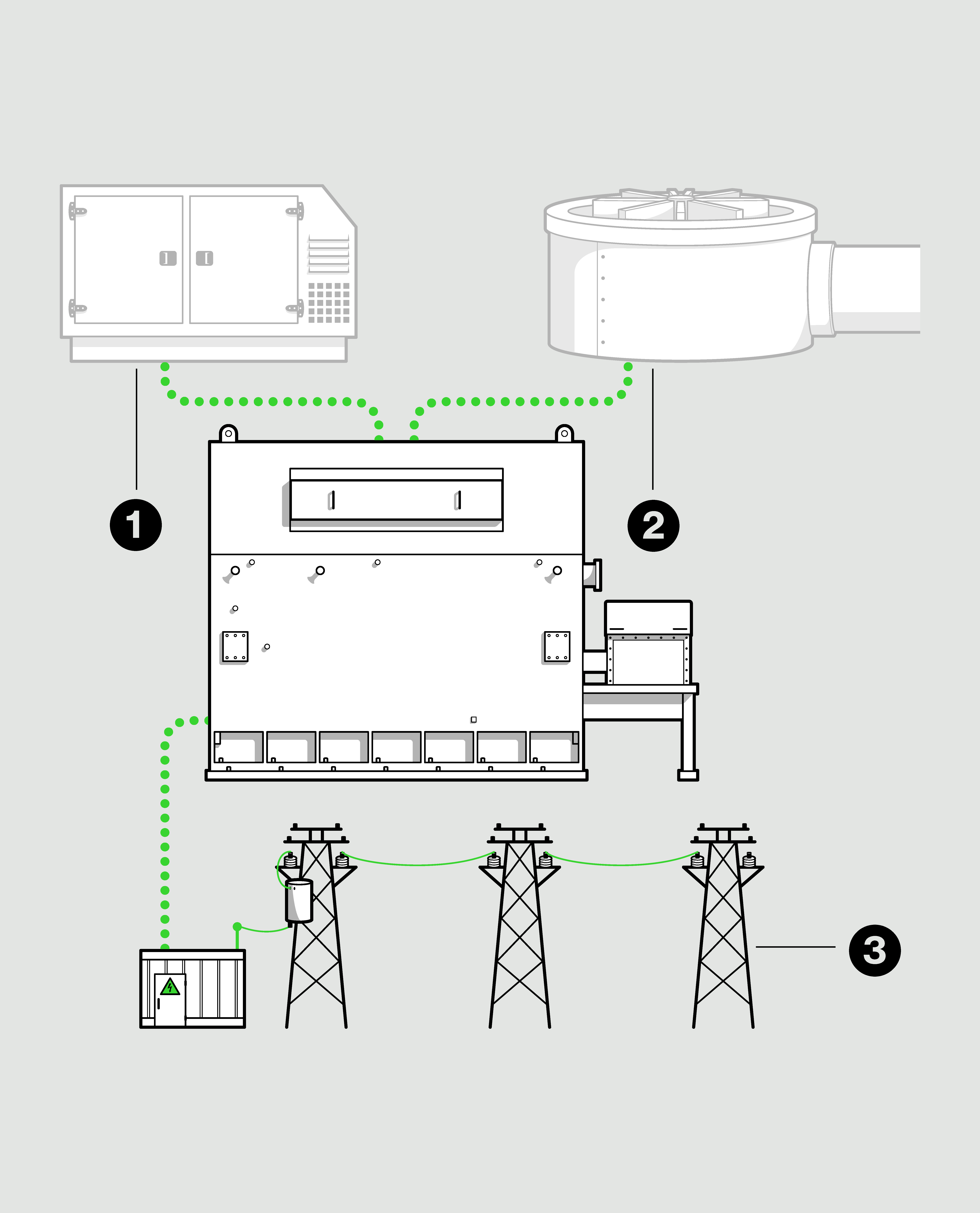
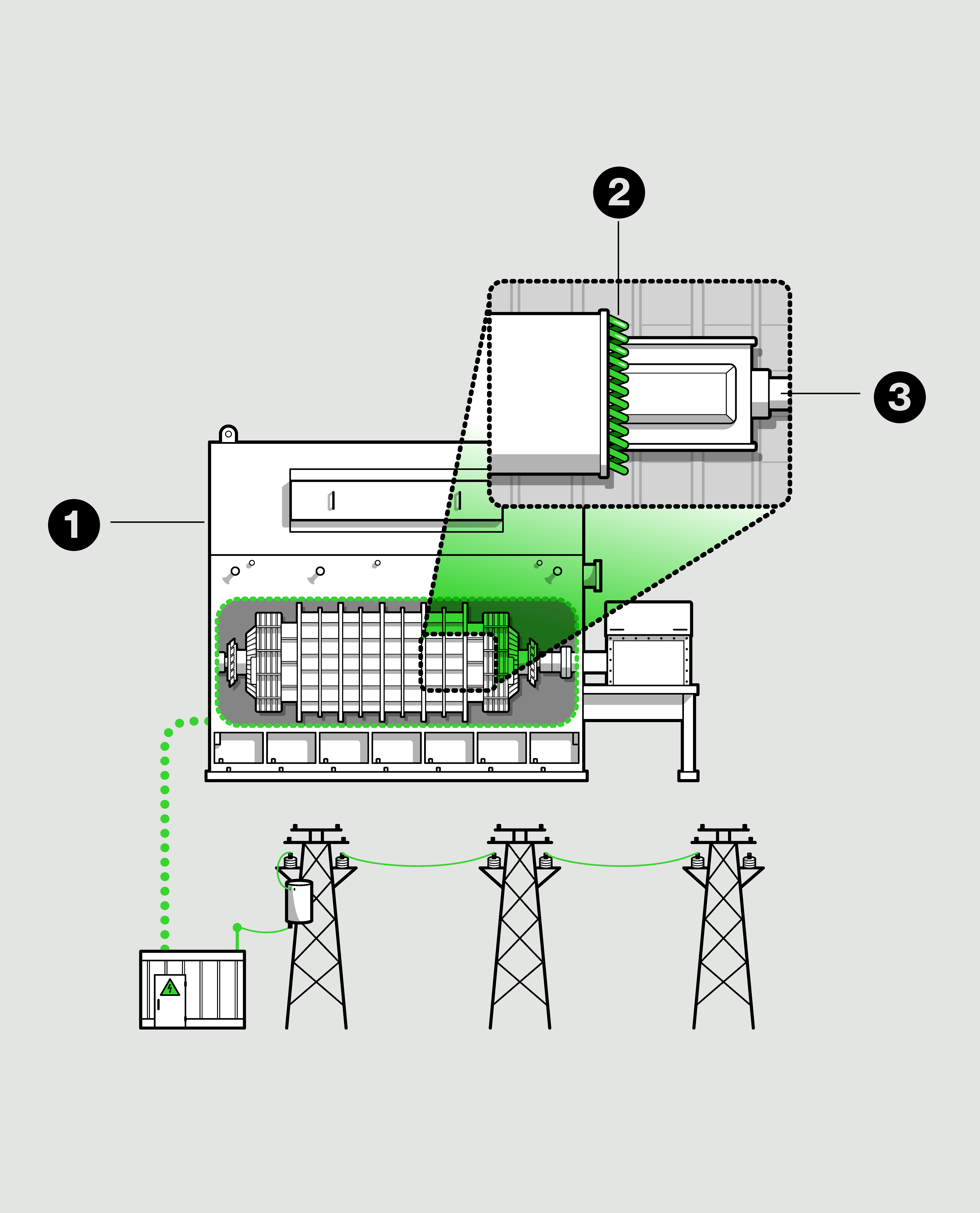
The UK suffered a major blackout on Aug. 9, 2019, that affected 1 million customers. It was caused by a lightning strike that led to automatic shutdowns of small-scale renewable plants, an offshore wind farm and a gas-powered steam turbine. Though power was restored within 45 minutes, the grid operator launched a program within months seeking technology solutions that could help provide inertia, as it expected more conventional turbines to be replaced by renewables.
Statkraft was ready with a solution: synchronous compensators. An electrical motor keeps a hunk of metal constantly spinning at a set number of rotations per minute. Clever circuitry enables the synchronous compensator to react to grid changes. Statkraft’s Nicholson compares the device to adding training wheels on a bicycle, just when it was about to start wobbling and long before it was due to fall.
Existing turbines can also be converted into synchronous compensators, as Ireland has done when it retired a coal-fired generator or Germany after it decommissioned a nuclear power plant. The Liverpool installation cost about £25 million ($34 million), and Nicholson says that installing 200 of these devices would resolve the UK grid’s need for inertia, allowing it to be powered by 100% renewables whenever possible.
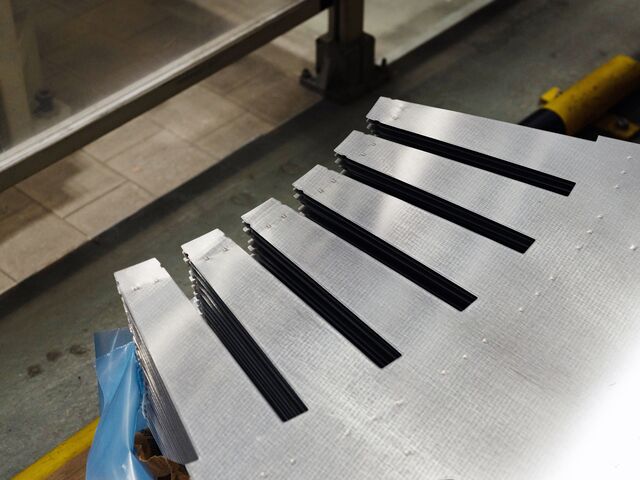
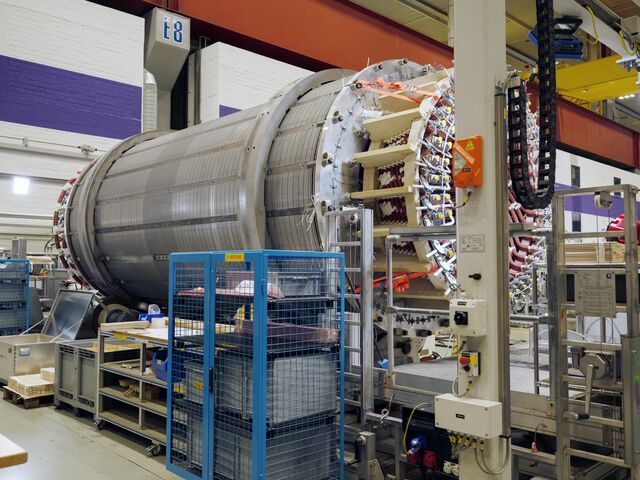
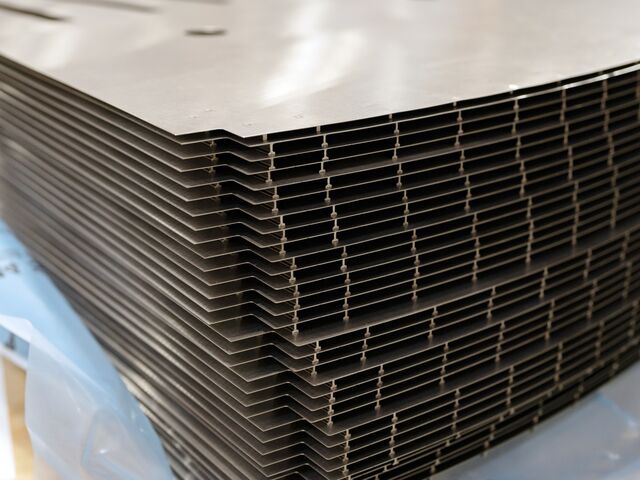
One day the grid will likely have no spinning devices. That’s because devices called “inverters” will do the job of creating “synthetic” inertia through computer-managed electrical signals.
Inverters are linked to solar, wind and battery plants. They convert direct current produced by those systems to match the frequency and voltage of alternating current on the grid. However, current inverters are passive or “grid following,” simply matching the grid’s variables, which is unhelpful when there’s disturbance on the grid.
Instead, arming these devices with smart electronics can turn them into “grid forming” inverters. That way, rather than amplifying faults on the grid, they can correct them by injecting extra power to stabilize voltage and frequency when needed.
“We’ve run grids for a hundred years with these synchronous rotating machines. Made them work pretty reliably and pretty well,” says Nicholson. “We are now changing the technology that the grid is running on.”
Grid Investments Aren’t Keeping Up With Renewable Boom

For example, in Australia, a giant battery system was installed in 2018 as a remedy after the grid suffered a major blackout in 2016. The system’s inverters were upgraded in 2022 to be able to provide synthetic inertia.
But it’s early days for this solution. “It's just that grid forming [devices] are a new technology and grid operators are not yet fully trusting how they work on the grid,” says Felicia Aminoff, BloombergNEF’s analyst for grids and utilities.
It’s not just a lack of investment causing the bottleneck — it’s also a dearth of the necessary regulations that would allow their use on the grid.
Legislation that could set up markets and regulatory frameworks to encourage companies to upgrade their grid equipment takes years to approve. The EU operates under rules approved in 2012 and has been working on an upgrade to the electricity network code for the past two years. This upgrade would in theory provide a framework for countries to set up their own stability markets, a necessary step toward encouraging companies to install devices like synchronous compensators and grid-forming batteries.
Even when the rules are greenlit, highly technical tender processes put together by grid operators mean installing a single device takes as much as five years, with renewable power coming up online at a much faster pace.
In Germany, the documents containing the technical specifications for grid stabilization machinery can be as long as 2,000 pages, according to Siemens Energy’s Kuhn. “The approval process should be shortened,” says Kuhn.
After major blackouts in Australia and the UK spurred changes, Spain is the next country put to the test on how fast it can upgrade its legislation. Just two months after the outage, there are encouraging signs.
Spain’s Solar Output Bounces Back Weeks After Blackout
Solar’s share of daily energy generation in Spain, 7-day moving average

On June 19, Spanish regulator CNMC approved a revision of rules aimed at keeping voltage on the grid stable that had been stalled for months. The new rules open the stability market — previously accessible to gas and nuclear power operators only — to wind and solar power plants. That step will encourage renewable operators to install devices to provide stability because they will get paid for it.
Spain's grid needs synchronous compensators and grid-forming inverters to handle voltage instability as more solar capacity comes online, the government investigation into the catastrophic April 28 outage concluded. At stake is not just the country's ability to keep the lights on, but its bold bet to outpace the EU's clean energy targets and generate 81% of its power from renewables by 2030, from just above 50% in the past two years.
It’s clear that countries speed up the deployment of grid-stabilizing technologies after suffering damaging blackouts. It’s happened in Australia, the UK and now Spain. The lesson for others is to start investing in synchronous compensators and grid-informing inverters today, which will carry a cost but it will likely be lower than the cost of a severe outage.
“There’s been a mantra that renewables may be cheap, but the cost of integrating them is huge,” says Nicholson. “That’s actually not the case at all.”