

Understanding Kamala Harris
Who she is, and what she might do if she wins.
As she finished laying her trap for Donald Trump on the night of Sept. 10, Kamala Harris turned to offer her pitch to Americans for why she, not he, would be the best person to hold the office of president of the United States. At Trump’s rallies, she told viewers, people leave “early out of boredom and exhaustion.” But while you’re there, “The one thing you will not hear him talk about is you. You will not hear him talk about your needs, your dreams and your desires,” she said. “You deserve a president who actually puts you first, and I pledge to you that I will.”
When the debate ended, talk centered on how she’d provoked Trump into attacking her over crowd sizes instead of the question’s subject, immigration. How it had led him to invoke a racist hoax that immigrants in Ohio were eating pets. And how it had all presaged a night on which she’d gotten under his skin.
Harris spent much of the debate making the case that the election is fundamentally about character and temperament and that she represents an opportunity to turn the page from Trump, now in his third consecutive presidential race. The sentiment has great appeal for Democratic loyalists, who aren’t overly burdened by questions of what she’d do in office. For many of them, she’s simply the woman who’s standing between Trump and another term and who could shatter the ultimate American glass ceiling in the process.
But for swing voters who don’t reflexively hate the former president or are just tuning in to the race now, Harris’ policy agenda, and especially her economic agenda—on inflation, taxes, tariffs, China—may resonate more. A Sept. 8 New York Times/Siena College poll showed that almost 30% of likely voters wanted to know more about her—and that 66% of those people wanted to learn about her policies, eight times the share who wanted to know about her character.
Harris describes herself as an underdog, but she’s campaigning like a front-runner. She’s given only a handful of interviews since becoming the nominee, betting that being pinned down on policy may not be to her advantage. (Her campaign didn’t agree to interview requests for this story.) But she’s been in public life for decades, and her history offers some indication of how a Harris term might play out. For additional insight, Bloomberg Businessweek spoke with people who’ve worked with or opposed her over the years, and dug into several interviews dating to 2005 that Bloomberg News’ Karen Breslau conducted with Harris, her mother and other family members.
On the economy, Harris has veered to the middle, reversing some of her positions, and signaled she’s pro-growth. She pitches her deliberateness and predictability as superior to Trump’s fixation on tariffs and his brazen transactionalism, which could remake the rules for American business. She’s floated an expanded tax break for new small businesses and a softer stance on cryptocurrency. Her rise in the San Francisco Bay Area familiarized her with the giants that power Silicon Valley’s growth, but she also flexed her watchdog muscles as California’s attorney general, targeting banks and for-profit colleges for predatory lending practices. She’s pledged to raise taxes on corporations and high earners and to increase the capital-gains tax, albeit to a lower rate than Biden’s target. Her track record suggests she’d push for stronger regulation of companies and stoke an antitrust agenda that’s riled even some prominent Democratic donors.
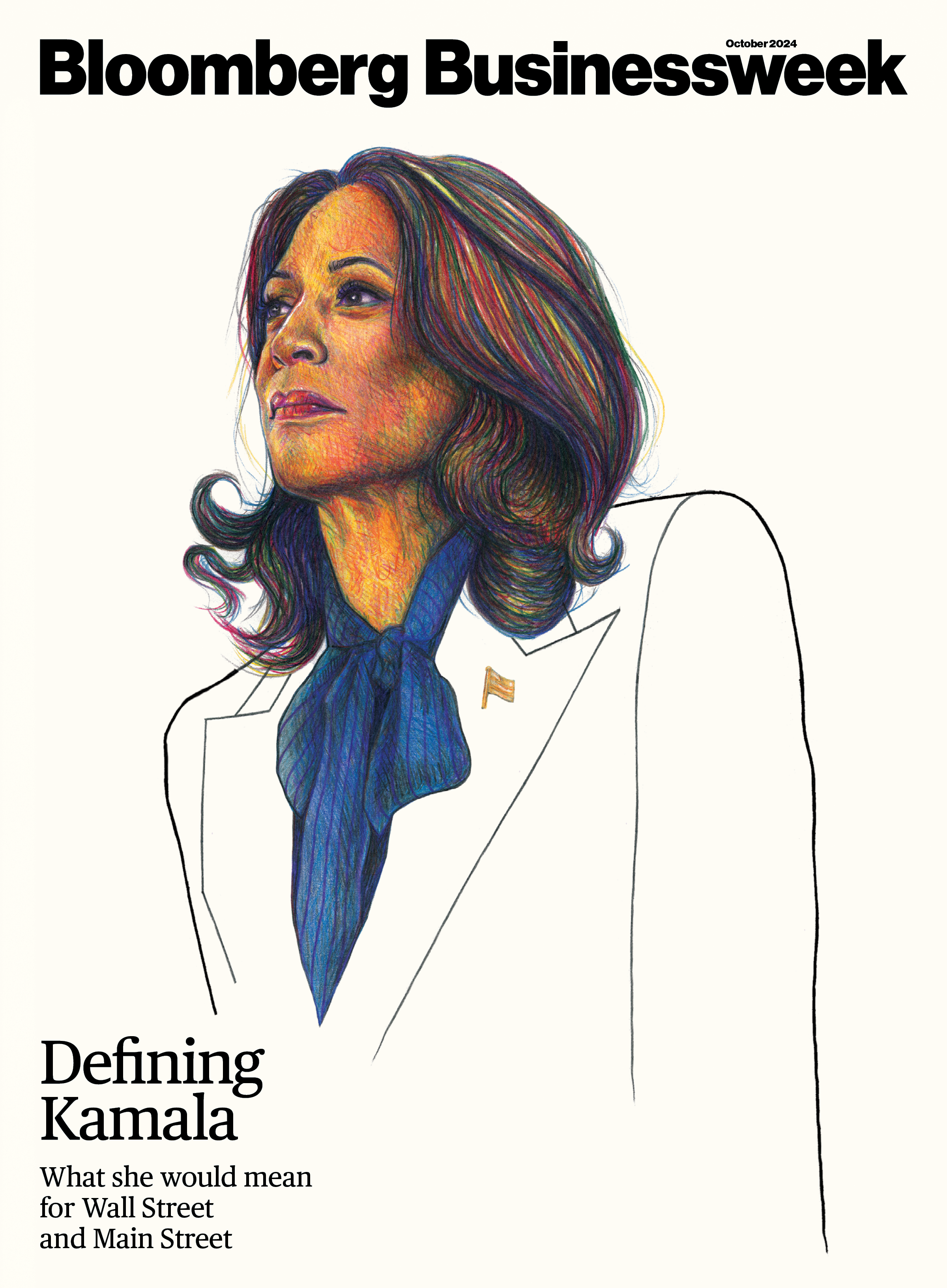
So which version of Harris would Americans get? The liberal or the moderate? The idealist or the pragmatist? The innovator or the incrementalist? Current and former aides contend that, while Harris wants to hold bad actors accountable, she’s all of the above—guided by values but pragmatic and open to compromise.
She has precious little time left to tell voters who she is and what she’d do as president. The campaign’s final weeks will pit her assertion that she’s a middle-class champion against Trump’s effort to paint her as a coastal liberal and an incumbent responsible for inflation and a porous border. And even if she succeeds in the seven battleground states she needs to win the presidency, her legislative agenda almost surely depends on helping hold a key Senate seat in Montana, too.
Harris says she’s building a movement. If it’s to become a revolution, she’s got important voters left to convince.
Harris was born in Oakland in 1964 to immigrant parents, a father from Jamaica and a mother from India. Both were graduate students and civil rights activists at the University of California at Berkeley. The protest movement underpinned Harris’ upbringing—her mother, Shyamala Gopalan Harris, who researched breast cancer, described to Breslau how she’d take young Kamala along to demonstrations: “When we chanted ‘What do we want?’ she would say ‘Fweedom!’ ”
Shyamala was loving and demanding with Harris and her younger daughter, Maya, born in 1967. She imparted lessons to her girls. One was to never ask anybody for money, an aversion Harris has had to shake as a politician. Another became an applause line for Harris at the Democratic National Convention: “Never complain about injustice, but do something about it. Do something about it.”
Harris studied in Washington, DC, at Howard University, a historically Black institution, and was a member of a Black sorority, both sources of political power for her today. While she was in college, she worked at McDonald’s—a résumé item Trump has baselessly called a lie—and at the Federal Trade Commission’s press office and the Bureau of Printing and Engraving.

She went on to law school in San Francisco. Shyamala saw a common thread between her daughter’s choice and her own vocation as a scientist: logic. “You cannot draw the right conclusions if you’re not logical,” Shyamala said in a 2008 interview. “The only problem with law which the scientists don’t encounter is the confounding factor of human beings.”
That factor defined Harris’ early career. She became a prosecutor, starting out in Oakland as a deputy district attorney for Alameda County. The choice appeared to some to be at odds with her social justice roots. “A lot of folks thought, ‘Well, this doesn’t follow,’ ” Harris told Breslau in 2012. “I decided that let’s not accept false choices about what it means to be a voice for the voiceless,” she said. In Alameda County she specialized in prosecuting child sexual assault cases.
Change comes slowly in America, then quickly. In the early 2000s, San Francisco had never had a woman district attorney, let alone a woman of color. Harris decided to run for the job anyway. Her mother reminded her that Americans historically didn’t have women do two things: “protect their safety and protect their money,” Harris recalled in a Newsweek interview with Breslau in 2005.
The road to political power in California runs through San Francisco’s clubby Democratic elite. It produced Nancy Pelosi, Dianne Feinstein, Gavin Newsom and Willie Brown, who was the city’s mayor and, before that, the self-proclaimed “ayatollah” of the state assembly. Harris was familiar with that world—she’d gone to law school with Pelosi’s daughter and briefly dated Brown in the mid-1990s—but she wasn’t of it. Still, she defeated the incumbent, Terence Hallinan, the pot-smoking scion of another old San Francisco family, painting him as a soft-on-crime progressive. Democrats often give “the impression that we just want to open up the jailhouse door and let everybody out,” Harris said a few years later. “That is not the case at all.”
She began as DA in January 2004, working from the Hall of Justice, a concrete hulk nicknamed Beirut West by attorneys who worked there. Her office was then at war with the San Francisco Police Department over her predecessor’s progressive agenda. Within months a crisis erupted: Isaac Espinoza, an undercover police officer, was shot dead by a teenage gang member wielding an AK-47. Harris announced before Espinoza’s funeral that she wouldn’t seek the death penalty, to which she has philosophical objections. (California’s last execution was in 2006.) The declaration was explosive. Rank-and-file officers turned their backs on her at the Hall of Justice, and Feinstein criticized Harris’ decision at Espinoza’s funeral. But she stuck to her position, writing in the San Francisco Chronicle that “there can be no exception to principle.” Her office prosecuted Espinoza’s killer, and he was sentenced in 2007 to life in prison without parole. Harris won a second term that year, running unopposed.
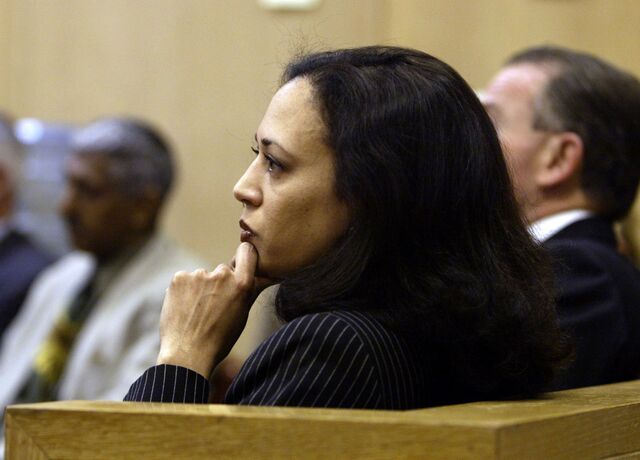
Her tenure as DA was marked by efforts to boost conviction rates for violent felonies and divert first-time, nonviolent offenders into a rehabilitation program she developed. She distinguished herself, too, by focusing on child welfare, even creating a waiting room with small chairs, teddy bears and books kids could read while their parents conducted their grim business at the Hall. “We have to always think about children because the reality is they don’t have a voice at all in so many systems,” she told Breslau in 2012. “And whatever impacts a child will impact what in a very short time will become an adult—for their life.” One of her headline proposals in this election is aimed at kids: a beefed-up $6,000 tax credit for families in the first year of a child’s life.
Harris came to identify herself as “smart on crime,” making that the title of a book she co-authored and published in 2009. “This is part of my methodology,” she reflected a decade later. “Let’s try and identify the false choices and fight them.”
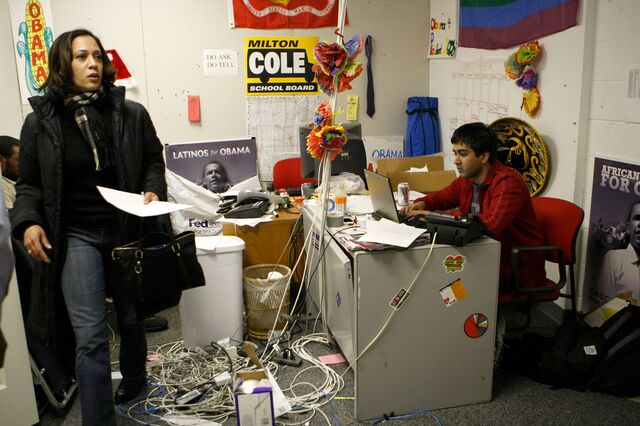
Even as DA, Harris was turning an eye to national politics, working for John Kerry’s campaign and door-knocking for Barack Obama in Iowa. She was also mending fences with people who could help her get to that stage, notably Feinstein. “She is a real role model,” Harris said in 2008, “when a woman is ever battling the need to be taken seriously and be understood to be strong and tough, but not wanting to come off being the you-know-what.”
While California’s tech culture favors young disrupters, the state’s sclerotic political culture keeps them waiting. Harris spent her 30s and 40s challenging older incumbents. With her was Newsom—a foil of sorts, the insider to her outsider, a fifth-generation Californian born into a prominent San Francisco family. He’d become mayor the same month she became DA on his way to being elected governor of California. “They were like political sibling rivals,” says Brian Brokaw, a Democratic strategist who worked on campaigns for both. “Eventually they worked it out.”
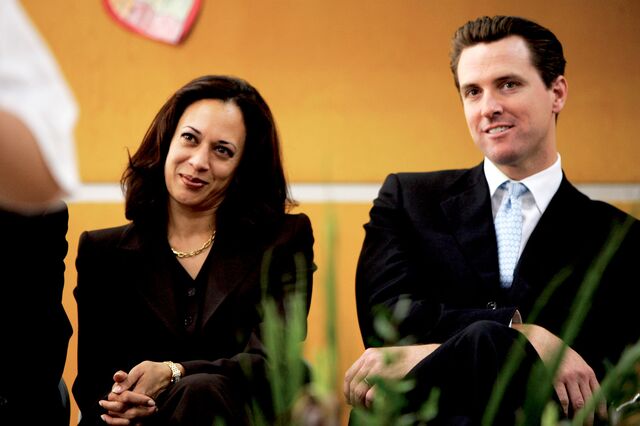
In 2010, still grieving her mother’s death the year before, Harris ran for attorney general. The race was closely fought. Harris beat her opponent, Republican Steve Cooley, with a margin of under 1%. Cooley recalls racking up endorsements from law enforcement and still today casts Harris as hostile to police. “She has had a phenomenal rise to the most important position in the world. I think it has not been on the merits. It’s been on the basis of her shrewd calculations,” he says. “I think she is wholly underqualified.”
As attorney general, Harris kept her focus on kids and the root causes of crime, including by prosecuting the parents of habitually truant students and forming a Bureau of Children’s Justice in 2015. Its goal was to disrupt the school-to-prison pipeline and identify underlying problems that set kids up for failure. Jill Habig, her deputy at the California Department of Justice, recalls that Harris would often bring issues back to children. Habig might be talking about “foreclosure rates and eviction rates and what’s the amount of money we’re getting for families,” and Harris would ask questions like “What do we know about the kids in these families?”
Habig says the angriest she ever saw Harris was during the case against Corinthian Colleges, a for-profit university system based in Southern California that had loaded vulnerable students with debt. “These are people who are trying to do the right thing. They’re trying to invest in their education, invest in their financial livelihood, pull themselves up by their proverbial bootstraps, live the American dream,” Habig remembers Harris saying. “And they’re just being scammed at every turn.” Harris won a $1 billion settlement against Corinthian—a victory she frequently invokes alongside Trump University, a failed venture that saw Trump agree to pay $25 million to settle claims it cheated students.
Bigger still, at least in financial terms, was her fight against major home lenders over their foreclosure practices, which saw her win an $18 billion settlement, plus an additional $2 billion as part of a federal case. That fight was conducted with Delaware’s attorney general, Beau Biden, bringing her onto the radar of his father, Joe. She asked California Representative Katie Porter, then a professor at UC Irvine, to monitor whether the settlement money was reaching victims. Harris “came to UC Irvine and sat down with people who’d lost their homes,” Porter says. “She made time to listen to the people most affected.”
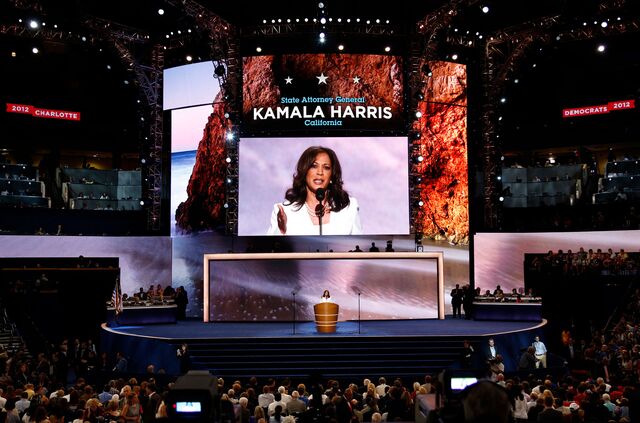
In Harris’ 2019 book, The Truths We Hold: An American Journey, she wrote that she relished her work on behalf of consumers. “I loved being the voice and advocate for the people they’ve mistreated. The lawyers on my team knew how serious I was about holding corporate predators accountable. They would joke that ‘Kamala’ meant ‘get more commas in that settlement price.’ ”
Harris made early visits to Airbnb, Dropbox, Netflix and Palantir and came to be viewed as tech forward, interested in the disruptive potential of these nascent businesses. An informational meeting with Palantir’s chief executive officer, Alex Karp, was scheduled for 30 minutes yet lasted more than three hours, according to Travis LeBlanc, who advised Harris as AG. She understood, LeBlanc says, “that it was important to allow a playing field for disrupters to disrupt.” On the other hand, she knew “it wasn’t meant to be the wild, wild West.”
This approach was evident, LeBlanc says, in an agreement Harris struck with mobile app developers in 2012 to require that their apps include clear privacy disclosures, as well as in a meeting she convened in Los Angeles after Hollywood studios complained that Amazon Marketplace was facilitating the sale of pirated DVDs. After the gathering, Amazon initiated a trial project that let the studios identify authorized sellers so it could crack down on everyone else. “She has a lot of tools in her tool chest,” LeBlanc says, “and she’s going to use the one that she believes is most appropriate.”
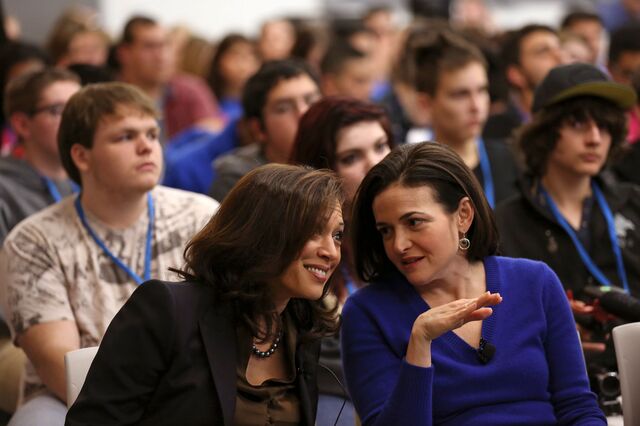
Harris met Doug Emhoff on a blind date and married him in 2014; his two children from his first marriage famously dubbed her Momala. As her personal life settled, she set her career sights higher. Rumors were swirling that Senator Barbara Boxer wouldn’t seek another term, and Cory Booker—a friend of Harris’ and the Senate’s only Black Democrat—decided to pitch her on running. “It was stunning to me how much lack of diversity there was,” he says.
The two met up, both bursting to speak. As Booker recalls, he went first, rattling off his case. “I gave her a whole bunch of the wisdom I had gained,” he says. “Come here, run for Senate, get out early, you’ll collapse the field.”
Harris listened until it was her turn to talk. It wasn’t Boxer’s seat she wanted to discuss. “She told me I needed to get married,” Booker remembers, laughing. “She really wanted to impress upon me that—screw the public life, the public life and public calling, all of that is really important, but the most important thing in life is to find a good person and get married. … She had married the love of her life. She was really on a high.”
Boxer departed, and Harris did run, collapsing the field as Booker had predicted thanks to endorsements from Obama and other prominent Democrats. In January 2017 she joined the Senate, a painstaking institution where she was at times plainly restless but made a name for herself with her interrogations on the Judiciary Committee.
Her progressive and prosecutorial background shone through in the dozens of bills she proposed, even if most of them stalled out, a common experience for senators. (A version of one, raising the penalty for lynching, became law while she was vice president.) She sought to strengthen migrants’ right to an attorney, to increase border agents’ use of body cameras and to bar the Department of Homeland Security from using federal funds to expand immigration detention centers. She put forth one bill that would have given state AGs the power to investigate national banks and another to require Federal Reserve banks to interview at least one woman and one person of color when searching for a new president. She proposed legislation for a middle-class tax credit and for a generous tax credit for renters. Many of her bills tried to help kids, including one aimed at studying how to alleviate care gaps by better lining up the school day with the workday. She tried to codify penalties for sharing intimate images without consent and to compel Spanish-language labeling on pesticides.
Those efforts all foreshadowed her attempt to court the Democrats’ left flank during her 2019 presidential run. She professed to support the Green New Deal, a version of Medicare for All and some mandatory gun buybacks, as well as bans on fracking and, by 2040, the sale of gas-powered cars. She spoke out in defense of those who cross the border illegally. And she barely mentioned her time as a prosecutor, in keeping with an era when the Democratic Party was seized by criminal justice issues and facing calls to defund the police.
Her presidential bid flamed out before the first primary, as she found herself strapped for cash and trapped between the progressive and moderate camps even within her own staff. But Biden, looking to leverage her background as a prosecutor and appeal to women and people of color, tapped her as his running mate.
Harris chalks up her shift away from her 2019 stances to the consensus-building favored by her boss, the Democrats’ flagship centrist. One former aide and longtime ally, Senator Laphonza Butler of California, says, “What reporters are describing as a change in position is the fact that she’s gotten to know more people in this country.” She describes Harris as “more seasoned,” adding, “when you are able to find that there is common ground between the farmers that you were working so hard to protect and defend as attorney general [and] the farmers that you hadn’t even met in Iowa … that definitely broadens your experience and perspective.”
Rather than Medicare for All, Harris came to emphasize defending Obamacare and to favor measures such as expanded caps on out-of-pocket expenses. She says she’d pursue an assault weapons ban and more background checks but not mandatory buybacks. She no longer wants to ban fracking and has fallen silent on phasing out combustion engines. On immigration, she supports the bipartisan bill that collapsed under pressure from Trump, which would have added thousands of enforcement personnel, expedited asylum claims and funded border wall construction.
Aides say Harris isn’t interested in fussing over wonky details about programs so much as in considering their effects. “She’s going to think about the people at the center of every policy that oftentimes can be seen as just words on a page,” Butler says.
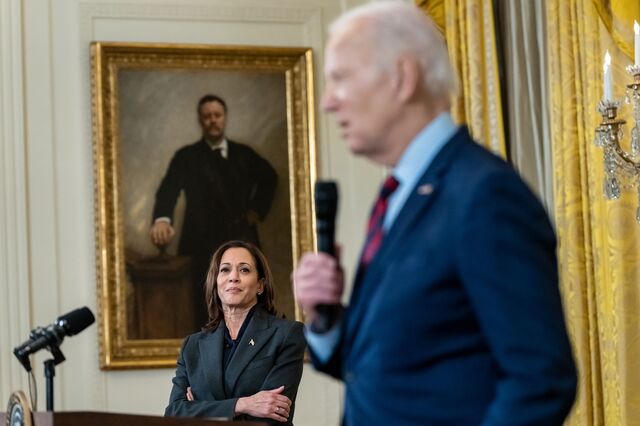
As vice president, Harris struggled to find her footing at times. She took on a role aiming to curb migration from Guatemala, Honduras and El Salvador while border crossings skyrocketed. She advocated for economic initiatives such as canceling student debt and marshaling capital commitments for community lenders, which she sees as a vehicle to spur small-business growth for entrepreneurs whom big banks might turn down. The Supreme Court’s Dobbs decision thrust her into the spotlight on abortion rights, a key issue for Democrats ever since.
She also fostered ties with other prominent Black lawmakers and marked historical moments such as the confirmation in 2022 of Ketanji Brown Jackson, the first Black woman to serve on the US Supreme Court. As Harris presided over the Senate vote, she huddled with two other Black lawmakers, Booker and Raphael Warnock, the pastor whose Georgia runoff win helped give Democrats an outright majority in the chamber.
It’s a story Booker and Warnock have told since: Harris urged them to write a letter to the next generation. “She made that suggestion to us—you know, the way Black women make suggestions,” Warnock later deadpanned at a Harris rally. She’d pulled out stationery with her vice presidential seal and handed a piece to each of them. Warnock wrote immediately to his daughter. Weeks went by before Booker wrote his. Speaking to a delegation at the DNC, he described Harris’ request as a metaphor for the sacrifices of past generations. “They wrote their love letters to us, and they wrote them in tears, they wrote them in sweat, and at times they wrote them in blood,” he said. “Now, Kamala Harris wants us to write our letter.”
Harris has talked about how diversity, including among her own staff, helps drive better decisions, even as she’s brushed aside questions about her multifaceted background and cast it as unremarkable to her. “It’s all of who I am,” she said in 2008. “It’s more difficult for other people to figure it out than it is for me to figure it out. This is my life.” Yet she also sees a need to break down barriers. When you hit them, she told an audience drawn from Asian American, Hawaiian and Pacific Islander organizations earlier this year, “you need to kick that f---ing door down.”
Harris’ rise was accompanied by persistent rivalries and cool relationships with some in the party, including Pelosi. “You never saw Kamala at any of Nancy’s events,” says a supporter of both women who asked not to be named discussing a personal relationship. Asked on CNN in September 2023, with Biden’s already rocky reelection campaign gearing up, whether Harris was “the best woman for the job” of vice president, Pelosi responded that as long as Biden thought so, “that’s what matters.”
As Biden’s age crept into view during the campaign, Harris wasn’t always his undisputed heir apparent. Prominent Democrats, including her old friendly rival, Newsom, vaulted to the national stage, positioning themselves for any race to replace Biden. After the president’s disastrous June debate with Trump triggered a national hand-wringing jamboree, Democrats began saying openly that Biden should step aside. Pelosi delivered a particularly devastating call for him to reconsider staying in.
And as for Harris? “You didn’t hear a hint from her of disloyalty,” Booker says. When Biden finally posted on X on Sunday, July 21, that he was withdrawing from the race, he endorsed her only 27 minutes later. She hadn’t had to kick the door down. They’d spoken that morning, with Harris at home preparing to do a puzzle with her grandnieces. She immediately got to work rallying support, and once again she collapsed the field.
Her calls that day included one to freshman Representative Jasmine Crockett of Texas, who has gained notice, much like Harris, for sparring with Republicans at hearings. Harris might have devoted that time to calling a donor or a congressional leader, Crockett points out. “I qualify as none of those categories, but somehow she found time to call me,” she says.
Harris faced the prospect of a fraught primary fight that might have displaced the first woman of color to be near the top of a presidential ticket, but no one came forward to challenge her. By Monday she was taking the reins of the Biden-Harris campaign, entering at its headquarters in Wilmington, Delaware, to Béyonce’s Freedom, in echo of her childhood cries in California. Fundraising surged, and volunteer ranks ballooned. Crowds began turning out for her rallies, both alone and with her running mate, Governor Tim Walz of Minnesota. Pelosi endorsed her, too, appearing with her at a fundraiser.
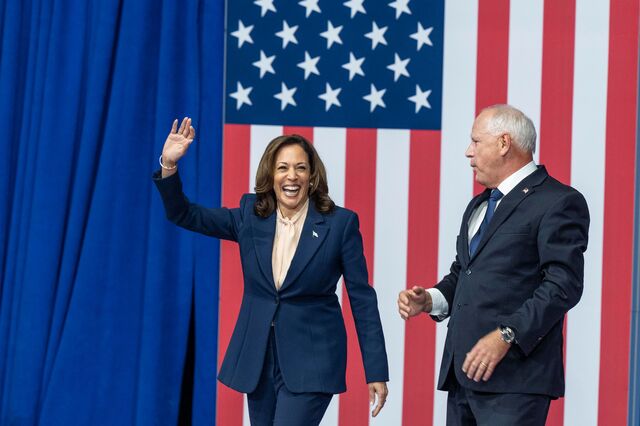
In a private exchange at a rally in Wisconsin, the vice president told Kelley Robinson, president of the Human Rights Campaign, a nonprofit focused on LGBTQ advocacy and political action, “This isn’t just a campaign, this is a movement,” Robinson says.
Republicans acknowledge that Harris has reset the race, but some still like their chances. “At the end of the day, this is still a California liberal,” says Mick Mulvaney, Trump’s acting White House chief of staff for just over a year. “That’s a really short elevator speech.”
Faced with Trump’s attacks over immigration, inflation and her liberal record, Harris has kept mainly to her campaign stops and rallies, shattering fundraising records while eschewing interviews and making few policy commitments. This strategic ambiguity is her path to cobbling together the disparate coalition of voters she needs to fend off Trump and his fervent base. She’ll aim for gains among suburban voters and strong independent and Black turnout and to limit losses in rural, Whiter areas.
On the campaign trail, Harris frequently visits small businesses—a barbecue joint in Georgia, a Mexican restaurant in Arizona, a sandwich place in Pennsylvania. It’s a shift from Biden, who favored manufacturing as shorthand for US economic health. The “opportunity economy” Harris says she wants to create—she used the phrase three times during the Sept. 10 debate—would include the increased child tax credit, expanded credits for new small businesses and $25,000 in aid to first-time homebuyers.
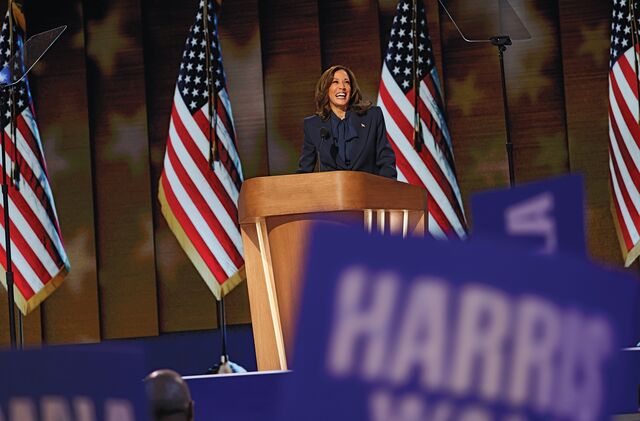
Harris’ campaign has said she supports nearly all the new taxes in Biden’s latest budget, teeing up a potential starting position in 2025 negotiations over the tax code. Tax cuts and credits for middle- and lower-income families would be more than paid for by a projected $5 trillion in new revenue over a decade. This money would come in part from increasing the corporate tax rate from 21% to 28%, raising taxes on billionaires and collecting more Medicare taxes from business owners and high earners. While such measures target the wealthy, New York Governor Kathy Hochul says Wall Street shouldn’t worry—Harris will deliver “the same they always get under Democratic administrations: a robust economy, strong stock markets.”
Brian Nelson, one of Harris’ top policy aides, calls expanding the middle class her North Star. “That means stable rules, that means sound economic management,” he says. Harris has pledged to go after corporate landlords who collude to drive up rents and pharmaceutical companies that impose predatory prices. “She really thinks about accountability,” says Habig, the former Harris deputy in California. “Like, how do we build a market and an economy that actually works for people, where people know what they’re getting and where companies can actually innovate and build a business knowing that they’re not going to be undercut by another business that’s just cheating.”
That extends also to Harris’ approach to crypto, a sector that’s bristled at the skepticism of Securities and Exchange Commission Chair Gary Gensler. Harris will “support policies that ensure that emerging technologies and that sort of industry can continue to grow,” including “stable rules,” Nelson says. That softer stance is a victory for crypto advocates such as Representative Ro Khanna, a Bay Area progressive and Harris backer. “I think it’s a step in the right direction,” Khanna says. “I hope they will build on it.”
Harris has been silent on whom she’d choose to help her navigate the economy. She’s avoided mention of party folk heroes such as the antitrust crusading duo of Lina Khan, the FTC chair whose removal some prominent Democratic donors have advocated for, and Assistant Attorney General Jonathan Kanter. For a former FTC intern and antitrust enforcer like Harris not to speak in support of Khan’s work shows how reserved she’s being. Aides say her reticence is in part because she doesn’t want to be seen as measuring the drapes at the White House, but it’s left donors and critics guessing.
In Harris’ drive to court middle-class and swing-state voters, her campaign has shifted starkly from Biden’s in one respect: She and Walz have swaddled themselves in Americana, with rallies awash in red, white and blue. “They don’t have a monopoly on the flag. We took the damn flag back,” Walz said at a late August fundraiser in Maryland. (Also, he added, “I took football back. I’m done with them thinking they have it.”) Appeals to patriotism figured prominently in her Democratic convention speech, with her saying that as commander-in-chief she’d ensure that “America always has the strongest, most lethal fighting force in the world” and that “America, not China, wins the competition for the 21st century and that we strengthen, not abdicate, our global leadership.” She used the “lethal fighting force” line again in her concluding remarks at the Sept. 10 debate.
Harris’ foreign policy positions are still taking shape, but she did travel abroad on diplomatic missions 17 times as vice president, sometimes asking that her motorcade drive by the country’s highest court in a nod to her past as a prosecutor. She’s been in lockstep with Biden in supporting aid and weapons for Ukraine, and she briefed President Volodymyr Zelenskiy five days before Russia’s invasion. Senator Chris Coons, a Biden ally, recalls her speaking powerfully about the conflict at the Munich Security Conference. “The vice president was clear and forceful about the urgency of defending democracy in Ukraine,” he says.
Harris also holds virtually the same position as Biden on the war in Israel, calling for a cease-fire deal and pinning most of the blame on Hamas, though she’s sought to emphasize the plight of Palestinians and Gaza in response to fierce activism from some Democratic critics of Israel. On other issues her positions are less defined, including on China, where campaign website pledges such as not tolerating “unfair trade practices from China or any competitor that undermines American workers” have had to pass for policy positions.
On social media the Harris campaign has tried to convey her personality by curating moments of spontaneity from her. The posts have often highlighted one of her passions: food. In videos of a recent trip to Georgia, she eyed a caramel cake at a boutique cafe and gift shop, and in another she enthusiastically shared her recipe for greens with Tabasco sauce. Booker, who once got a virtual birthday cooking lesson from Harris, says: “She is one of the best people to teach you how to cook, as a person who has tried to rescue me from my bachelordom.”
Last November, Harris put together a dinner at her residence for some influential men of color in media. According to people familiar with the gathering, guests included comedian D.L. Hughley, commentator Roland Martin and rapper Fat Joe. Hughley is among those who’ve had reservations about Harris’ past as part of a system that’s disproportionately prosecuted Black men. At one point, he recalled in May, the conversation “got contentious.” After he falsely accused her of imprisoning hundreds of Black men on marijuana charges, “she put her hand on my shoulder, and she asked me to do some research.”
Hughley ultimately apologized to Harris for “letting a media narrative co-opt” his perspective of her. He, Fat Joe and other celebrities have toured with her, sitting for moderated conversations to promote the administration’s policies. Hughley also spoke on Harris’ behalf at the DNC, while Martin, who has a daily show targeted to the Black community, co-hosted at least four livestreamed fundraising calls for her. Almost all the battleground states have substantial Black populations—Georgia, Michigan and Pennsylvania among them—so her efforts to shore up their support are crucial.
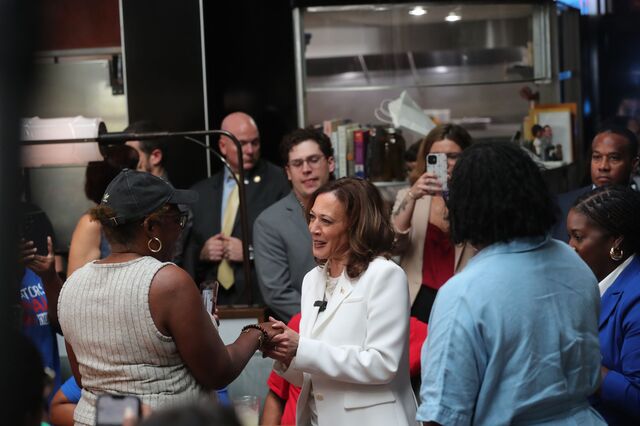
Harris has reopened the race in several of the seven swing states, post-Biden. She can win with as few as three of them, and Democrats have grown hopeful that strong turnout en route to a Harris win would allow them to regain control of the House. The Senate looks grimmer. It may come down to Montana, where Democrat Jon Tester is trying to hold on to a seat he first won in 2006. If he loses, Democrats will almost surely cap out at 49 seats, ceding their majority and forestalling many, if not all, of Harris’ plans.
With the time she has left to make her case, she’ll keep bringing it back to character—the middle-class kid versus the millionaire’s son, the prosecutor versus the felon—and connecting her experiences with those of voters however she can. In August, at a school in Georgia, Harris spoke to a marching band with cheerleaders and athletes lining the room. “All that you all are doing, it requires a whole lot of rehearsal, a whole lot of practice, long hours. Right? Sometimes you hit the note, sometimes you don’t,” she said. “Sometimes you’re going to hit the step right, sometimes you’re not. Sometimes you’re going to win the game, sometimes you may not. But, you know, you never let any circumstance knock you down or slow you down. You just keep going at it.”