
Skate Parks Are Growing Up
A punk pastime made massively popular by the Olympics has reached amenity status with ‘skate gardens.’
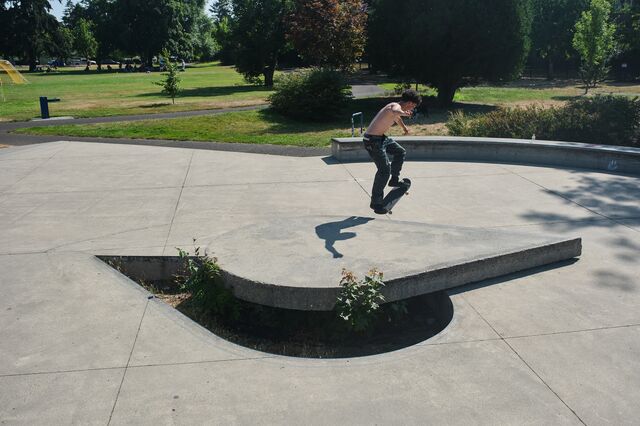
Skateboarding has rarely been welcomed anywhere. But the boards’ urethane wheels, adopted from roller skates, meant it could be practiced everywhere—on stairs, rails, benches, ramps, culverts and, in the drought-plagued summers of the mid-1970s, empty swimming pools.
Skate parks can be found in the corners of cities: beneath viaducts and overpasses, besides vent stacks and port terminals and in parks on the edge of town. These spaces may evoke skating’s guerilla origins, but they fail to represent skating today: an Olympic phenomenon, a $3.2 billion business and a sport that spans Generations X to Alpha.
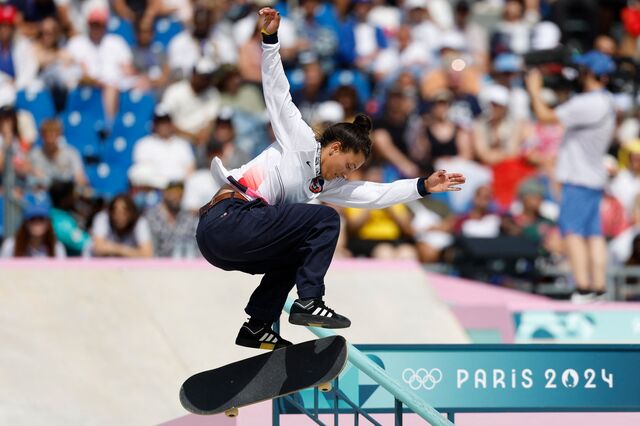
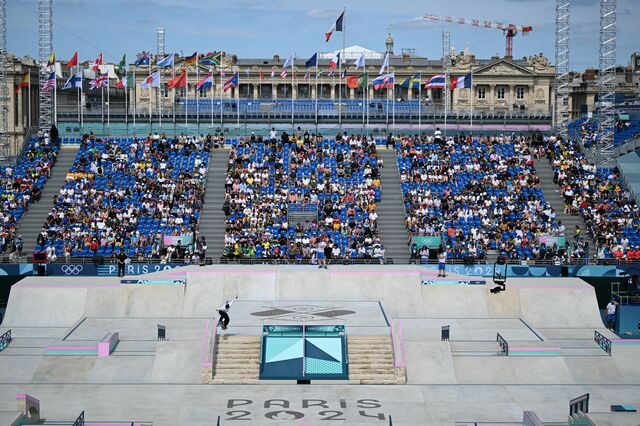
While skateboarding has been embraced by the establishment that skaters once had to outrun—elite skaters are competing for gold at the Place de la Concorde in the Paris Olympics—the sport’s everyday facilities typically remain on the fringes of the urban landscape.
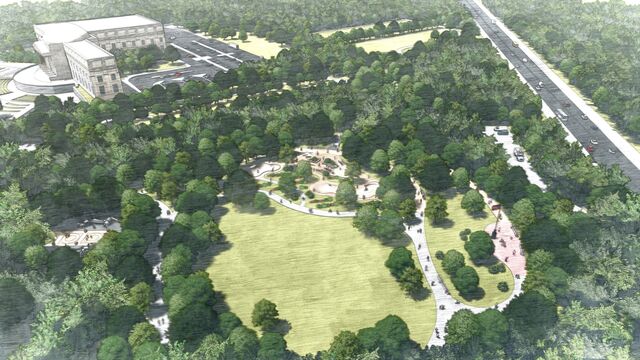
“For so long skate parks got put under a bridge, by a highway, in really undesirable and unhealthy locations,” says The Skatepark Project executive director Benjamin Bashein. But his organization’s forthcoming Brooklyn Skate Garden would seek to change that. “This is a nice opportunity to demonstrate that they can be integrated seamlessly into a larger park environment and complement the park.”
Brooklyn Skate Garden will be the largest of four skate parks to be built by New York City, for a total of $24.8 million, in partnership with The Skatepark Project. The $11 million, 40,000-square-foot Brooklyn Skate Garden is to be located in leafy Mount Prospect Park, on Eastern Parkway between the Brooklyn Public Library and Brooklyn Botanic Garden. That new visibility means growing pains: Even neighbors comfortable with skateboarding as a sport for more than malcontents are not used to seeing it in their parks, near their homes, their children, and their dogs. Neighbors in Park Slope may be comfortable with the vocabulary of pickleball and bioswales, but nobody has ever heard of a “skate garden.”
“This is a burgeoning sport, it’s not going away, and it needs to be treated with the same weight as a pickleball court or a swing set,” says landscape designer Alice S. Marcus Krieg, whose 2020 thesis at Brooklyn’s Pratt Institute focused on skate parks and public process, inspired by her son’s ollies and kickflips. “It has to be designed by skaters for skaters,” she says. Yet skate gardens also offer the opportunity to integrate the kind of horticulture-as-amenity on view at the other parks built in NYC over the past decades: “If it is done right, this could be the High Line of Brooklyn.”
Over the 25-year history of the Skatepark Project, originally named after legendary founder Tony Hawk, the nonprofit has worked on 600-plus ground-up parks. “Historically we would make grants and provide technical assistance to local advocates who were typically kids and their parents,” says Bashein. “Our grant would be $15,000 to $20,000 at the largest, and they would have to raise $200,000 to get a park built.”
Three years ago, something changed: Skaters started grinding at the Games. “Skateboarding was at the Olympics for the first time in Tokyo,” says Bashein. “We saw a 700% increase in requests from municipalities.”
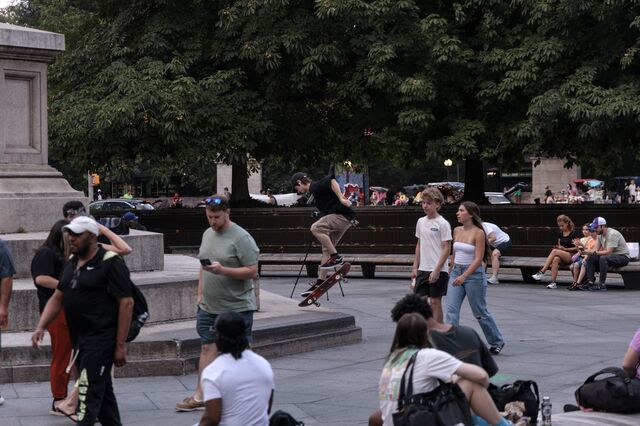
Skateboarding was the sixth fastest-growing sport in the US from 2019 to 2023, according to the Sports & Fitness Industry Association, and among the top three for both boys and girls in high school. The pandemic also underlined the need for more outdoor pick-up sports for people of all ages. “Kids needed something to do outdoors safely, with their friends, but not too close,” Bashein says. “Parents went out to parks with their kids too.”
In Montclair, New Jersey, Olympic skateboarder and MIT architecture graduate Alexis Sablone designed a set of sculptural skate elements for a former tennis court, formalizing and aestheticizing what had been an informal spot. In Manhattan, a coalition of skaters, students and families organized to save the storied Brooklyn Banks under the bridge—now a public park with a skate plaza alongside basketball and (of course) pickleball courts. LOVE Park, the beloved skate spot in central Philadelphia, was removed in 2016, but is being reconstructed in Malmo, Sweden, this summer.
Despite the US taking home two medals in the first-ever skateboarding events at the Tokyo Olympics—and two at the Paris Olympics so far—some Americans have yet to catch on.
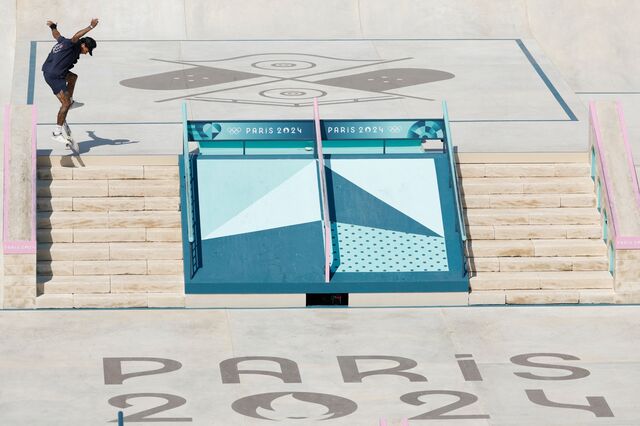
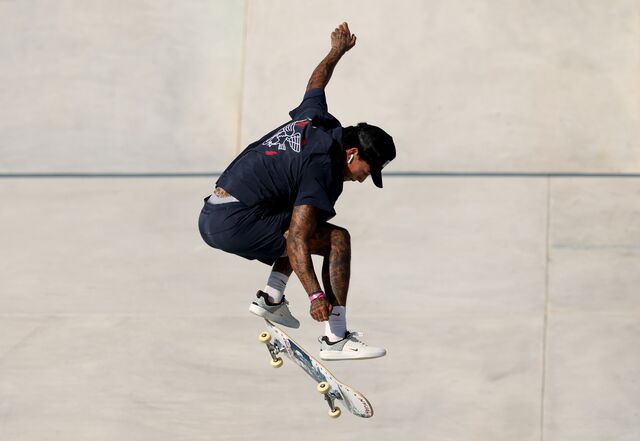
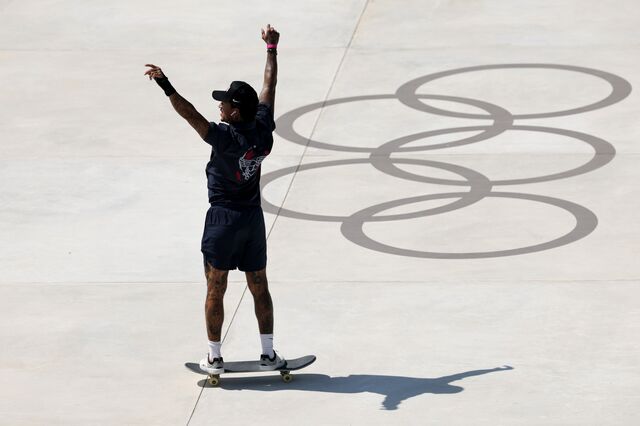
After New York Mayor Eric Adams announced the skate park initiative in January, opposition to the Brooklyn Skate Garden was swift. Notwithstanding support from the mayor, the borough president and local city council members, negative responses grabbed most of the headlines. Opponents, who organized groups including Friends of Mount Prospect Park, characterized the proposal as “paving parkland,” framing preservation of the status quo as the only environmental choice. More than 400 people showed up for the skate garden’s second community input meeting, record-breaking attendance for an NYC park scoping session.
There’s an urgent question about whether it is more environmentally responsible to build (compactly, with as many sustainable materials as possible, for the greatest number) or to not build (preserving green space as it is). The second, more traditional environmental position is often weaponized to keep neighborhoods as they are—in this case, a neighborhood park, sandwiched between many of Brooklyn’s greatest institutions, but neglected to the point that it is most popular with off-leash dogwalkers and after-hours partiers.
Beyond that, design can answer many of the stated objections to the Brooklyn Skate Garden. It is entirely possible to minimize the paving while adding shade, drainage and amenities that would benefit all users of the park. Planners say they intend for a quarter of the park’s 40,000 square feet to be planted, with bioswales to manage stormwater and possibly an on-trend microforest.
Brooklyn’s skaters, friends and caregivers—a set of users that spans generations—also deserve more seating, more shade and less pollution while they practice their medal-winning runs. The plethora of subway lines serving the nearby Brooklyn Museum, Brooklyn Public Library and Prospect Park don’t hurt either.
“That area is the epicenter of Brooklyn culture,” says Michael J. Sclafani, skater and owner of Park Deli, the closest skate shop to Mount Prospect Park. “There are so many monuments, and we have a chance to add to that mix. That’s kind of an important historical thing.”
Pat Cranston and his daughter Hazel M., 10, started skating and biking together during Covid lockdowns, and quickly noticed the difference between new cycling infrastructure, like Shirley Chisholm State Park on Jamaica Bay, and new skating infrastructure, like Golconda Skate Park, under the Brooklyn Queens Expressway.
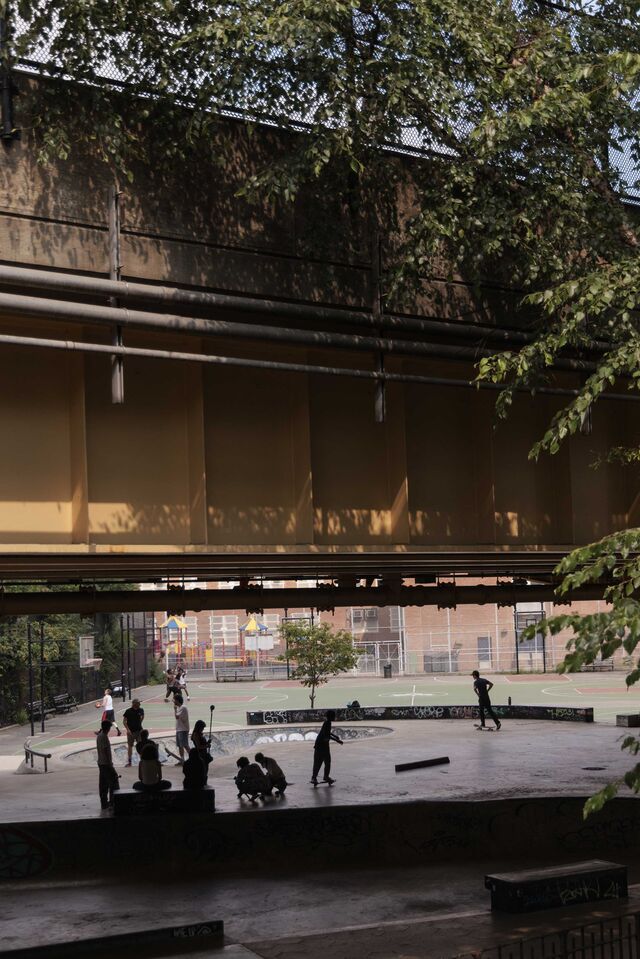
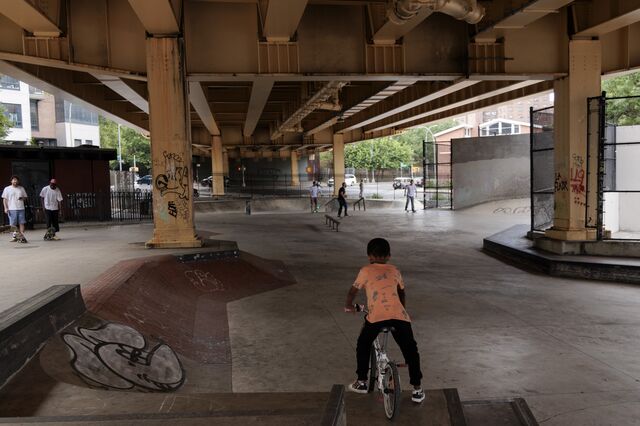
“I have asthma so it is really hard to go to a park right under a subway track or under a highway or sewage treatment plant,” Hazel says. “I want to have a place where I can be able to breathe naturally and just enjoy myself and not worry about it.”
New Yorkers may be used to swooping concrete elements and lush pollinator plants in their parks, but most of the US has never seen parks that integrate hardscape with softscape, much less in a skate park. Talk to skate-adjacent horticulturalists, garden designers and landscape architects, however, and they’ll tell you not only is it possible, but it’s also the next big thing in skate park design.
Shane Yee, chief design officer of Austin-based skateECOSYSTEMS has gained some 10,000 Instagram followers posting renderings of landscape urbanism crossed with skate parks. While the hazy glow gives them away as digital renderings, the idea of a landscaped trail that winds through greenery already exists for ice skating in Chicago’s Maggie Daley Park. The forms and combinations in Yee’s designs are not so different from the work by landscape architecture firm West 8 to transform Governors Island.
Yee’s company, co-founded with skate park builder Bobby King, is currently designing a new park for Del Rio, Texas. One version of the design centers on what Yee calls “almost a formal garden, very symmetrical,” which will likely have a skateable fountain at the center inspired by the basins of Rome; the other draft sends ribbons of concrete into a landscape with planted beds and mature trees, reducing the heat island effect of so much uninterrupted solid surface.
Skate gardens resemble the kinds of freshly planted plazas that often feature anti-skate elements on benches and rails, a concession that these designs are skateable, even if skaters are considered undesirable. Other examples of skate gardens include the V-plaza in Kaunas, Lithuania, which mixes steps, ramps, bleacher seating and planters. SLA designed a similar-looking skateable plaza for the Copenhagen waterfront in 2011, emphasizing its greenness and openness.
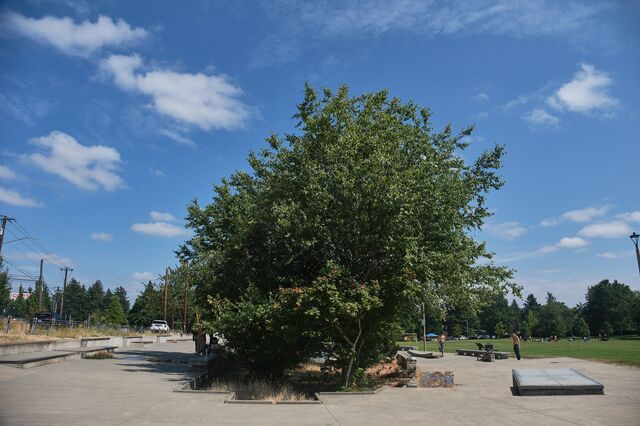
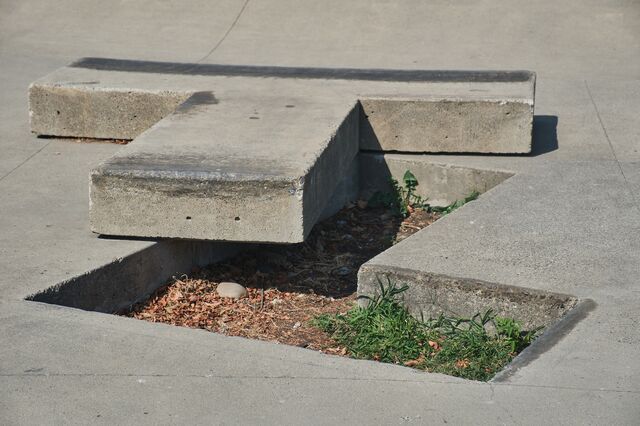
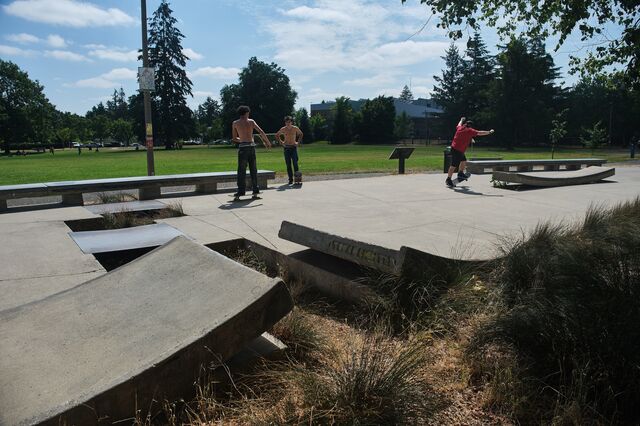
“The fundamental thing we are dealing with when it comes to skate parks is that the materials are impervious, and they generate stormwater runoff,” says Dave Elkin, principal for Portland, Oregon-based Juncus Studio. But you can design for that, using systems to either absorb or channel rainwater into sewers. Portland’s Ed Benedict Skate Plaza, for example, has integrated bioswales as well as sand filtration planters, so skaters slide and ollie over the planted beds.
The original vision for Brooklyn Skate Garden wasn’t just about bringing plants to the skate park, however. It was also about acknowledging, and supporting, skaters as a community, with planting and clean-up days, places to picnic, and plenty of shade. Loren Michelle created the Pablo Ramirez Foundation after the traffic death in 2019 of her son, Ramirez, a skateboarder and artist. Younger Brooklyn skaters launched a petition in August 2019 to build a skate garden in his memory in Brooklyn. It garnered more than 5,000 signatures, and made it onto the 2021 participatory budget ballot in Brooklyn’s District 39, eventually winning $300,000 from then councilmember, now comptroller Brad Lander.
“The premise of the whole skate garden is to turn a normal skate park into something that is more engaging,” Michelle says. She and the foundation have been hosting meetups, gardening sessions and mural painting since 2019, trying to build the coalition that would ultimately activate the skate garden as a hub.
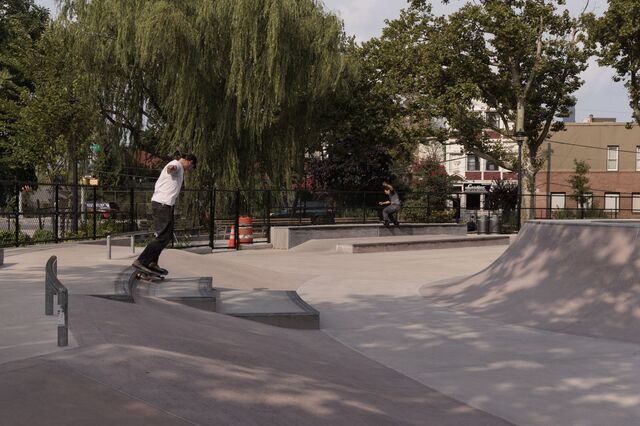
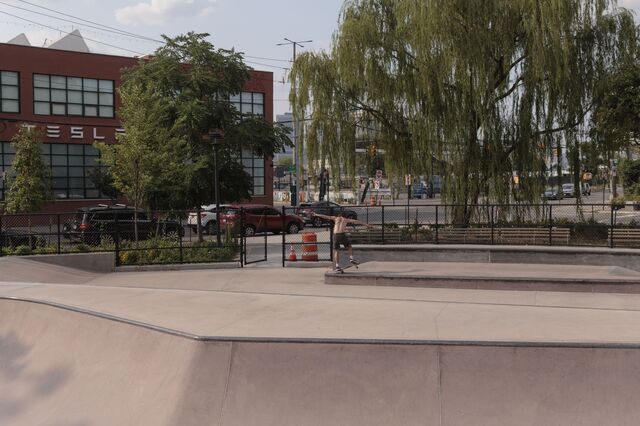
Brooklyn’s most recent skate park, which opened in January at Harold Ickes Playground, sits next to the vent stack for the Hugh L. Carey Tunnel to Manhattan, across from the entrance to the Red Hook Container Terminals and a Tesla dealership. Despite its infrastructural setting, on a recent Sunday the Harold Ickes skate park was hosting approximately two dozen scooters, skateboarders and bikers, from approximately ages 5 to 50, in less than an acre. The smell of sweat was in the air. Two twentysomething BMX riders hydrating at the water fountain at Ickes had ridden overland from Sunset Park and East Flatbush (2.5 and 5.7 miles away respectively), neither of which have their own skate parks or easy transit access to Red Hook.
A set of older London plane trees cools the water fountain and a handful of concrete tables, at which I found wife and mother of skaters Ana Maria Gastaneta reading. “It is perfect here. I’m always searching for shade and somewhere to sit, and there are different options to go and eat in Carroll Gardens.” But when I mentioned the Mount Prospect Park option, her eyes lit up. “We would love that—my husband could go right from work at 6.”