BusinessweekWhat May Be One of the Biggest Jewelry Heists Ever Is Still a Mystery

And the stolen merchandise—worth either $8.7 million or about $100 million, depending on whom you ask—is nowhere to be found.

In 27 minutes, the jewelry vanished from a Brink’s tractor-trailer in California last year. The fallout from the heist has been ugly, with Brink’s Co. suing the victimized merchants, who then filed their own suit against the company. Bloomberg Businessweek partnered with Los Angeles Times reporters Daniel Miller and Richard Winton, who’ve covered the story. Here’s what we know about how it went down.

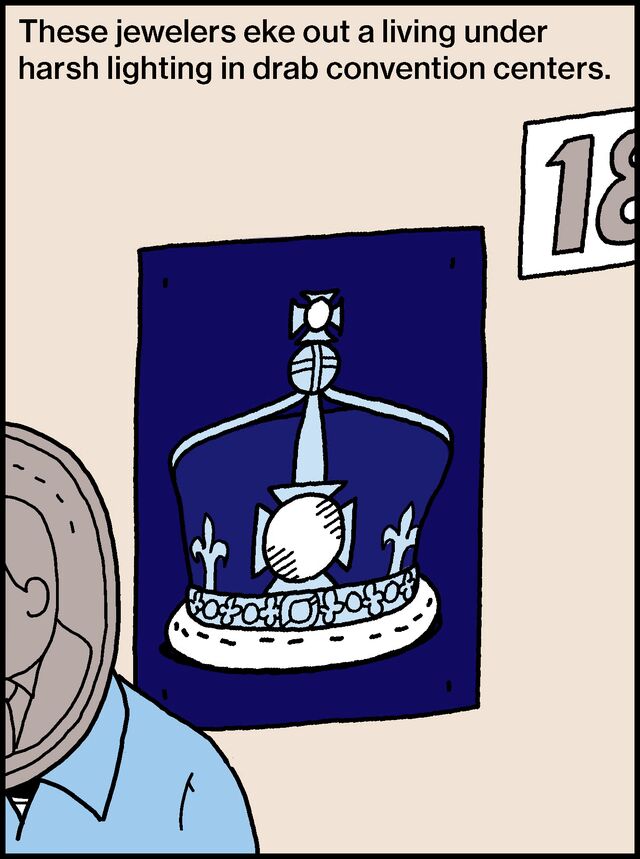
The jewelry industry isn’t as glitzy as it might seem, especially for those on the trade show circuit.
These jewelers eke out a living under harsh lighting in drab convention centers.
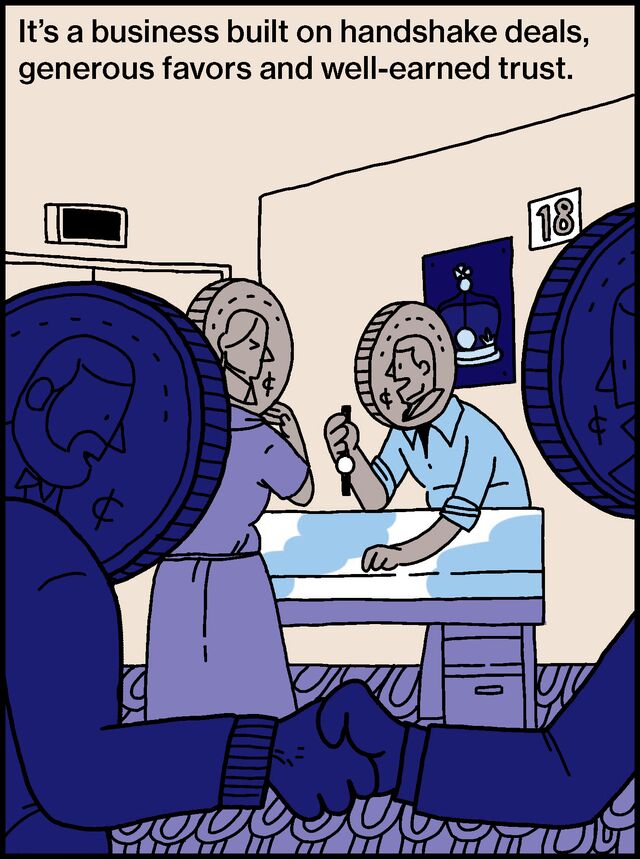
It’s a business built on handshake deals, generous favors and well-earned trust.
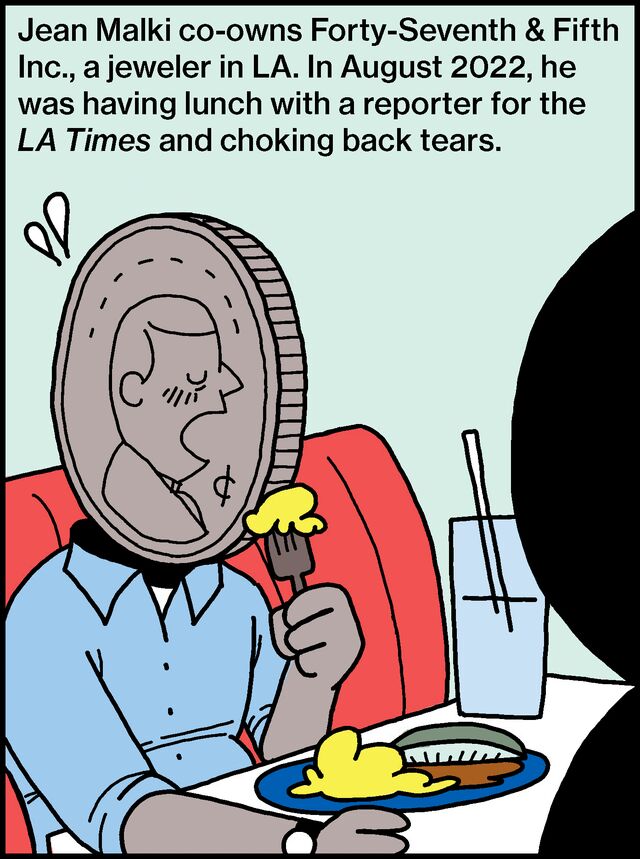
Jean Malki co-owns Forty-Seventh & Fifth Inc., a jeweler in LA. In August 2022, he was having lunch with a reporter for the LA Times and choking back tears.
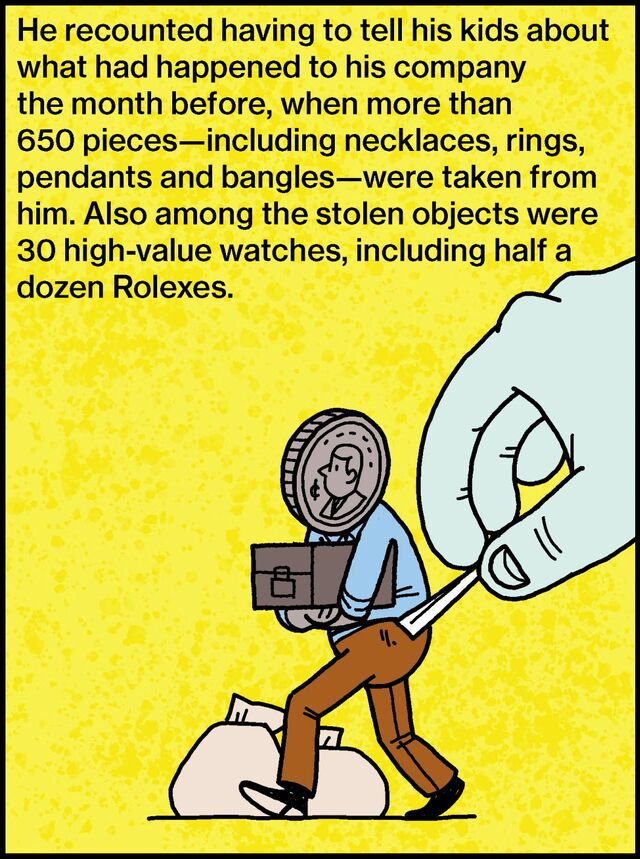
He recounted having to tell his kids about what had happened to his company the month before, when more than 650 pieces—including necklaces, rings, pendants and bangles—were taken from him. Also among the stolen objects were 30 high-value watches, including half a dozen Rolexes.
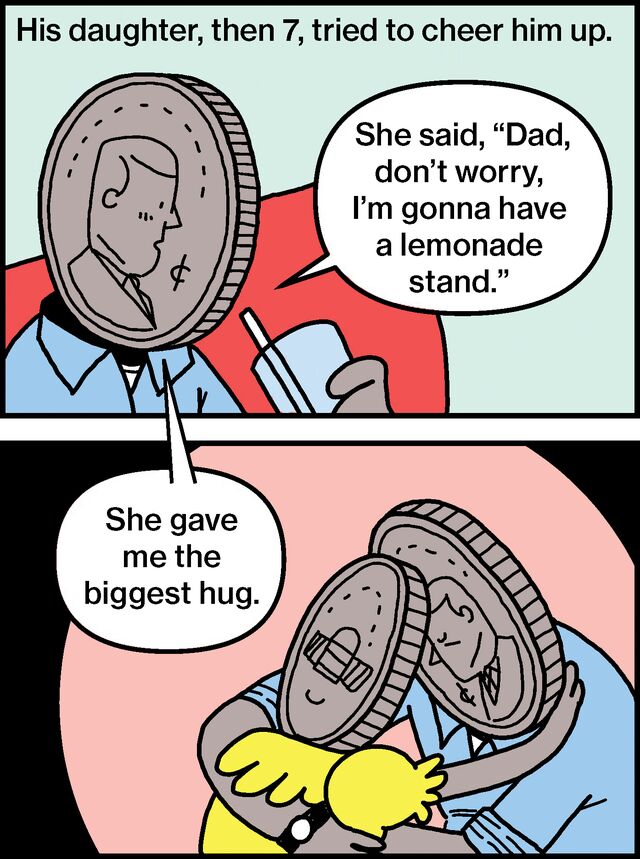
His daughter, then 7, tried to cheer him up. She said, “Dad, don’t worry, I’m gonna have a lemonade stand.” She gave me the biggest hug.
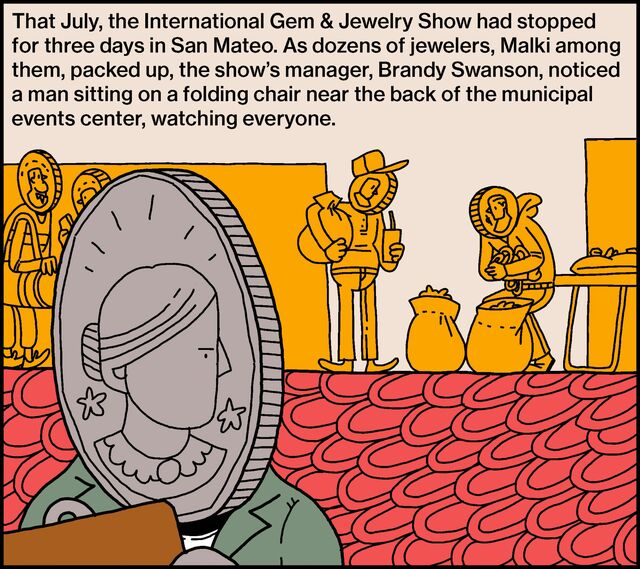
That July, the International Gem & Jewelry Show had stopped for three days in San Mateo. As dozens of jewelers, Malki among them, packed up, the show’s manager, Brandy Swanson, noticed a man sitting on a folding chair near the back of the municipal events center, watching everyone.
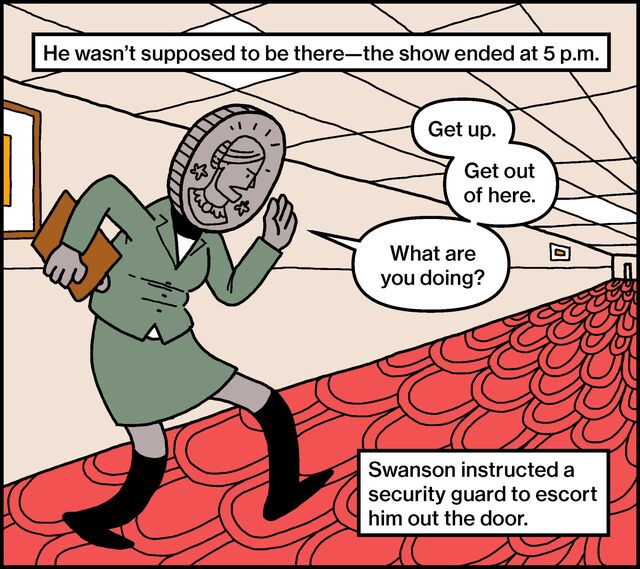
He wasn’t supposed to be there—the show ended at 5 p.m.
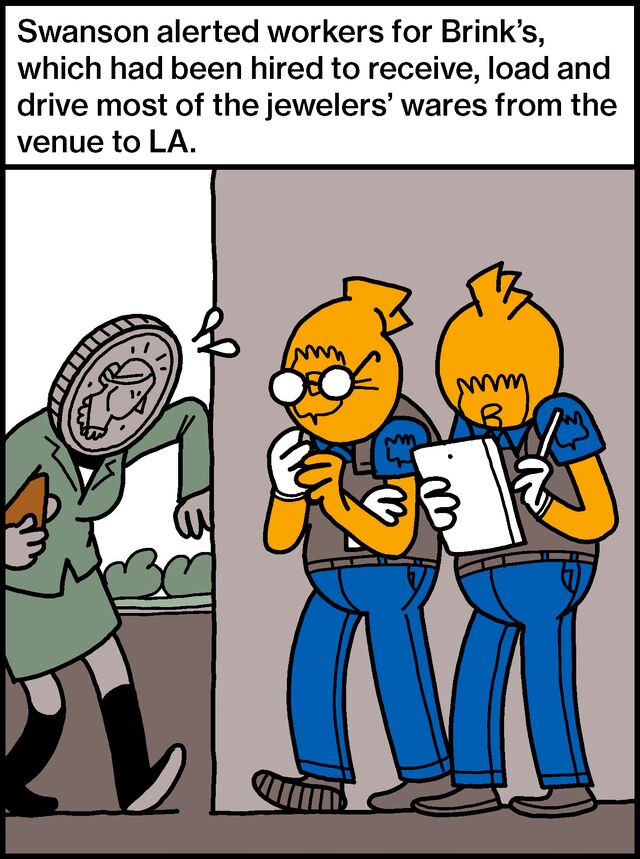
Swanson alerted workers for Brink’s, which had been hired to receive, load and drive most of the jewelers’ wares from the venue to LA.
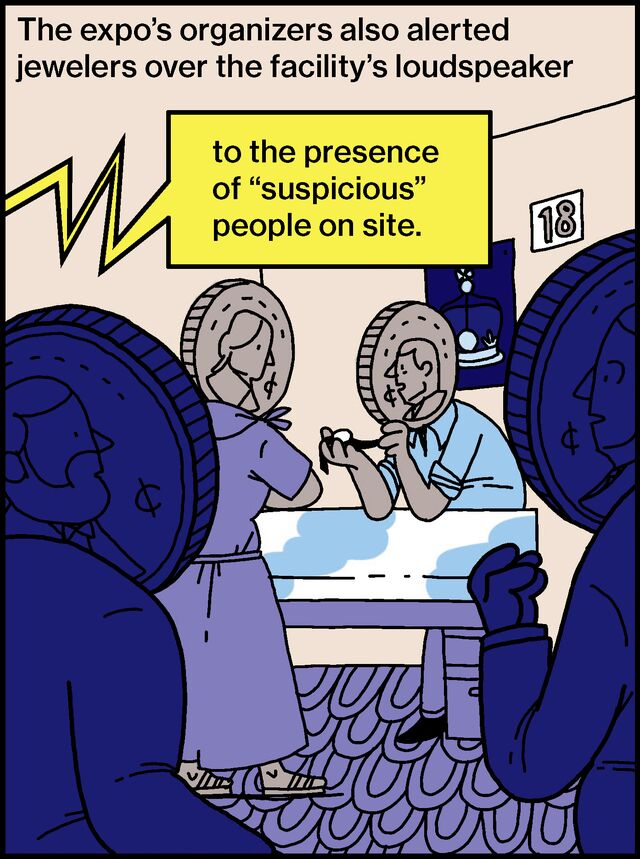
The expo’s organizers also alerted jewelers over the facility’s loudspeaker to the presence of “suspicious” people on site.
Such warnings are routine, though on this day they were delivered with more urgency than normal, the LA Times later reported.
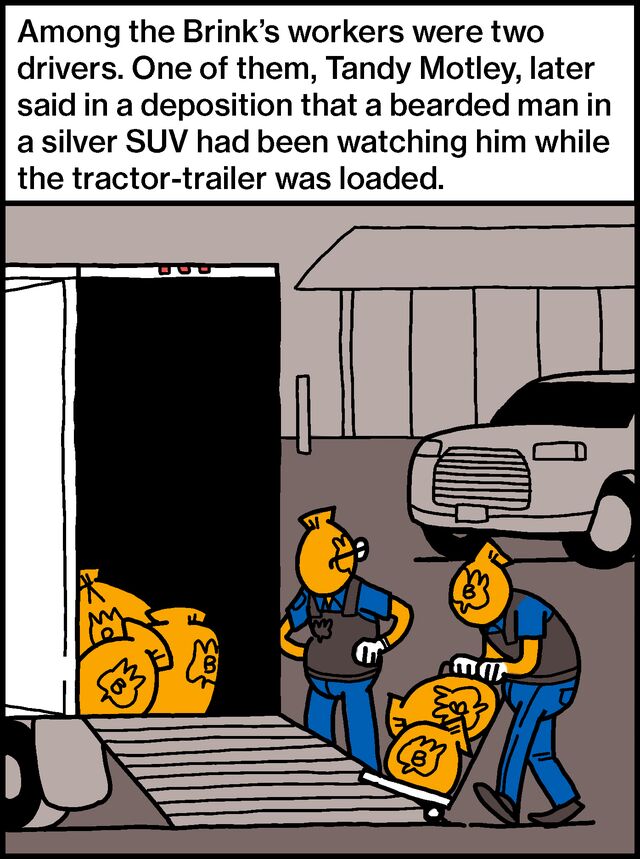
Among the Brink’s workers were two drivers. One of them, Tandy Motley, later said in a deposition that a bearded man in a silver SUV had been watching him while the tractor-trailer was loaded.
There was somebody kind of looking at me weird, kind of dogged me, staring right in the eyes, just sitting there, doors were open, as we were getting loaded. It just felt weird.
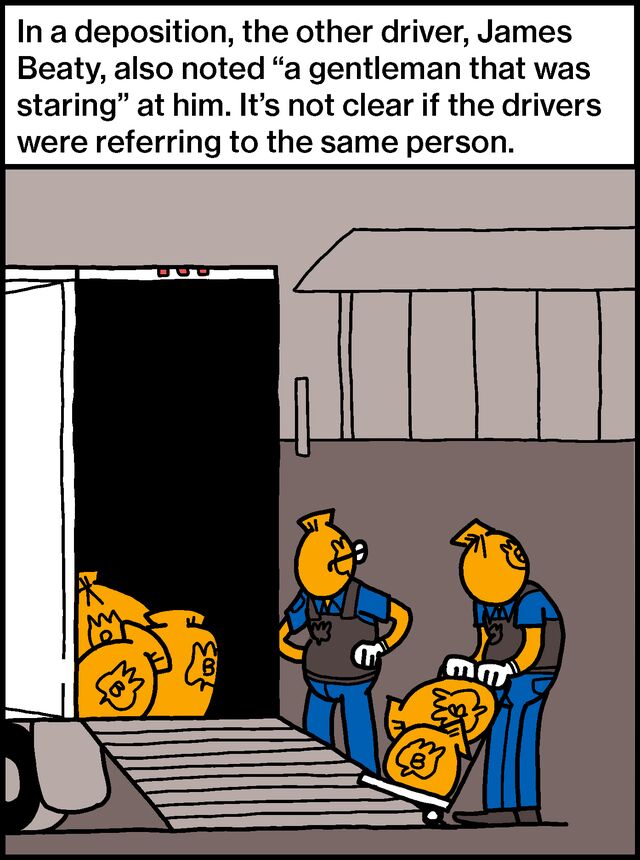
In a deposition, the other driver, James Beaty, also noted “a gentleman that was staring” at him. It’s not clear if the drivers were referring to the same person.
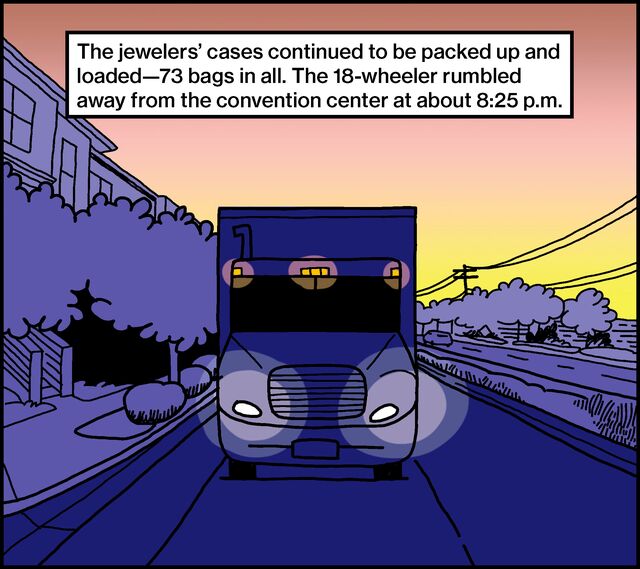
The jewelers’ cases continued to be packed up and loaded—73 bags in all. The 18-wheeler rumbled away from the convention center at about 8:25 p.m.
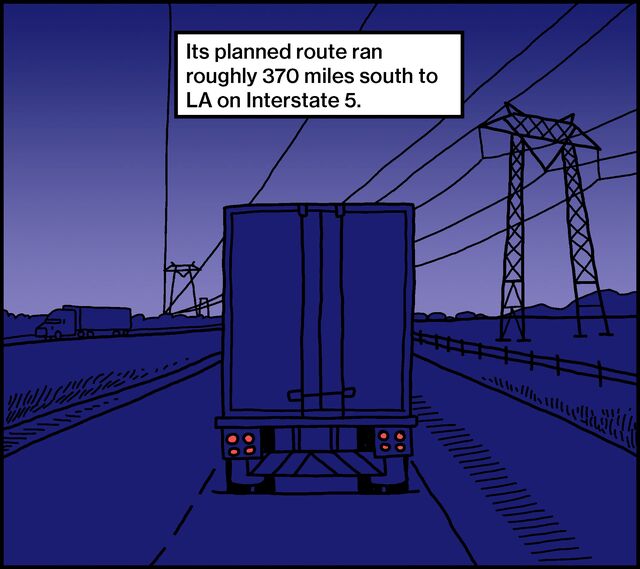
Its planned route ran roughly 370 miles south to LA on Interstate 5.
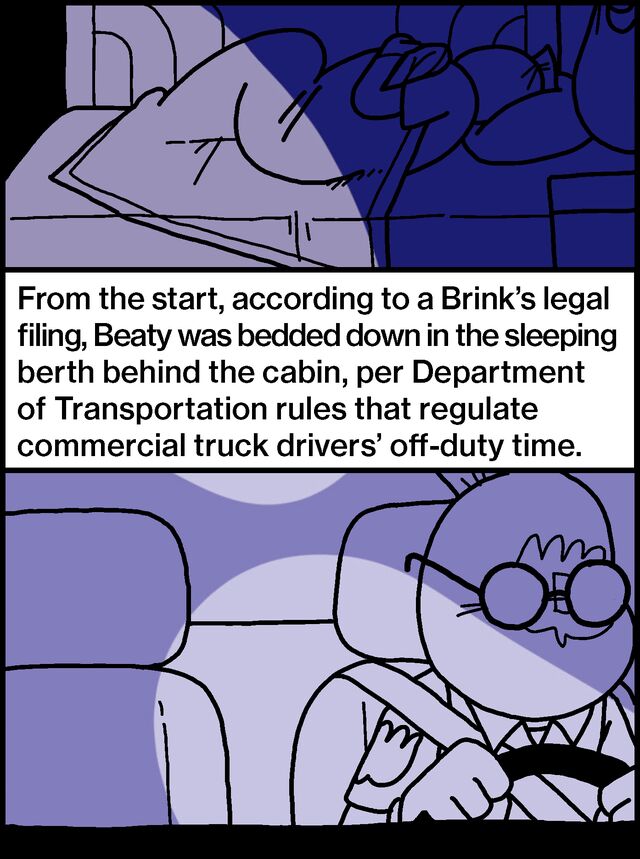
From the start, according to a Brink’s legal filing, Beaty was bedded down in the sleeping berth behind the cabin, per Department of Transportation rules that regulate commercial truck drivers’ off-duty time.
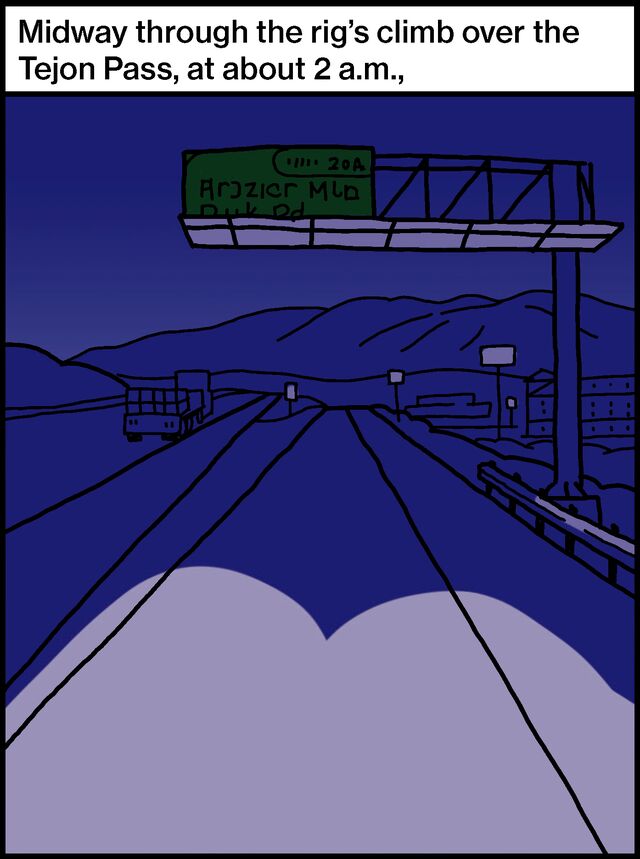
Midway through the rig’s climb over the Tejon Pass, at about 2 a.m.,
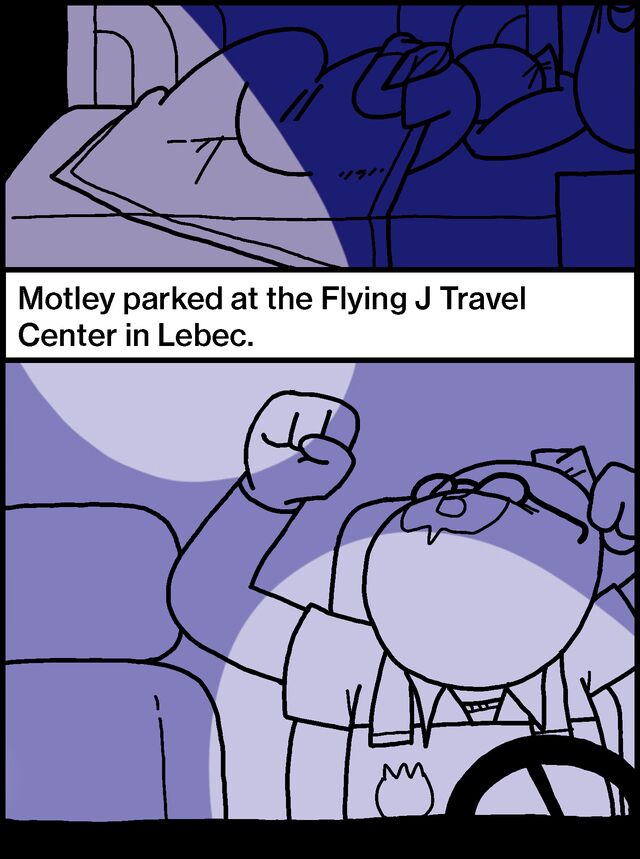
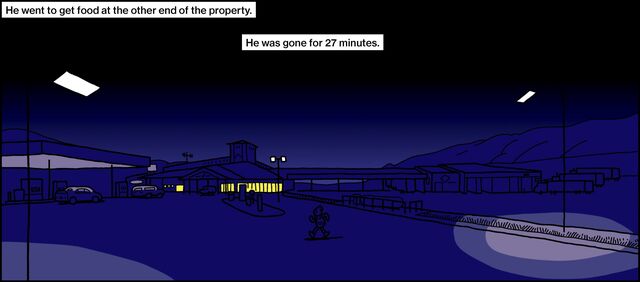
Motley parked at the Flying J Travel Center in Lebec.
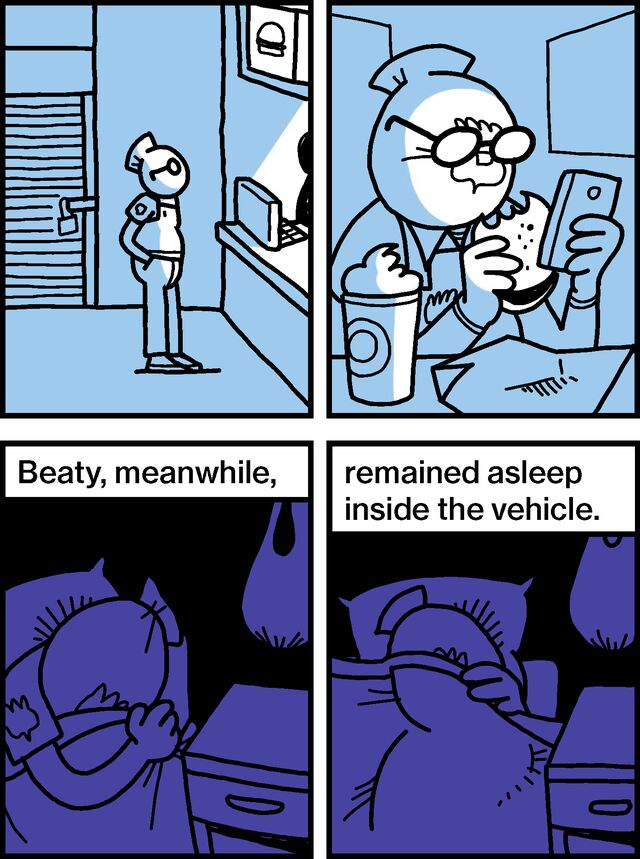
He went to get food at the other end of the property. He was gone for 27 minutes.
Beaty, meanwhile, remained asleep inside the vehicle.
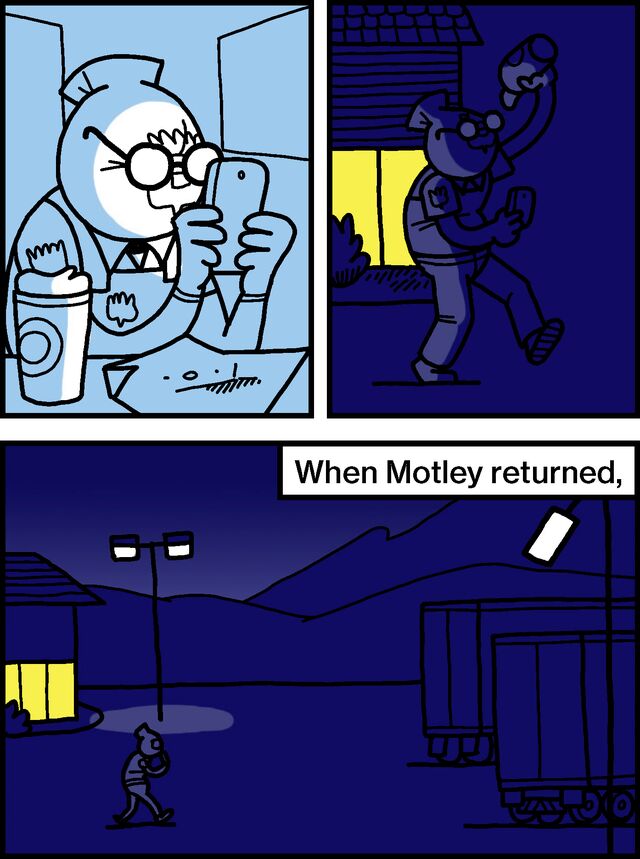
When Motley returned,
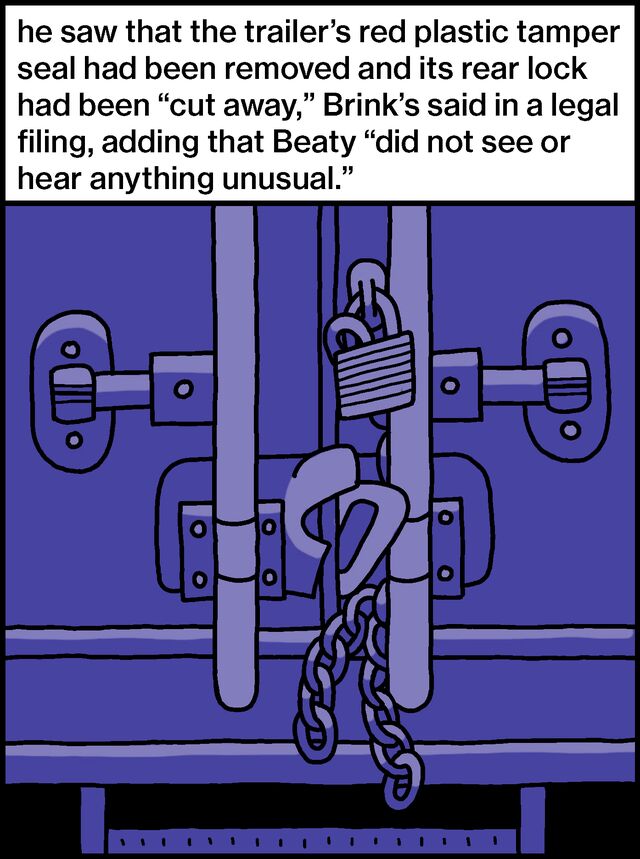
he saw that the trailer’s red plastic tamper seal had been removed and its rear lock had been “cut away,” Brink’s said in a legal filing, adding that Beaty “did not see or hear anything unusual.”
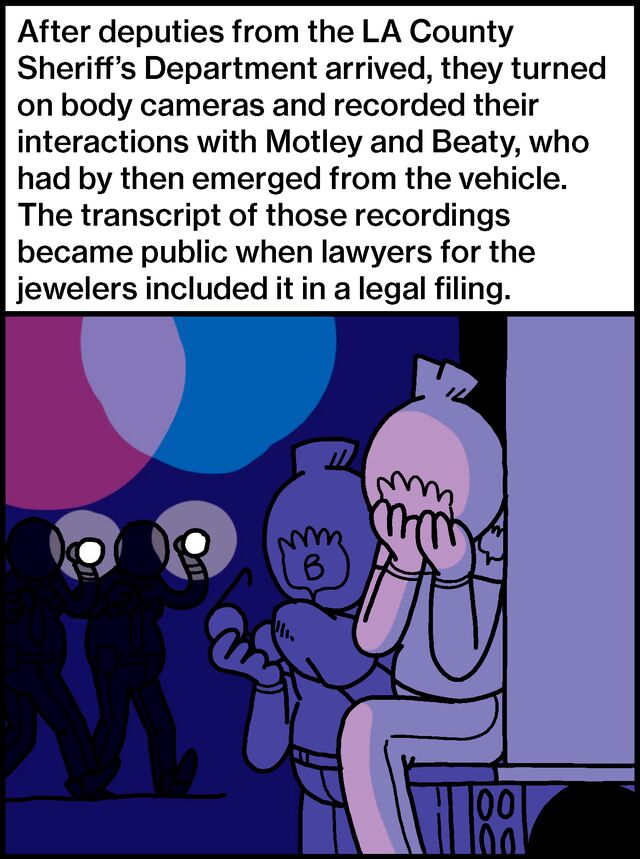
After deputies from the LA County Sheriff’s Department arrived, they turned on body cameras and recorded their interactions with Motley and Beaty, who had by then emerged from the vehicle. The transcript of those recordings became public when lawyers for the jewelers included it in a legal filing.
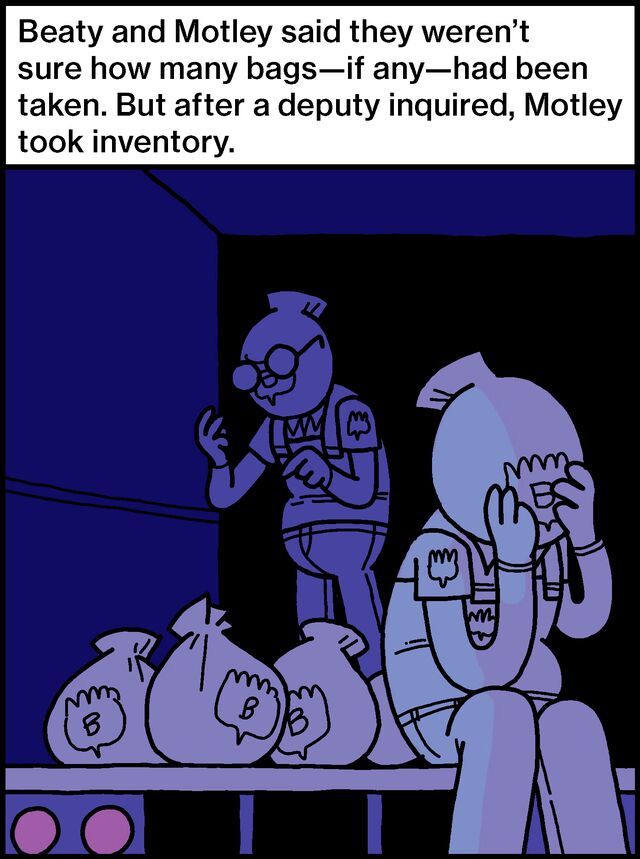
Beaty and Motley said they weren’t sure how many bags—if any—had been taken. But after a deputy inquired, Motley took inventory.
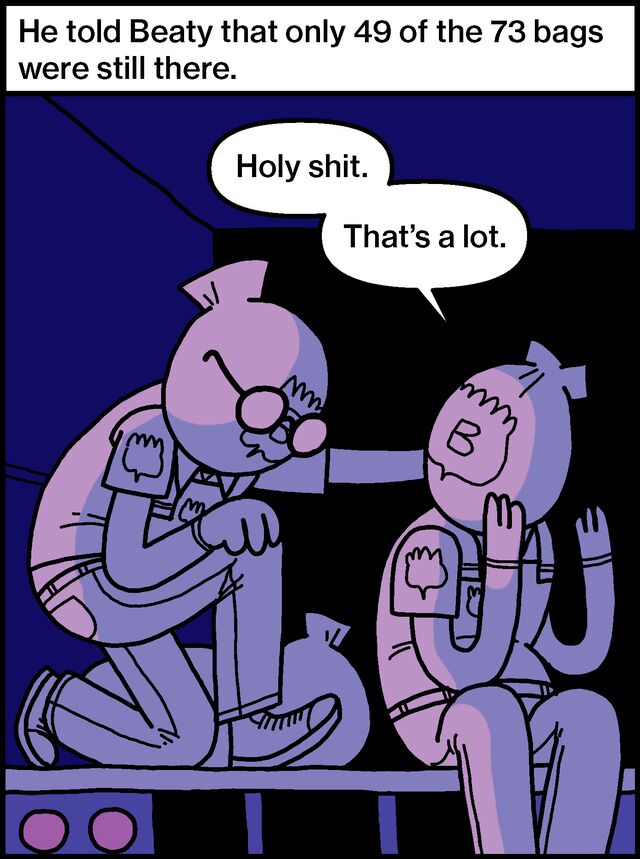
He told Beaty that only 49 of the 73 bags were still there.
The drivers speculated about what had happened. I’m pretty sure we were followed from the show where we got loaded. I heard some ruckus earlier like there was—it was a foreign language, it wasn’t Spanish, because I know a lot of Spanish. It wasn’t that
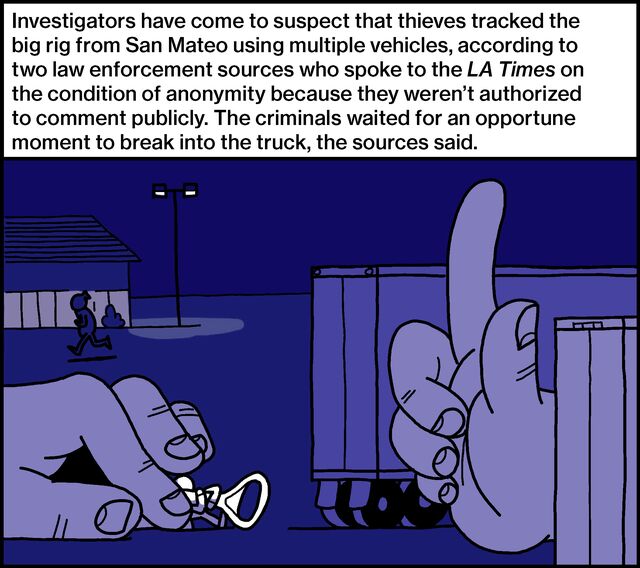
Investigators have come to suspect that thieves tracked the big rig from San Mateo using multiple vehicles, according to two law enforcement sources who spoke to the LA Times on the condition of anonymity because they weren’t authorized to comment publicly. The criminals waited for an opportune moment to break into the truck, the sources said.
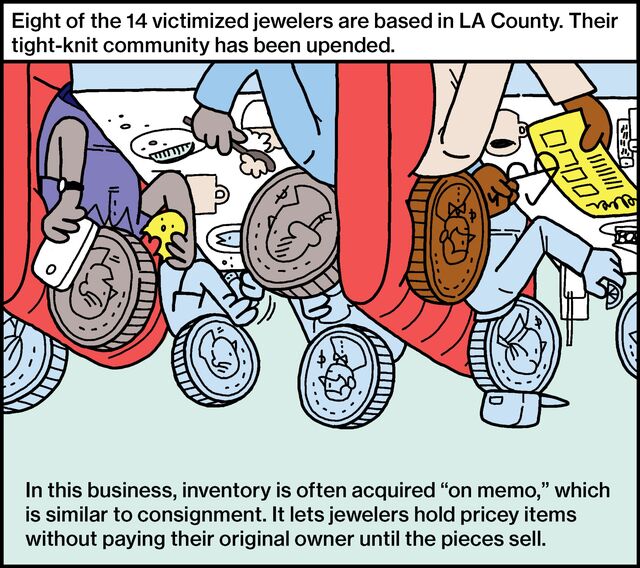
Eight of the 14 victimized jewelers are based in LA County. Their tight-knit community has been upended. In this business, inventory is often acquired “on memo,” which is similar to consignment. It lets jewelers hold pricey items without paying their original owner until the pieces sell.
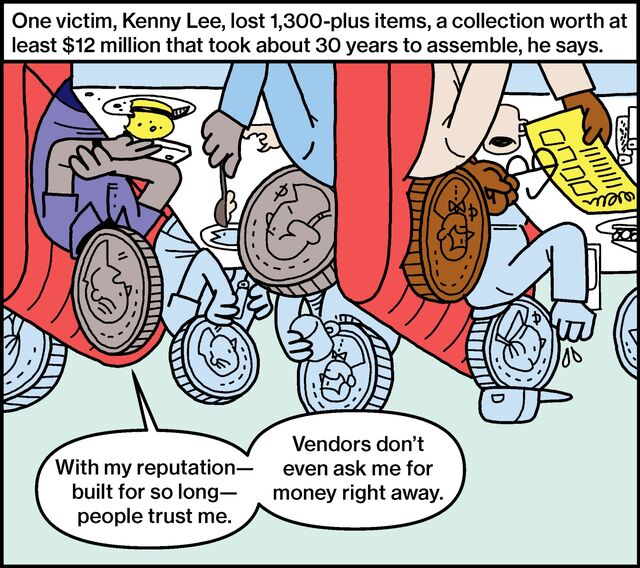
One victim, Kenny Lee, lost 1,300-plus items, a collection worth at least $12 million that took about 30 years to assemble, he says. With my reputation—built for so long—people trust me. Vendors don’t even ask me for money right away.
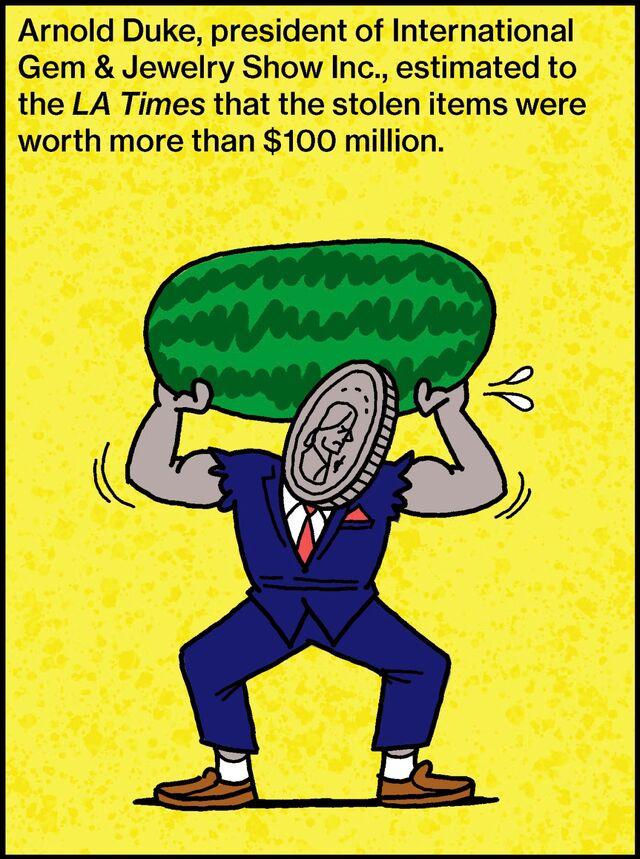
Arnold Duke, president of International Gem & Jewelry Show Inc., estimated to the LA Times that the stolen items were worth more than $100 million.
But in its lawsuit against the jewelers, Brink’s put the value at $8.7 million, a figure the company attributed to manifests the jewelers’ representatives (often the jeweler himself) signed ahead of the truck’s departure from San Mateo.
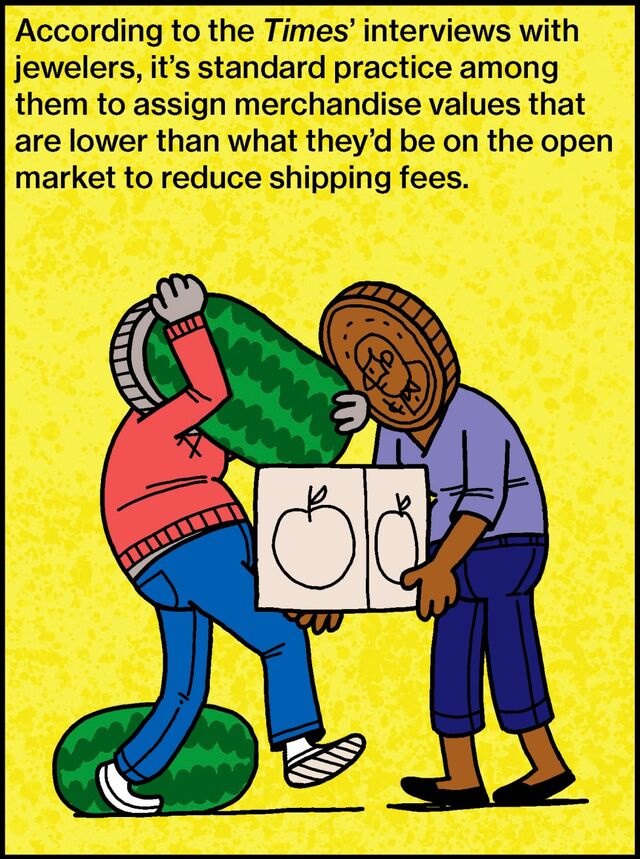
According to the Times’ interviews with jewelers, it’s standard practice among them to assign merchandise values that are lower than what they’d be on the open market to reduce shipping fees.
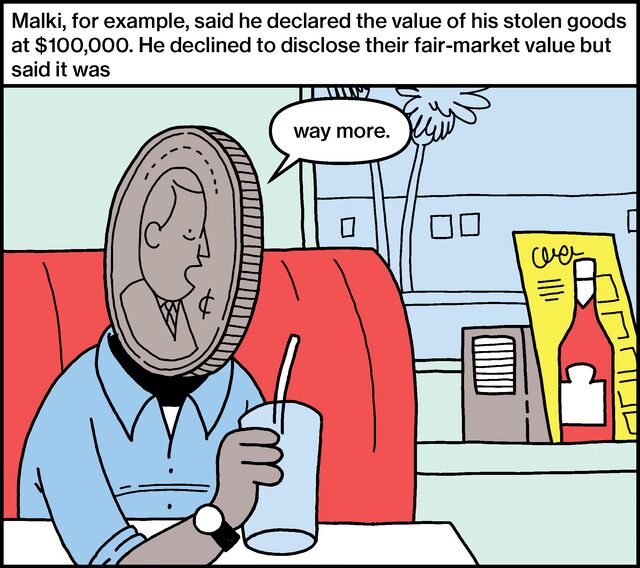
Malki, for example, said he declared the value of his stolen goods at $100,000. He declined to disclose their fair-market value but said it was way more.
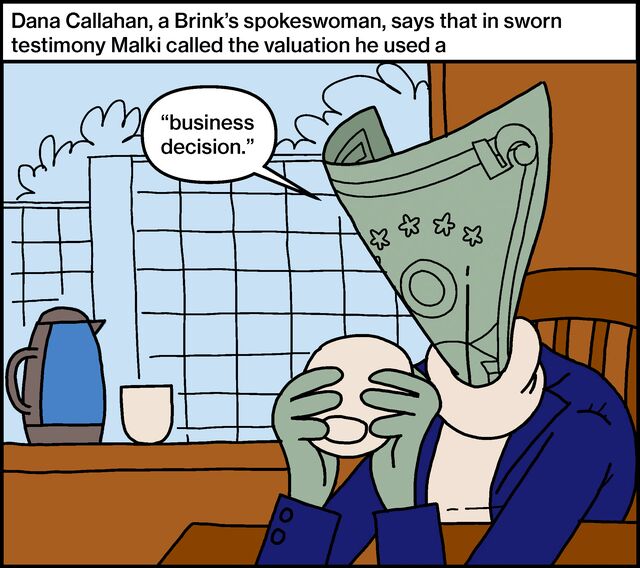
Dana Callahan, a Brink’s spokeswoman, says that in sworn testimony Malki called the valuation he used a business decision.
The victims were shocked by the Brink’s suit, which sought to limit the company’s financial exposure to $8.7 million. Callahan says that “if the jewelers here had honestly and accurately declared the value of the goods they shipped, litigation would not be necessary.” She adds, “We remain willing to compensate these customers for the declared value of their goods.”
In their suit, filed about two weeks after the Brink’s one, the jewelers demanded about $100 million in restitution and at least $100 million in damages. Their suit said that the tractor-trailer was parked in a “poorly lit” location and had an “easily-defeated lock,” and that “lax security” by Brink’s allowed “jewelry and gemstones to be stolen right out from under the noses” of the drivers. (Motley and Beaty didn’t respond to requests for comment.)
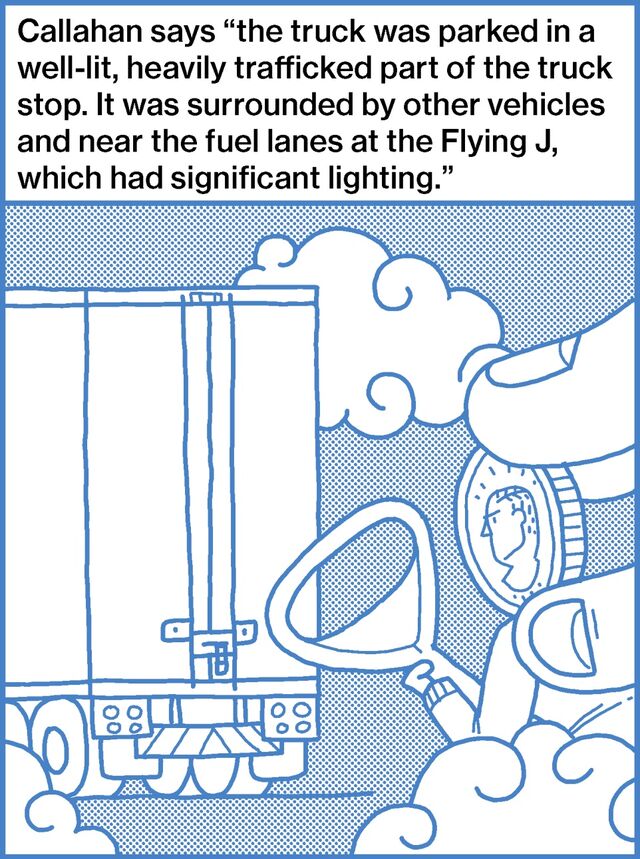
Callahan says “the truck was parked in a well-lit, heavily trafficked part of the truck stop. It was surrounded by other vehicles and near the fuel lanes at the Flying J, which had significant lighting.”
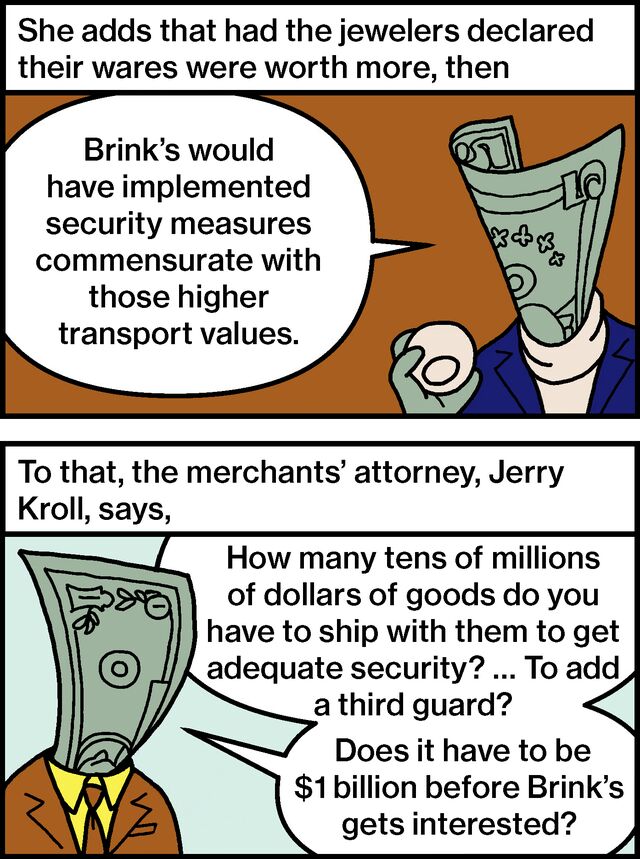
She adds that had the jewelers declared their wares were worth more, then Brink’s would have implemented security measures commensurate with those higher transport values. To that, the merchants’ attorney, Jerry Kroll, says, “How many tens of millions of dollars of goods do you have to ship with them to get adequate security? … To add a third guard? Does it have to be $1 billion before Brink’s gets interested?”
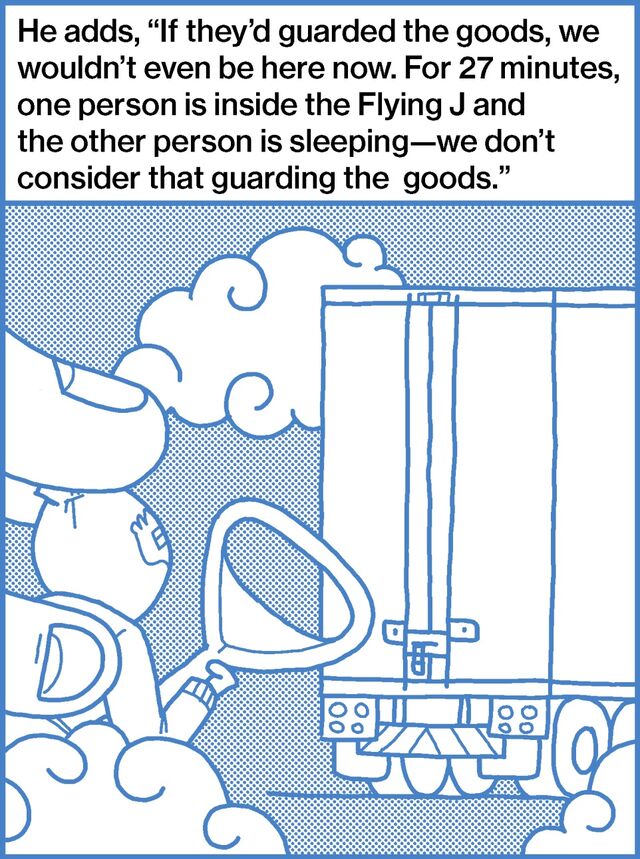
He adds, “If they’d guarded the goods, we wouldn’t even be here now. For 27 minutes, one person is inside the Flying J and the other person is sleeping—we don’t consider that guarding the goods.”
So where are the jewels?
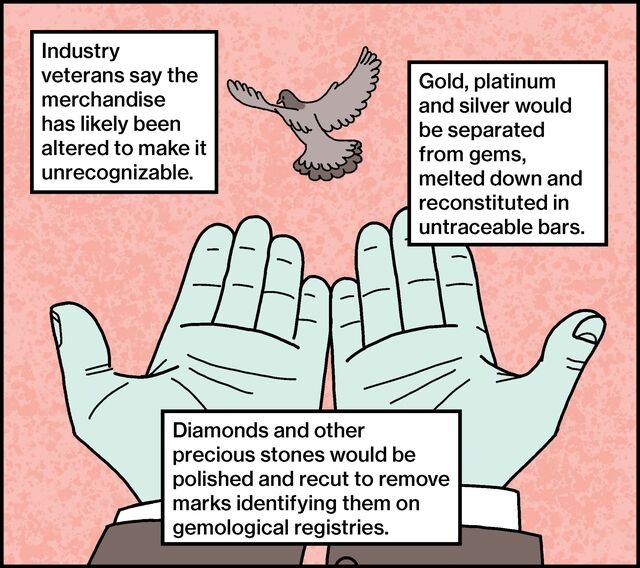
Industry veterans say the merchandise has likely been altered to make it unrecognizable. Gold, platinum and silver would be separated from gems, melted down and reconstituted in untraceable bars. Diamonds and other precious stones would be polished and recut to remove marks identifying them on gemological registries.
The ill-gotten wares would then be sold to fences
and resold to buyers
who might or might not know the goods were stolen.
Larry Lawton, a former jewel thief who spent over a decade in prison after being convicted in connection with jewelry store robberies in the 1990s, says the thieves who carried out the Flying J heist “knew where to get rid of the stuff” before they burgled the truck.
You don’t go into a robbery of this magnitude without having all your ducks in a row.
Whoever planned this planned a good one.
In the year since the heist, authorities have said little about their investigation. The LA Times has reported that factors such as the speed and nonviolence of the operation have led officers to conclude that sophisticated criminals likely carried out the heist.
Investigators haven’t linked the suspicious men at the jewelry show to the operation.
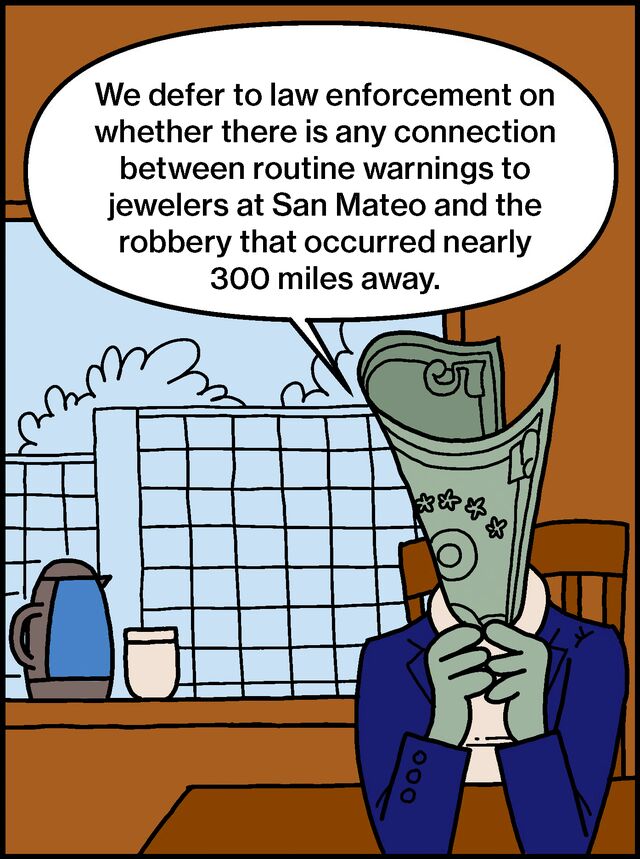
We defer to law enforcement on whether there is any connection between routine warnings to jewelers at San Mateo and the robbery that occurred nearly 300 miles away.
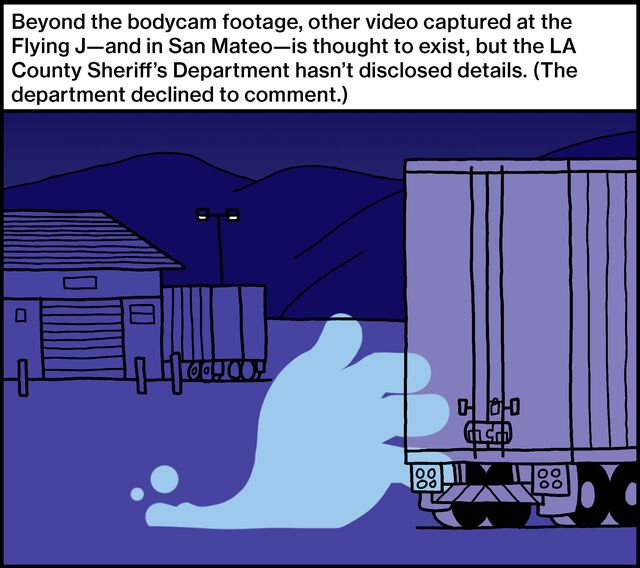
Beyond the bodycam footage, other video captured at the Flying J—and in San Mateo—is thought to exist, but the LA County Sheriff’s Department hasn’t disclosed details. (The department declined to comment.)
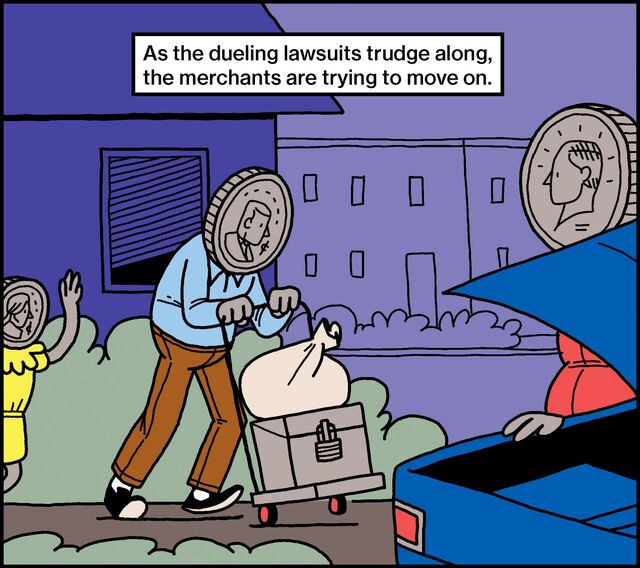
As the dueling lawsuits trudge along, the merchants are trying to move on.
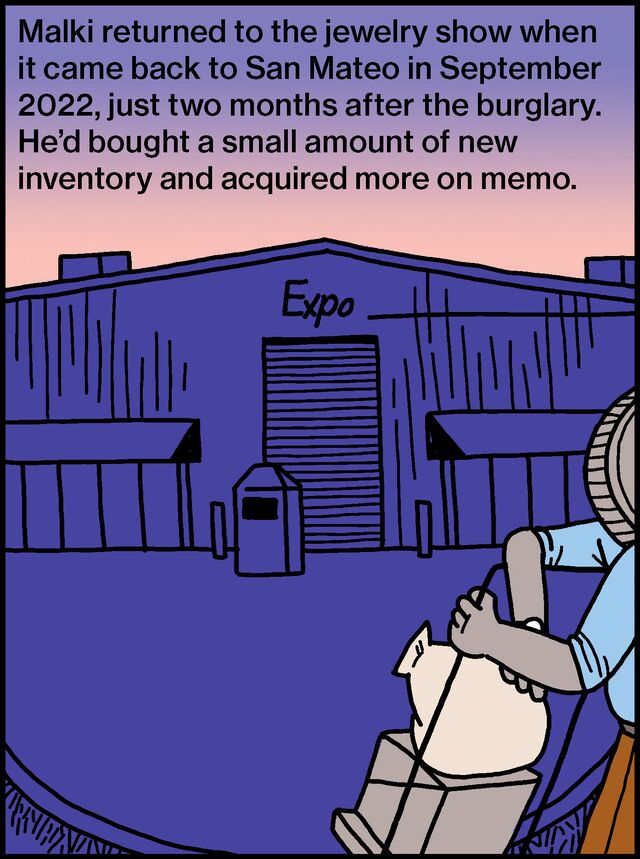
Malki returned to the jewelry show when it came back to San Mateo in September 2022, just two months after the burglary. He’d bought a small amount of new inventory and acquired more on memo.
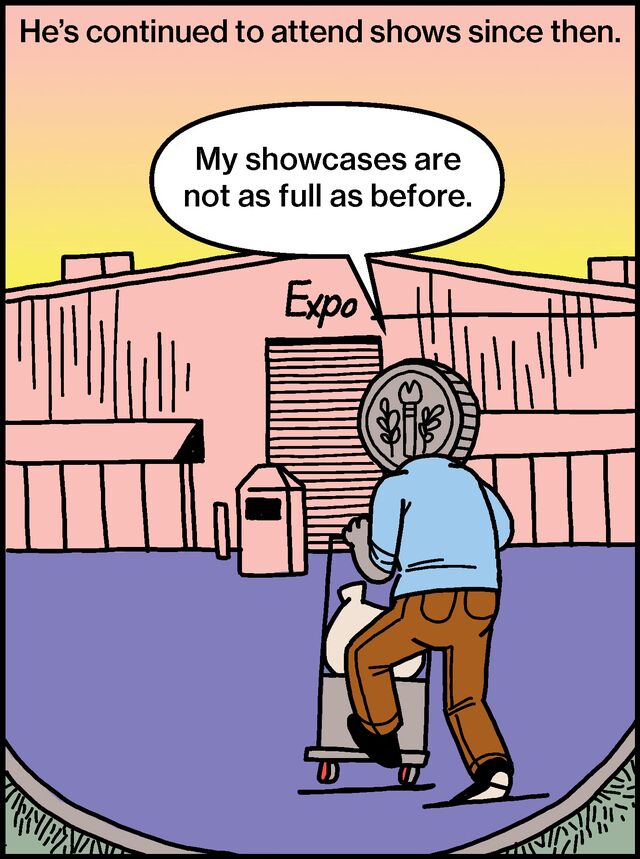
He’s continued to attend shows since then, “My showcases are not as full as before.”
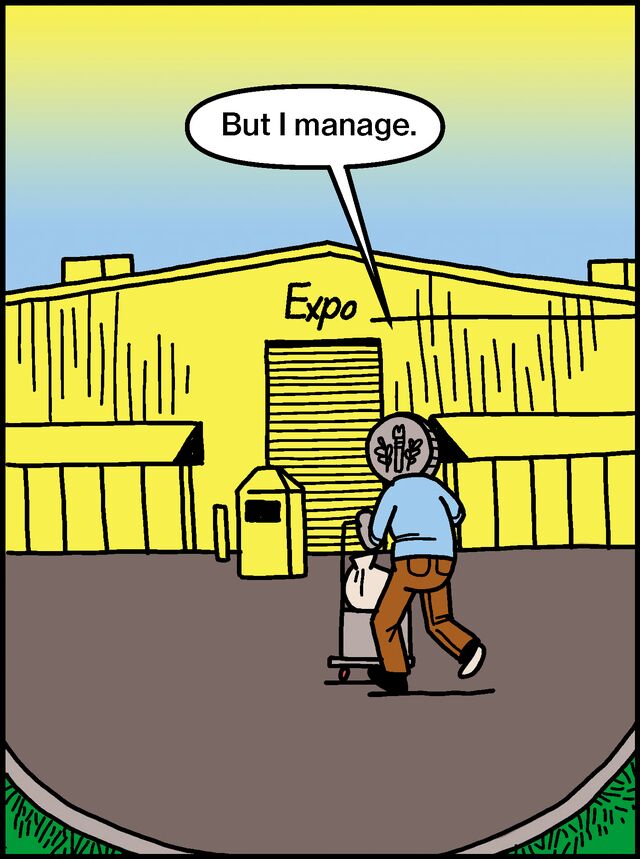
But I manage.

More On Bloomberg