How Brexit Failed England's Premier Fishing Town
Grimsby, blaming the EU for decades of decline, voted overwhelmingly to leave. It hasn't helped—and may have made matters worse.
By Sabah Meddings
Photographs by Jason Florio
August 18, 2023
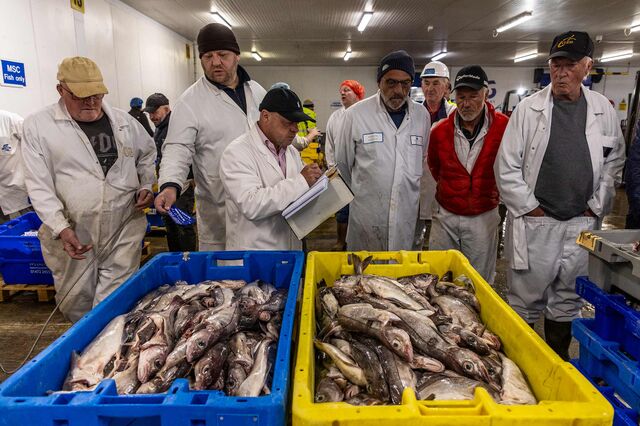
IN THE ENGLISH PORT town of Grimsby, Andrew Kay inspects rows of glistening lemon sole and haddock. At 7 a.m., Kay nods his head, buying 1,800 pounds of fish in the auction, which is held each weekday at a warehouse deep in the docks. His company, DNA Fish Supplies Ltd., will fillet his £2,000 (about $2,500) purchase, then mark it up for wholesalers who’ll supply restaurants, pubs and fishmongers across the UK.
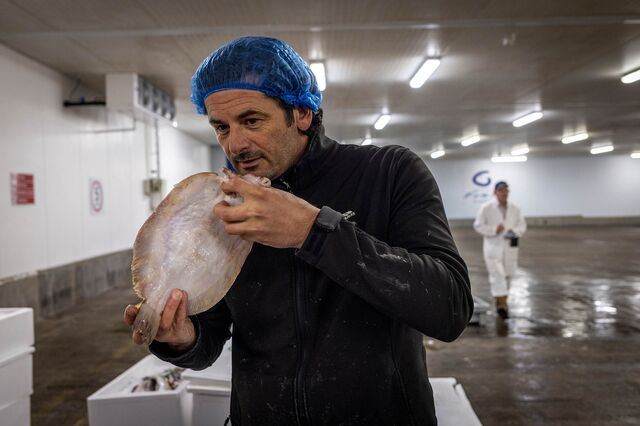
His almost 1-ton haul may seem like a lot. But when he first entered the trade as a teenager, Kay, now 45, would have bought many times as much. Back then, the UK fleet could well supply a nation’s insatiable demand for fish and chips. Today, merchants must rely on imports—in Kay’s case, from Norway.
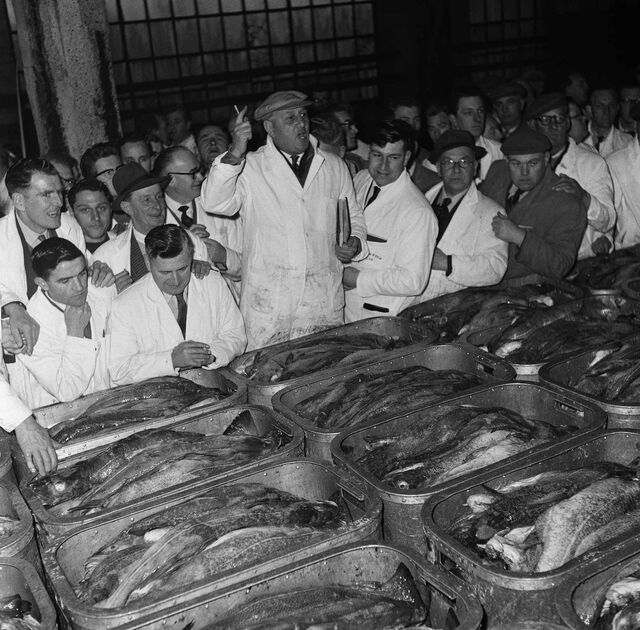
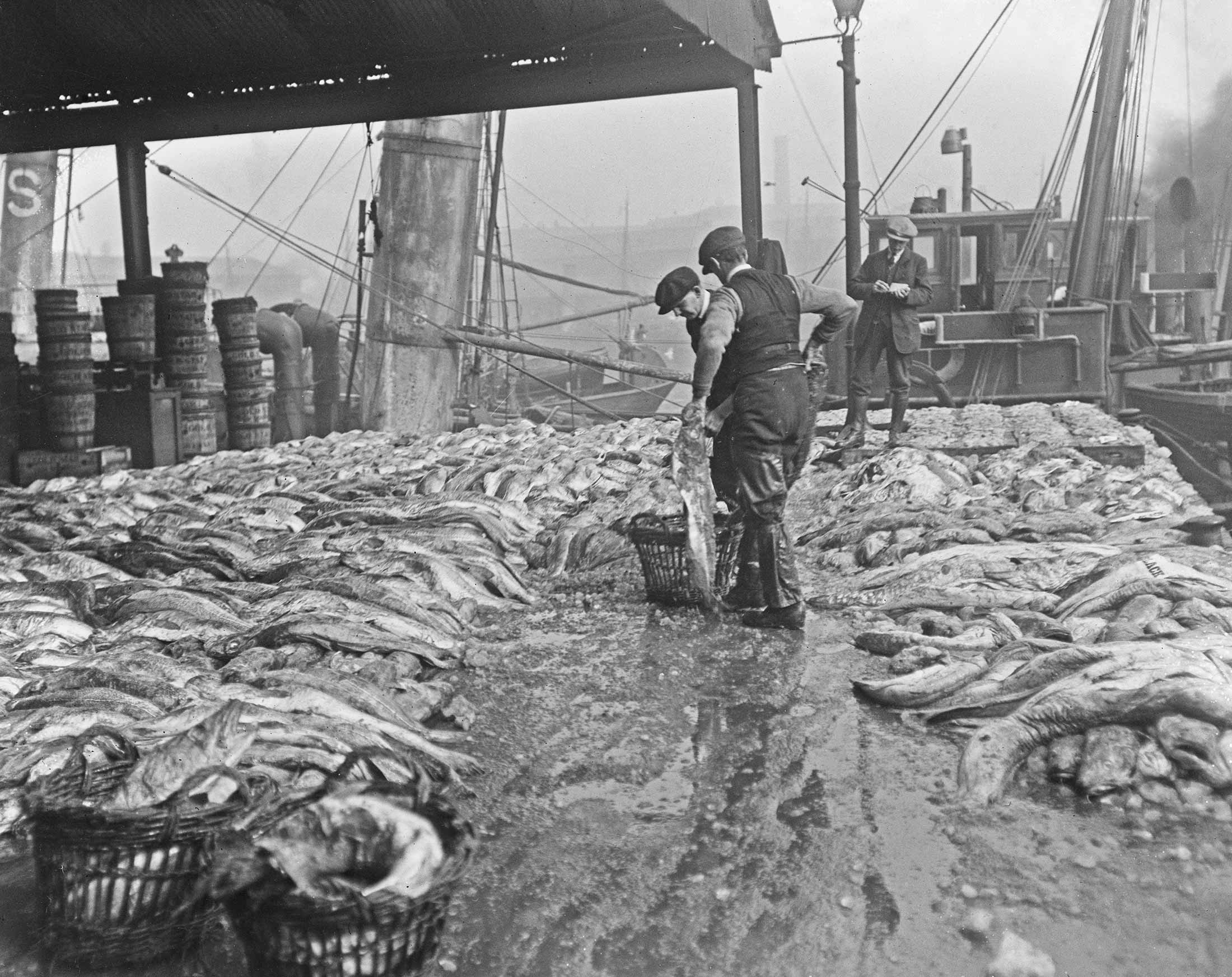
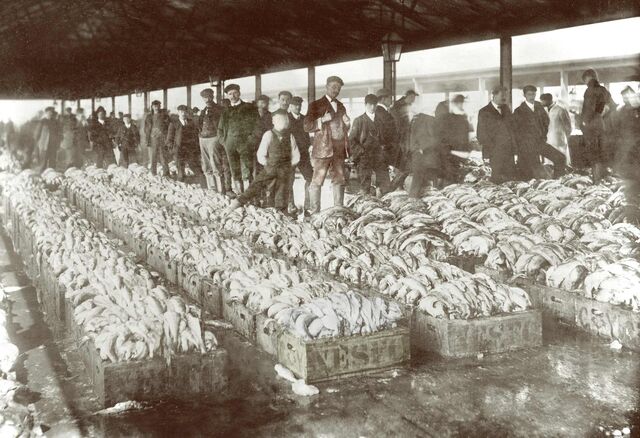
Grimsby is fading like the signs hanging across empty buildings at the docks. The town was once Europe’s biggest seaport, the heart of the UK seafood business. Packed with banks, shops and cafes, the docks alone made up a kind of mini-downtown. “It’s sad, what’s happened to the industry,” Kay says. “You can barely get a cafe that can sustain business here now.”
Grimsby’s old salts blame decades of what they consider the unfair meddling of the European Union and other neighbors. Infuriating them further: Brexit, which politicians sold to them as a way to reclaim their livelihood, hasn’t helped and may have made matters worse.
Departing the EU appealed to places such as Grimsby that have missed out on the prosperity of parts of London and the southeast. Some 70% of Grimsby voters supported Brexit, among the biggest proportions in the country. Similar populist anger led to the US election of Donald Trump and the rise of European nationalists.
Brexit offered a return to a time when a nation could control its own destiny—in terms of fishing, when British boats freely trawled the open seas far to the north, competing with all comers. Now, the story of British fishing shows what happens when nationalist policies, fueled by nostalgia, confront the realities of today’s world trade and politics, as well as the limitations of natural resources. “The Brexit promises made it sound like everyone was going to be allowed to catch more fish,” says Bryce Stewart, a marine ecologist and fisheries biologist at the University of York. “And that’s not how it played out.”
The historical forces arrayed against the fishers, as they’re often called in the UK, were too powerful. In the 1970s they lost access to some of the most productive waters. Iceland exerted control as far as 200 miles from its shores, sparking what came to be known as the Cod Wars. In the same period, the UK industry faced further restrictions when Britain joined what would become the EU. As a member, it had to abide by the Common Fisheries Policy, which set limits, or quotas, on how much of each kind of fish could be caught.
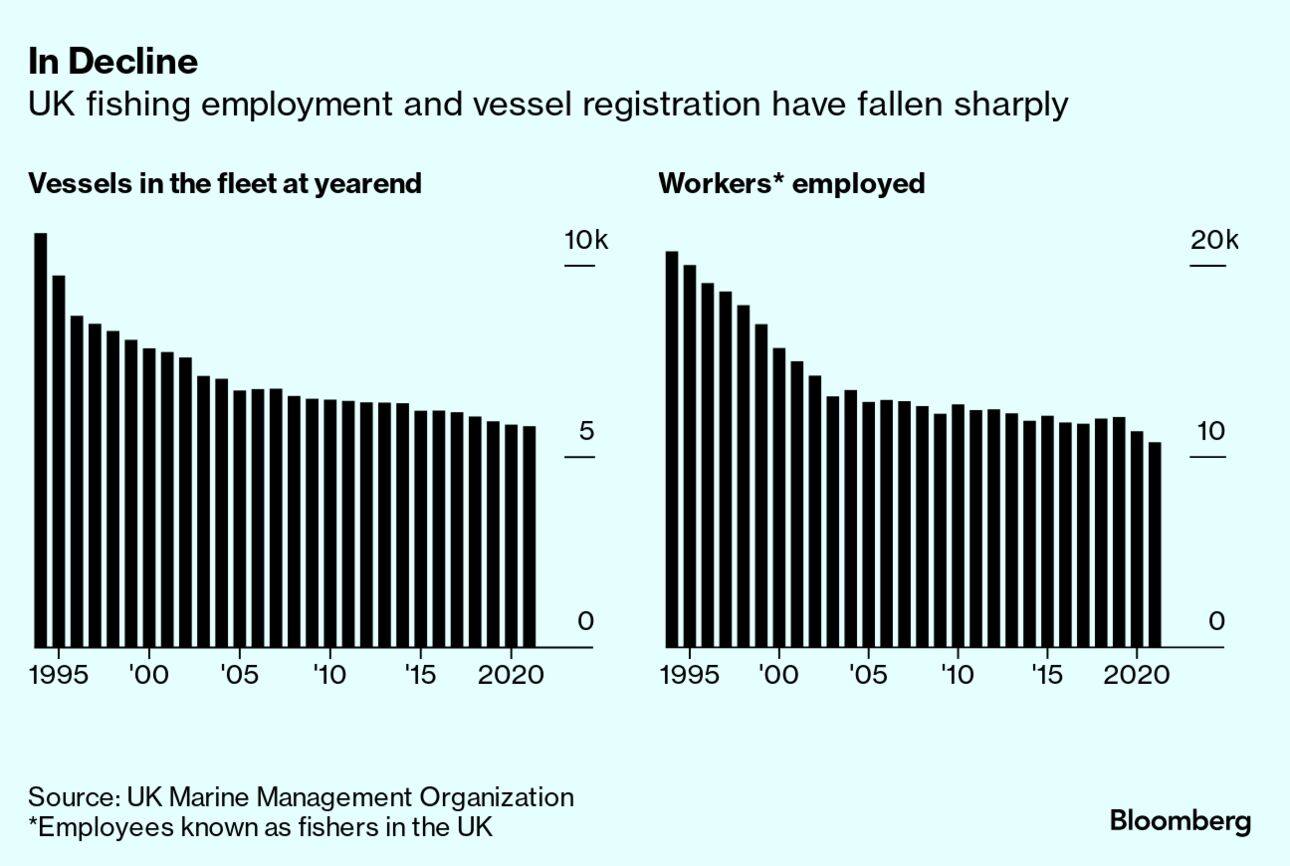
The EU countries sought, in part, to preserve the seas from overfishing, which damages the environment and the industry. Grimsby and other port communities hated the limits, which coincided with the industry’s decline. From the mid-1990s to 2021, UK fishing employment decreased to 11,000, nearly half what it had been. Vessel registrations fell by a third.
Since then, post-Brexit, little has changed. Per a negotiated agreement, Europeans will retain through 2026 most of their access to the seas under UK control. Quotas for EU nations will gradually decline but only by a quarter. Then, the two sides will renegotiate.
At the time of the deal, Barrie Deas, then chief executive officer of the National Federation of Fishermen’s Organizations, said then-Prime Minister Boris Johnson had “sacrificed” the industry. “It’s just rhetoric and broken promises,” says Martyn Boyers, CEO of the Grimsby Fish Market, who nevertheless doesn’t regret his vote for Brexit. Mike Cohen, current chief of the federation, says Brexit made it harder to trade with the EU, which had been the UK’s biggest market.
Brits don’t go much for shellfish. Lobster, crab and langoustines, the most common seafood in their waters, mostly get sold for export. UK diners prefer imported haddock and cod. The result pains the pride of Grimsby and places like it. The UK, which established an empire based on its maritime power, now has a seafood trade deficit. Last year it totaled £1.7 billion.
In Decline
UK fishing employment and vessel registration have fallen sharply
•••
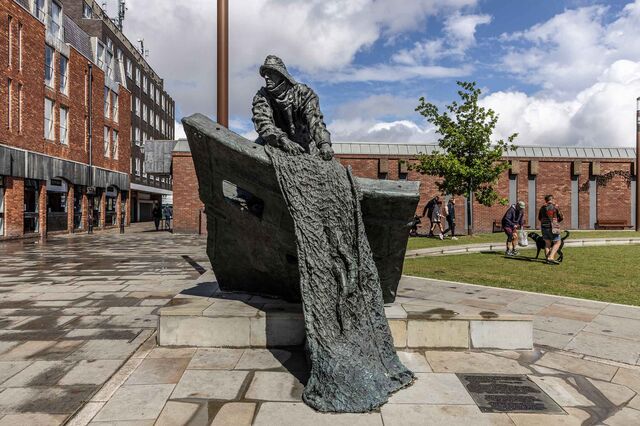
SEAFARING WEAVES THROUGH the fabric of Grimsby, a town of 85,000 about 200 miles northeast of London. In its central St. James’s Square, outside a Gothic church, stands a bronze statue of a man in a slicker crouching over the side of his boat to haul in a net. It’s a memorial to the fishermen who died on the job—among them, those lost at sea in 30 vessels in the 1950s.
Fishing could be lucrative, as well as dangerous. In the 1970s, Grimsby had hundreds of trawlers. A crew would head out to sea for long stretches, then return home, their wallets heavy with cash. In town they became known as “three-day millionaires,” because they would buy fancy tailored suits and they liked to drink with abandon at the local pubs. People speak with pride about their fathers and grandfathers who left school as young as age 14 to take their first job aboard the boats. On a weekday afternoon in July, Pete Bromley, 71, sips beer at the Tivoli Tavern on Old Market Place and remembers his fishing days. “I had a wardrobe full of suits,” he says. “You don’t see anyone in a suit nowadays.”
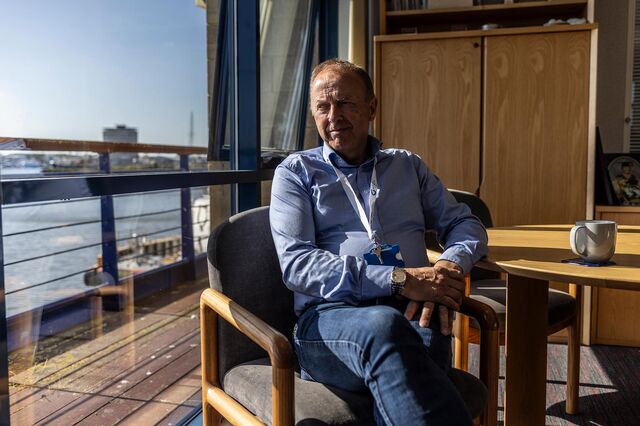
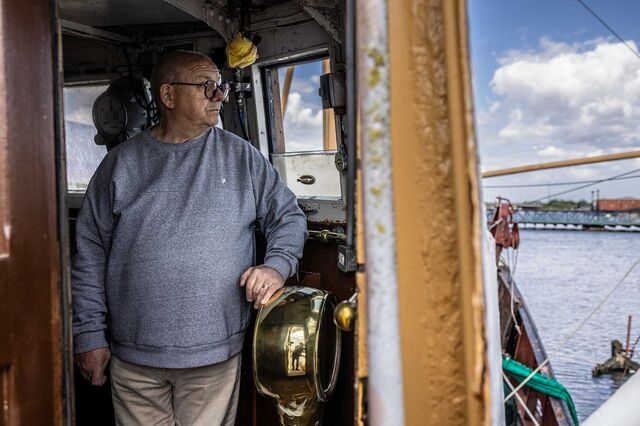
Fishing still plays a vital role in town. Almost 6,000 people work at 50 processing factories, where imports from Iceland, Norway and the Faroe Islands are packaged for UK supermarkets. But, since last November, one has closed, and two have indicated they could soon follow. Hundreds of jobs are now lost or at risk. Brexit has in a different way added to the sense of an industry being hollowed out: A third of fish-processing workers are EU nationals, and some have left the UK after Brexit.
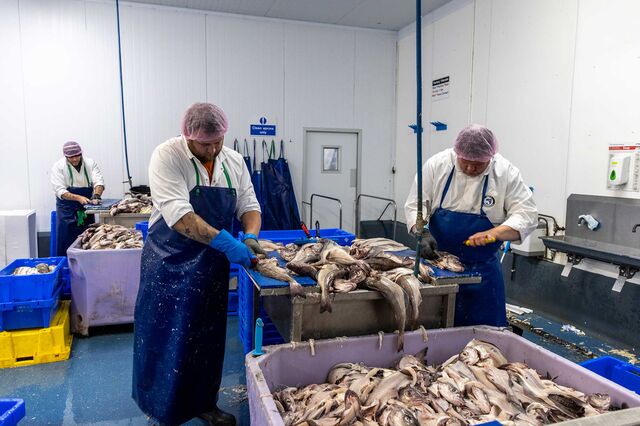
Technology also threatens employment. Processors are looking to automate. Modern trawlers, which use GPS and sonar for efficiency, fillet and freeze fish on board just minutes after they’re caught. “When you look at what the fishermen went through, there’s no way that young people nowadays would want to go fishing in the way they used to,” says Lia Nici, the Conservative Party member of Parliament who’s represented Grimsby since 2019. She dismisses a return to fishing’s golden era, calling it “a romantic dream.”
The streets of Grimsby suggest she may be right. Department stores are closed, windows are boarded up, and the roof is caving in on the old Victorian icehouse. The Fishermen’s Mission, whose roots date to the 19th century, is busy these days providing financial help and other services to those who’ve fallen on hard times. “What can they do for this town now?” says Robert Mogg, 74, a retired fisherman who works for the organization. “We’ve got politicians saying, ‘Let’s make Grimsby great again,’ but you haven’t got the men.”
Back at the fish market, CEO Martin Boyers sits for a cup of tea after the morning auction rush is over. He says the industry has continued to decline since Brexit, to the point where there are no longer any fresh landings of fish in Grimsby – it all comes by containers. For his part, Boyers voted for Brexit. “I’m not sad about it, I’ve thought the European model has been flawed for a long time,” he says. However, he accepts it has not been helpful for the fishing industry. “If it was only about fish, I’d have voted to stay in.”
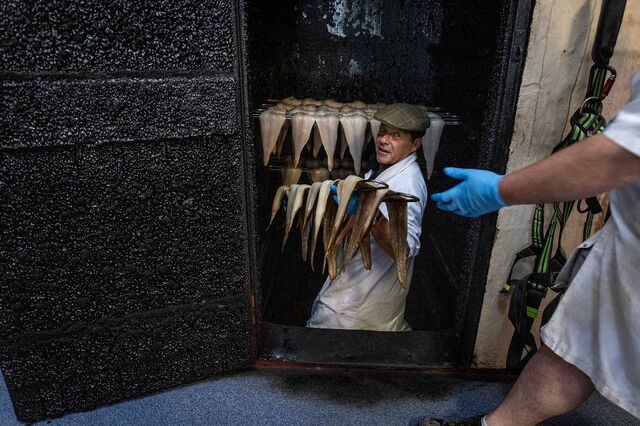
Soon after the auction, another veteran merchant starts soaking his freshly bought haddock in brine. He’ll then head over to the smokehouse he bought seven years ago to hang the fish over smoldering wood shavings. He was born for this business: His name is Patrick Salmon, a fish that he smokes and along with haddock sells to fancy UK restaurants and mail-order customers. He’s cranky, because the pandemic shuttered restaurants and inflation is raising labor costs. “Nonsense,” he calls the idea that Brexit could help. “The fishing industry in the UK is smaller than the lawnmower industry,” Salmon says. “Nobody gives a toss, really.”
Meddings covers UK business out of Bloomberg’s London bureau.
Corrects the spelling of Grimsby in the deck headline.