The Green Dreamer Who Became Big Coal’s Fall Guy
Tom Clarke, a self-proclaimed environmentalist, had a wild plan to save the mining industry and the planet. It didn’t work out that way.
The tiny West Virginia village of Colfax is surrounded by a coal mine. Underfoot, tunnels stretch for miles to the north, south, and west. Above ground, the horizon is shaped by heaps of refuse carried up from below.
Although the last shovelful of coal was hauled away a generation ago, the Martinka mine still requires careful tending. Toxic water gathers in the caverns and pours off the heaps. Without someone to pump the water up and treat it with chemicals, it would flow into nearby streams and poison them.
On a Saturday afternoon in February 2020, Leah Runion, an inspector for West Virginia’s Department of Environmental Protection, or DEP, paid a visit to the mine. She noted that the pumps had fallen into disrepair and water levels were rising. She watched orange-tinted liquid from an overflowing containment pond pour into the Tygart Valley River. A field test showed it was about as acidic as household vinegar.
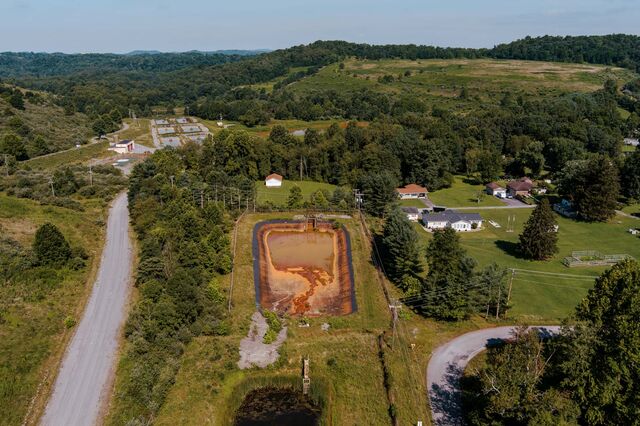
More alarming was the situation underground. The tunnels had been filling up. If the toxin-laden water rose much more, it would spring from the ground wherever it found a path—possibly through people’s homes or yards—and from there into the river, imperiling a water source for thousands.
In bygone days, the mine was among West Virginia’s most productive, owned by a succession of giant companies. But after production ceased in 1995, it became a money pit, consuming $900,000 a year in power and chemicals. Required by law to keep pumping, its owners tried various maneuvers to get rid of it.
By the time of Runion’s visit, these moves had paid off. State regulators had allowed Martinka and dozens of other mines to pass into the care of a smooth-talking accountant named Tom Clarke; it was part of a regionwide pattern of dumping old mines on questionable owners. Pitching a wacky plan to halt global warming and save the coal industry, Clarke had become one of the biggest mine bosses in the state. Then, just as his story took an even more bizarre turn, he went broke.

That left Runion with no good options. She couldn’t order a halt to mining because there was no mining going on, nor was there any money to pay fines. She wrote up another violation and added it to a growing pile.
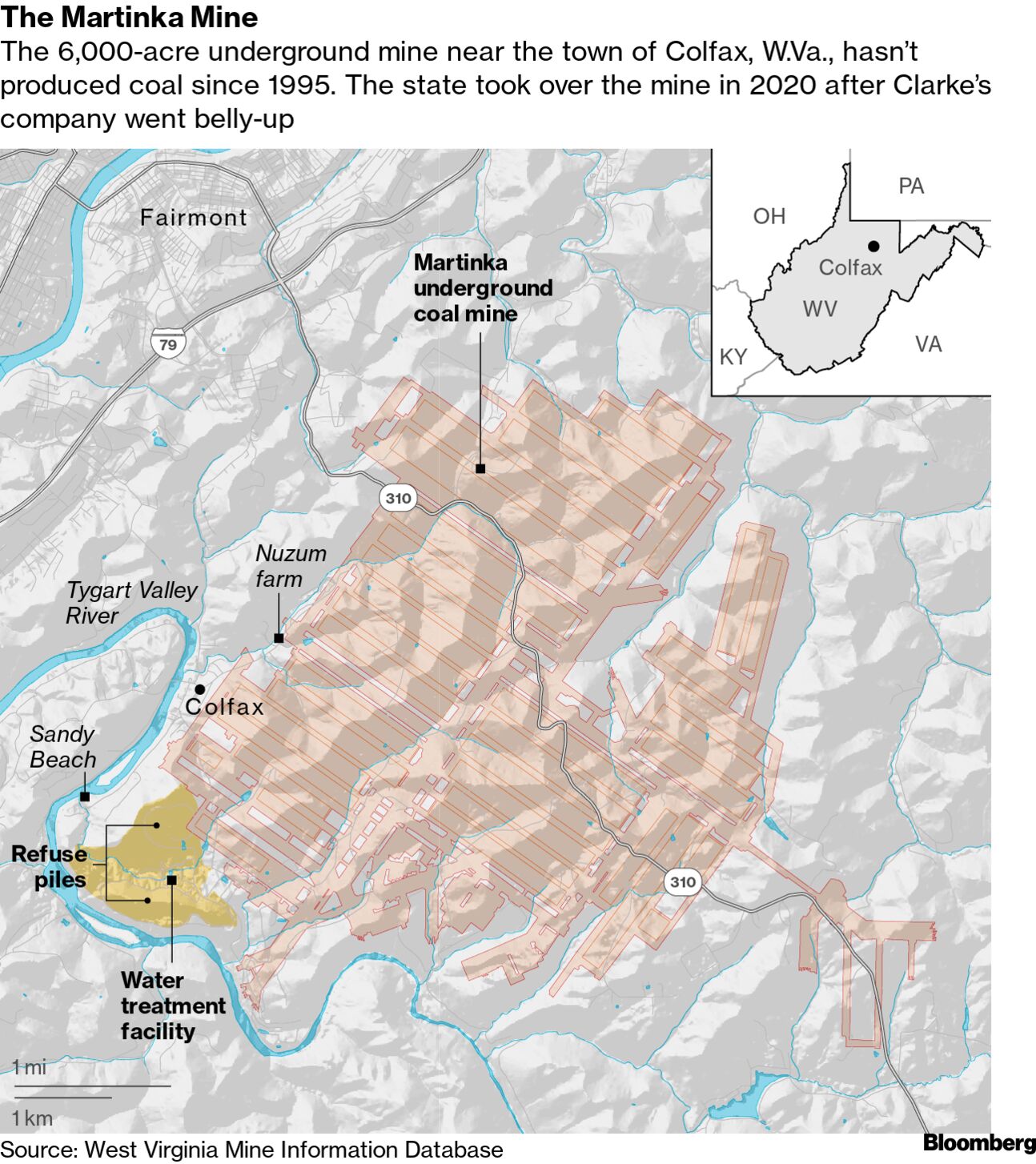
The Martinka Mine
The 6,000-acre underground mine near the town of Colfax, W.Va., hasn’t produced coal since 1995. The state took over the mine in 2020 after Clarke’s company went belly-up
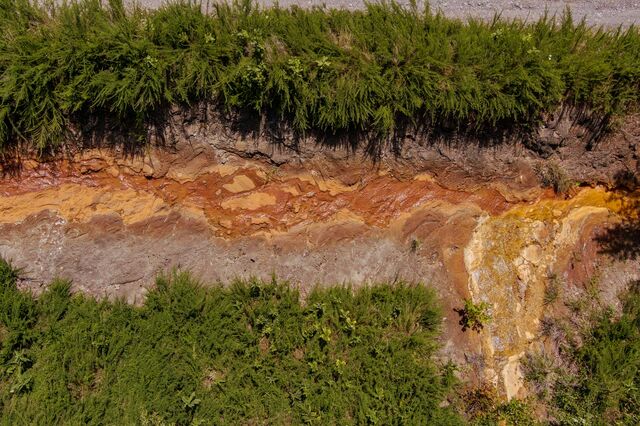
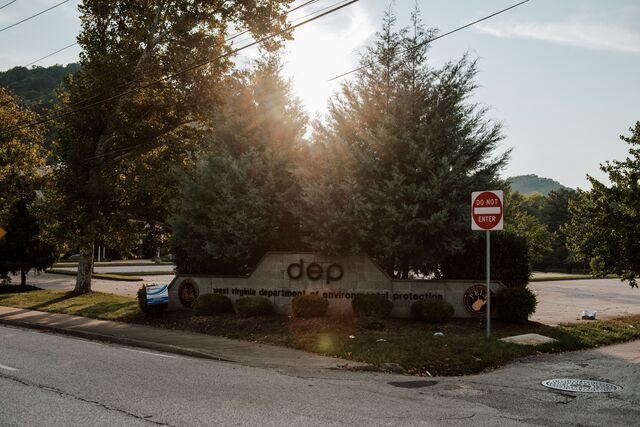
In May a couple of Colfax residents offered to show me around the old mine. We ambled up a road that skirts the refuse mounds, which are covered with grass and blackberry thickets and drained by ditches carrying orange water. At one point, a state pickup truck approached. Since Clarke went belly up, the mine had become the responsibility of the state’s DEP. The driver dragged on a cigarette and chatted with the visitors through the open window of his vehicle. One of them asked what became of the mine’s last owner. “They walked off,” he said.
The scene at Martinka offered a sharp contrast to what was happening elsewhere in the coal business. Surging demand and a war in Ukraine offered a bonanza to an industry that was otherwise in long-term decline. “These are prices that we’ve never seen, frankly, in 20-plus years,” crowed a top coal executive. Analysts were projecting that Peabody Energy Corp., a longtime owner of the Martinka mine, would earn $1.3 billion in 2022, its biggest haul ever. None of that money would end up in Colfax.
The same story was playing out all over Appalachia. While the coal giants enjoyed boom times, many of the messes they’d made were still waiting to be cleaned up. Over the previous decade, the companies had used spinoffs, asset sales, and bankruptcies to shed idle mines, along with hundreds of millions of dollars in cleanup obligations, onto a crop of undercapitalized new owners. As these new owners now tilt toward insolvency, the risk grows that they could overwhelm state backup funds and foist the cost onto the public.
The oddest of this new breed was Tom Clarke, president of a nonprofit chain of nursing homes. The day before my visit to Martinka, I’d stopped by his headquarters in Roanoke, Va., in an industrial building shared with a cardboard-box manufacturer and a machine shop. A woman who answered the door said he wasn’t around. I handed her a note, which, like the other voicemails, emails, and letters I sent to Clarke over several months, got no response.
Clarke used to be more forthcoming. In 2015, before his unlikely turn as a coal baron, he was invited to Virginia Tech’s Pamplin College of Business to talk about business ethics.
A video of the event shows a lanky, affable 59-year-old in a boxy suit. At that point, Clarke had spent his career in health care. After a stint in the US Navy and college in Maine, he held finance roles at hospital chains in Massachusetts, then got into nursing homes and moved to Virginia.
Clarke didn’t bother with that history in his hourlong talk at Virginia Tech. He mostly dwelled on a series of wildly ambitious, if scattershot, charitable projects he’d been pursuing, using his nursing home outfit, Kissito Healthcare Inc., as a launchpad. Clarke brimmed with enthusiasm as he clicked through his slides. Here was a newborn baby in Uganda, one of several African nations where he’d built health clinics. Click. Here was Virginia’s world-famous Natural Bridge, which he’d just rescued from a developer. Click. Here was a 13,500-acre forest in Belize he’d recently purchased. Click. It all sounded great, even if it was hard to figure out how everything fit together or where the money was coming from.
Clarke turned to his latest project: stopping climate change. He said he’d hit on a way to offset the carbon dioxide emissions of coal, the dirtiest component of the US energy grid, by planting trees. It’s not quite as crazy as it sounds. Trees store tons of carbon in their roots and trunks, acting as a natural sponge for the planet-warming gas. Clarke’s idea was to sell coal and tree-planting credits as a package, rendering the combination supposedly carbon-neutral.
To hear Clarke pitch the idea, it sounded inevitable that coal buyers would pay extra for the product. “I’m convinced,” he told the students, “that business will be the catalyst for the change we need.”
Less than a month later, Clarke would get a chance to put his vision into action. In May 2015, Patriot Coal Corp., one of the largest producers in Appalachia, filed for bankruptcy, part of a wave of failures that took down all the biggest miners. Clarke stopped by the courthouse in Richmond, Va., to watch the proceedings. A buyer wanted Patriot’s most attractive assets but wouldn’t touch the rest, a grab bag of idle or unionized mines, saddled with high costs and reclamation obligations. After permit holders are done digging coal, federal law requires them to restore any scarred or denuded land and to return poisoned streams to health—work that, in Patriot’s case, would cost hundreds of millions of dollars.
That summer, Clarke offered to take the unwanted mines. He wouldn’t pay anything for them out of his own pocket. Instead he’d set up a nonprofit that would assume environmental liabilities attached to some 150 mining permits, including Martinka’s. If his coal-and-trees idea worked, maybe the profits would more than pay the cleanup costs. He called the venture ERP, for Earth Restoration Project.
Most of the mines were in West Virginia, and the state’s environmental authorities balked. Clarke’s project was “destined to fail,” the agency told the court, and would benefit no one but Patriot executives and the New York hedge fund backing them.
The regulators pointed out Clarke’s lack of experience in running a coal mine. Other red flags went unmentioned, including the bankruptcy of one of the companies he ran and a history of unpaid debts.
But Patriot executives pressed hard for a deal. They claimed that without Clarke, the leftover mines would undergo a messy liquidation, an outcome that bankruptcy judges strive to avoid. And Clarke was promising to cooperate with the United Mine Workers of America and keep more miners at work, a popular notion in a region that was reeling from layoffs. After securing a $12.5 million backup fund from the other buyer, the state dropped its objections. When Clarke’s outside financing fell through at the last minute, he even got Patriot and the union to kick in funding to salvage the deal.
After Patriot, Clarke struck two more deals with other large coal miners, acquiring their castoffs in exchange for assuming cleanup obligations. Court filings show that neither he nor his companies put up more than a dollar of their own.
The unorthodox climate plan won Clarke wide notice. “We’re sort of betting the farm that we’re going to create a market,” he told the Marketplace radio program. In his State of the State address in early 2016, the West Virginia governor at the time, Earl Ray Tomblin, applauded Clarke for bringing “new and innovative ideas” to revive the region’s economy.
Disaster ensued. Environmental regulators and advocates rolled their eyes at the coal-and-trees idea, and buyers weren’t willing to pay extra for it. Coal prices stayed too low. Unpleasant surprises kept cropping up. After Clarke bought one mine, it was hit with a $600 million lawsuit stemming from a years-earlier flooding episode for which he was now on the hook.
Meanwhile, Clarke’s tree-planting scheme was hindered by a lack of trees. It turned out he didn’t own that forest in Belize; he’d just tried to buy it, according to the manager of the forest’s carbon-offset project. Clarke rented a 30-acre greenhouse in rural New York, but according to the site’s former horticulturist, disease tore through the facility and crippled thousands of seedlings before they could be planted. Chronically short of cash, Clarke stiffed vendors, trading partners, and tax authorities.
Clarke responded to these challenges by pursuing more and bigger deals. If steelmakers wouldn’t pay extra for carbon-neutral coal, he’d just make his own steel. In 2017 he bought an iron mine in Minnesota and kicked the tires on steel plants in Canada, Italy, and the UK. “I just love solving complex problems,” he remarked to Bloomberg Businessweek that year. He started comparing himself to Andrew Carnegie.
Even as creditors closed in, Clarke’s ambitions swelled. Press accounts started calling him a billionaire. (He wasn’t.) The iron mine had come with a corporate jet, which he used to scout for deals, along with occasional jaunts to vacation spots such as Aruba, flight records show. He bought a gold mine in California. He bought derelict oil platforms in the Gulf of Mexico and a shipyard in Alabama. He bought an historic Coast Guard icebreaker, the Bramble, and planned to send it to the Arctic Circle with a documentary crew. Video of a test voyage, posted online, shows Clarke in a heavy parka. “We’re going to go up to Lake Huron today and break some ice!” he declares. Creditors repossessed the Bramble not long after.
“Tom is one of those guys,” says Kevin Barrett, a lawyer who represented West Virginia in several Clarke-related matters. “There’s always a deal to be done, and if I can just get this new deal done, everything will work out just fine.”
As Clarke’s acquisition binge neared its manic peak, a reporter from Virginia’s Rockbridge Advocate visited his war room in the basement of a hotel in the town of Natural Bridge. Organizational charts covered the walls, tracking more than 100 business entities Clarke had set up. The hotel itself was another gamble with borrowed money; he later lost control of the property after missing payments on a $9 million state loan.
“It was just this unbelievable shell game,” said Doug Harwood, the Advocate editor who chronicled Clarke’s machinations over several years. “He was just this sweet-talking, down-to-earth guy who was really enjoyable to be around. He stiffed everybody here in one way or another.”
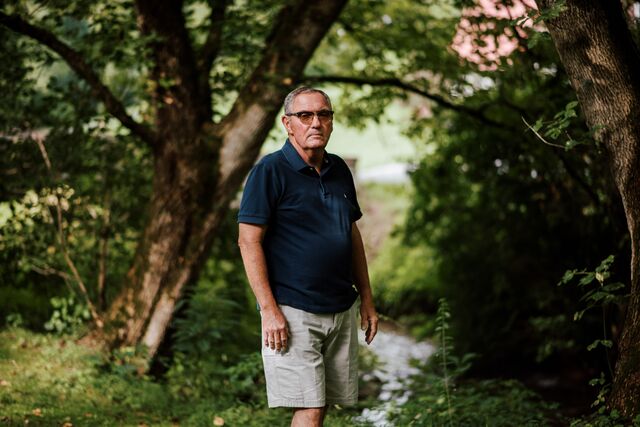
David Nuzum, a retired social studies teacher and school principal, lives on a farm near Colfax. It’s been in the family since his grandfather swapped a Model T for the spread. A creek runs through a pasture and passes behind Nuzum’s house.
Nuzum remembers when the Martinka mine stopped production, because that’s when his creek turned orange. It’s a common sight in coal country. Water passing through old mine cavities or refuse piles forms sulfuric acid, which dissolves iron and other metals and carries them away. The runoff can ruin water wells and kill aquatic life, throwing ecosystems out of whack. Nuzum says the water sometimes turned white, too, and it stank. He suspects it killed a pony that drank from the stream.
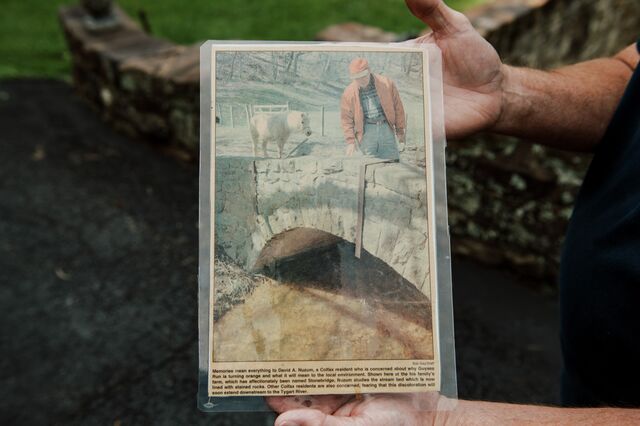
Martinka’s owner at the time was Peabody, the largest US coal producer. Nuzum complained to regulators at the DEP, but he says nothing much happened until he and his neighbors began pressuring the agency and then intervened in a case before the state Surface Mine Board. He says he came to believe regulators were more intent on helping industry than on protecting the environment. “Coal was king in West Virginia for a lot of years,” he says.
The board eventually forced Peabody to clean up the creek, noting that it was Nuzum’s group, not the DEP, that won the case. In 1999 the company built a state-of-the-art water treatment system that pumped water to a distant hillside. There it was treated in a maze of orange ponds before pouring down a different creek into the Tygart.
Martinka was now an albatross, consuming huge amounts of power and chemicals and producing no coal. Peabody executives tried everything to unload it. First they floated the idea of donating the property for a county park, a move that led locals to wonder who, if anyone, would be responsible for water treatment. Then they sold it to two Missouri brothers, who subsequently unwound the purchase after claiming they’d been tricked.
Finally, in 2007 the Peabody executives found a way out. They shunted dozens of their idle or unwanted mines in Appalachia, along with many of their health-care and workers’ compensation costs, into a new, independent company, Patriot Coal.
Patriot lasted less than five years before going broke. The miners’ union would later accuse Peabody of creating Patriot as a liability dump, destined to fail. Even Patriot’s own chief executive officer agreed, telling a reporter after the bankruptcy filing that “something doesn’t quite smell right here.” (Peabody, which didn’t respond to requests for comment, has said in court filings that it left Patriot on solid financial footing and wasn’t to blame for the later collapse.)
It was during Patriot’s second trip through bankruptcy court, in 2015, that the next CEO, Robert Bennett, worked out the deal with Clarke. In a way, it was the same old Peabody trick: Hold on to the most promising assets and dump the rest. Patriot’s best mines went to Blackhawk Mining LLC, where Bennett now serves as a top executive. (He didn’t respond to requests for comment.)
By early 2020, Clarke’s rickety empire was collapsing. The iron mine and shipyard and jet and icebreaker were gone, swept away in a flurry of liens and judgments. The few productive coal mines in his portfolio were gone, too, either shut down, bankrupt, or sold to cover other debts. A few weeks after the inspector visited the overflowing pond at Martinka, the nonprofit that held Clarke’s remaining mines, ERP Environmental Fund Inc., laid off its last employees. Once hailed as an environmental savior, it had racked up 160 violations of mining laws.
Regulators hastily convened a court hearing on a Friday afternoon, where they asked a judge to seize control of Clarke’s company. Barrett, the DEP lawyer, told the judge that ERP “is, in effect, your Honor, a rudderless cruise ship at sea in a hurricane about to hit an iceberg, and with passengers on board.”
ERP, the agency wrote in court papers, was so big that a bankruptcy filing could trigger a financial chain reaction that would imperil the entire industry, blowing up ERP’s main surety bond provider as well as the state’s reclamation funds.
The backdrop was the sorry state of coal mining in West Virginia. Cheap natural gas had decimated demand and toppled all the big companies. As they struggled back to their feet, they were allowed by regulators to toss hundreds of idle mines into the hands of shaky new owners, one of which had already gone bust. That couldn’t be allowed to happen with ERP, Barrett said. Instead, he asked the judge to put the company in receivership, a sort of prebankruptcy limbo that would slow the inevitable collapse.
Clarke didn’t show up at the hearing; according to the DEP, he’d had little to do with ERP in recent years. A lawyer for the company raised no objection to the receivership, and the judge appointed an outside mining engineer to take charge.
I eventually talked to about a dozen people who used to work for or with Clarke, most of whom spoke on condition of anonymity. How could someone who seemed so earnest about saving the planet end up responsible for such a mess? These people seemed as puzzled as anyone else. “After working for him for a number of years,” one former employee wrote me, “my own thoughts and feelings about him are so conflicted and unclear to myself that I do not think they would make sense to anyone else.”
Peter Morgan, a lawyer for the Sierra Club in Colorado who tracks mine reclamation, dealt with Clarke and his companies in and out of court for years. “We spent a lot of time internally debating whether he was entirely a con man, or whether he was just in over his head, and whether he earnestly believed he could do the good things he was claiming,” Morgan says. “I don’t know we ever resolved the question.”
Since the collapse, Clarke’s former associates have swapped rumors about his whereabouts: He was somewhere in South America or at the California gold mine. (According to his longtime lawyer, Timothy Dixon, Clarke remains in Virginia.)
As creditors sort through the wreckage, some have accused him of improperly shifting money out of his various companies. But most of the examples they point to involve moving funds from one doomed venture to another, rather than pocketing it for himself. In one of the dozens of lawsuits against him, he testified in 2020 that his business woes left him unable to pay personal debts or even, for a time, to hire a lawyer to defend himself against creditors. “It just all collapsed,” he said. “The whole world collapsed.”
Ultimately, Morgan says, it doesn’t matter whether Clarke was cynical or naive. “The bigger story is the way in which more sophisticated entities took advantage of Tom Clarke and used him to carry out their broader purposes of shedding high-liability assets,” he says. “It seems likely he was running some sort of a con, but ultimately he was caught up in a much bigger con.”
Last year an auditor for the West Virginia legislature warned that the environmental cleanup costs at ERP could top $800 million, enough to blow through the company’s bonds and overwhelm the state’s backup reclamation funds, which are supported by a per-ton coal tax and cover mine cleanup when owners go broke. The same report pointed out that hundreds of other mines once owned by coal giants have fallen into questionable hands. (The panel that oversees the reclamation funds said in February that they’re at no risk of running out of money anytime soon.)
Barry Doss, ERP’s court-appointed receiver, has offloaded about half its mining permits to other parties at no cost to the state and cut deals to partially repay other debts. Eventually, whatever is left will be sorted out in bankruptcy. “If you ask me what the terminal liability will be, I don’t know,” Doss says. “There will be one.”
Among those likely to get shortchanged are Clarke’s former workers. Clarke had a “mentality of paying medical bills when he wanted to,” says Brian Sanson, a top mine workers’ union official. “We’re still trying to collect those debts on behalf of those workers today.”
At Martinka, the state took direct control during the summer of 2020, a move that freed up a $1.5 million bond. Given the site’s monthly expenses, that money might have already been spent. The DEP declined to comment on that or on a dozen other questions.
The agency said in a statement that it’s striving to make sure all of ERP’s mines are reclaimed without placing a financial burden on taxpayers. It said the strategy has been successful so far and that Doss and his team have done a “tremendous” job.
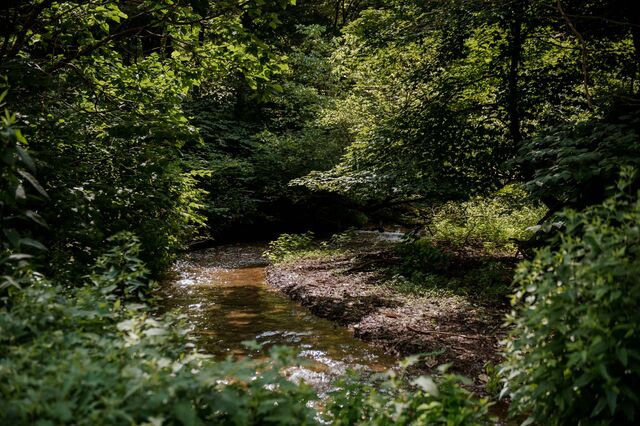
These days, treated water from Martinka pours into the river at a swimming hole called Sandy Beach. One afternoon in May, Joseph Irons, whose family owns this part of the riverbank, parked his truck alongside the creek and pointed to rusty stains on the rocks. He said the water still turns orange or white now and then, especially in late summer, when there hasn’t been much rain. “It happens about every year, and we complain every year,” he said. Sometimes, he said, dead fish wash up in the river.
Irons has been trying to rally his neighbors to press for a permanent fix. With deep corporate pockets gone, any solution will have to come from the state. But there are lots of communities such as Colfax, living in the shadow of an old mine, and he fears there will be only so much money to go around.
This story was reported in collaboration with National Public Radio, which is airing several broadcasts on the subject.