With Food and Drinks in the Spotlight, Now’s the Perfect Time to Visit Wales
Here’s where to eat, drink, and spend a night or two in a country that’s riding high on new innovation and accolades—built on centuries-old traditions.
Little-known fact: The Welsh landscape contains such towering ridges and crags, it served as Sir Edmund Hillary’s training ground before he climbed Mount Everest in 1953. Its glacially hewed peaks and iridescent coastal valleys fill some of the most dramatic vistas you’ll find west of the Himalayas. But the mountain I’m here to climb can’t be measured in feet.
I’m visiting a village on the Isle of Anglesey with the distinct honor of having the longest place name in Europe: Llanfairpwllgwyngyllgogerychwyrndrobwllllantysiliogogogoch.
It means “The church of Mary in the hollow of the white hazel near the fierce whirlpool and the church of Tysilio by the red cave.”
Wales, Done Well

Getting to Llanfair PG, as it’s commonly shortened, is easy. Most people arrive by train, where an unabbreviated station placard is a point of pilgrimage for enthusiasts of obscure geography like myself. The Everest-style challenge is, instead, tackling the pronunciation.
Even locals stumble in that esoteric quest, partially because the old Celtic tongue native to the country has been repeatedly quashed by invaders since the dawn of the Romans. In the 1500s, King Henry VIII strictly forbade its usage; in the 19th century, when schoolchildren got caught speaking it they were forced to wear the Welsh Not, a plank of wood strung around their necks with a cord as a form of humiliation. Even today, only 30% of residents speak the language, and that’s up roughly 10% from a decade earlier.
In my first few days on the ground, I hear a lot about a surge in the long-ascending desire to reclaim Welsh culture and language, both formally in schools and in less tangible ways. Traditional architecture is being restored, places of great natural beauty are being protected as reserves, and an ambitious program of GIs, or geographical indications, has sprouted to recognize about 20 native foods, just as France has trademarked Champagne and certain cheeses based off their appellations.
At Nant Gwrtheyrn, the National Welsh Language and Heritage Centre, educational manager Rhodri Evans says I’m hardly the first person seeking help in untangling the aspirated double “l’s” and shifting, voweled “y’s” of Llanfairpwllgwyngyllgogerychwyrndrobwllllantysiliogogogoch.
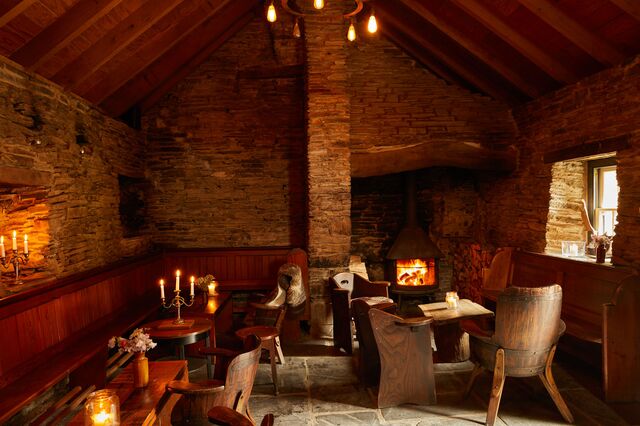
Lately, he notes, people have been asking for more. “We’ve had a massive increase in interest in our language courses over the last two years,” he tells me over tea at the campus cafe. Through the picture windows, the hills of Snowdonia National Park tumble down toward the lapping waves and jagged coast. During the pandemic, the school registered thousands of signups for digital classes, which provided a structured activity amid lockdowns. It also fed into a post-Brexit push for the establishment of an independent Welsh state, an idea now supported by more than a third of the population.
As I drive north along coastal route A487, which stitches pine forests to fishing towns on the way toward Llanfair PG, I hear the folk song Yma o Hyd on mainstream radio stations so frequently I wonder if it’s on a loop. The tune is a rallying cry for not only pro-separatist activists but also the Wales national football team—they sang its refrain, which translates to “Despite everyone and everything we’re still here,” in June when they won a place at the upcoming FIFA World Cup. (It’s only the second time the team has qualified in the history of the tournament.)
Today I detour from the seaside highway that arcs up from the Pembrokeshire Coast National Park to Snowdonia and find myself on the outskirts of sleepy Llandeilo, near a castle-filled national park called Brecon Beacons. I’ve come to interview Carwyn Graves, a staunch protector of the Welsh language, and join him for lunch at Wright’s Food Emporium—half grocery, half restaurant. Under the buckling beams of an old farmhouse, we savor Blaencamel potatoes, smoked local salmon, and a side of bara brith, or fruit-studded Welsh tea bread.
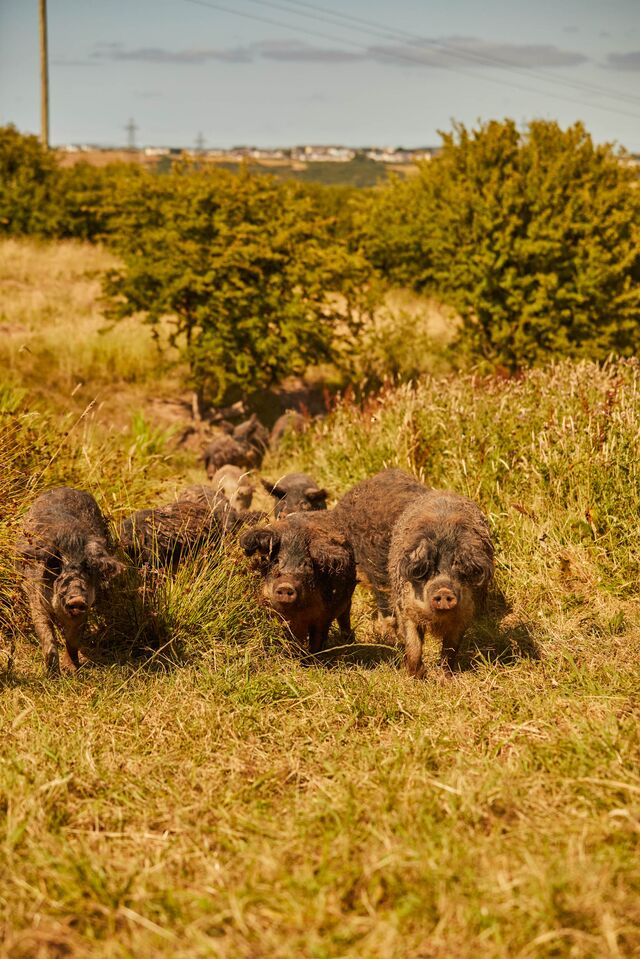
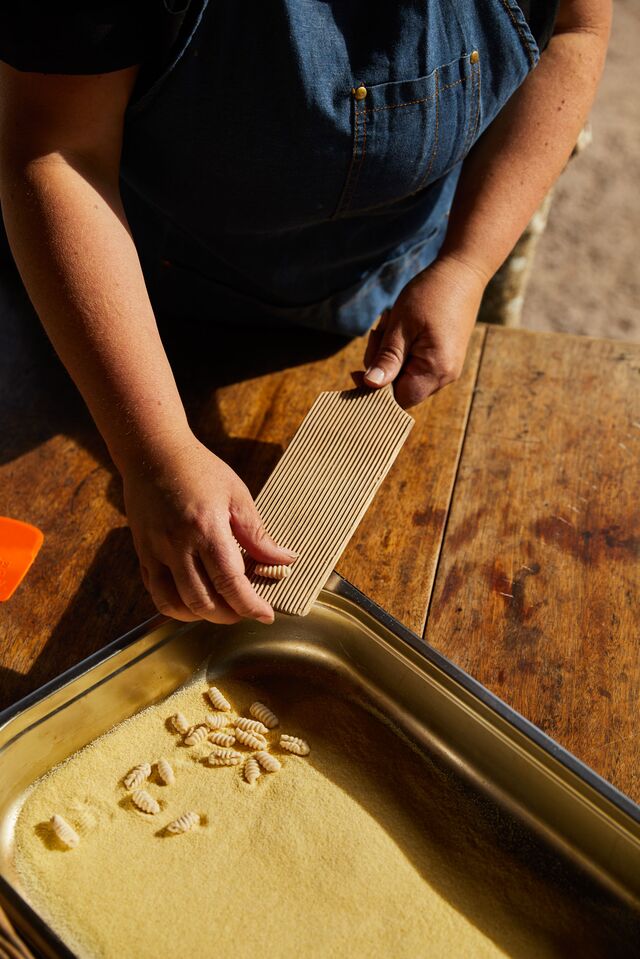
Many of the ingredients here—crumbly Caerphilly cheese, pure Halen Môn sea salt, free-range lamb—are also celebrated in Graves’s new book, Welsh Food Stories, which argues that the country has a culinary vernacular as wide and distinctive as France’s or Italy’s. But Graves confesses to me that, more than the Welsh language, it’s the very notion of Welshness that’s in danger of disappearing.
The words that are hardest to teach, he says, are trickier to translate than they are to spell or say. Most of these relate to the way the Welsh value nature and their native agricultural spoils. The word pingo denotes a tree so heavy with fruit that its branches begin to sag. Two other Welsh-isms, armel and tical, relate to the specific freshness and richness of milk. They offer nuanced distinctions—similar to the Danish concept of hygge—that simply don’t exist anywhere else.
Soon, Simon Wright, the cafe’s eponymous co-owner, joins us with forks and slices of whipped cheesecake crammed with raisins and spices. He prefers to talk numbers, noting that the UK can produce only 60% of its needed calories, a mounting dilemma now that Brexit has raised the cost of imported foods. Wales, he says, can help.
This is a point of passion for Wright, who lobbies for better farm-to-supermarket pipelines, runs free cooking classes for the community, and recently co-founded the 300-plus-member Welsh Independent Restaurant Collective to help the hospitality sector recover from the one-two punch of Covid-19 and Brexit.
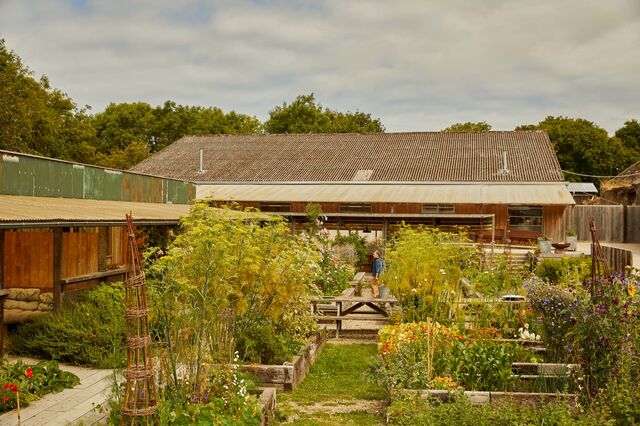
Wright is excited to hear that my next stop is Fforest, a nature-focused resort on 200 acres of old oaks and tended pastures near the town of Cardigan, back along the coast. He’s friends with its owners, Sian Tucker and James Lynch, who approach Welsh architecture and craftsmanship much the way Wright approaches food.
In the past two decades they’ve turned their working farm into a popular weekending destination for Londoners, adding cabins and geodesic domes throughout the property. Each is filled with goods from their lifestyle brand, Cold at Night, which works with Welsh artisans to produce modern versions of traditional crafts like knitwear, loomed blankets, and hand-carved wooden cutlery. Although the summer weather is warm and cloudless, Tucker offers me a pair of Corgi wool socks with Fforest’s druid-ish geometric logo on the heel. “Here, you’ll need these this evening,” she tells me.
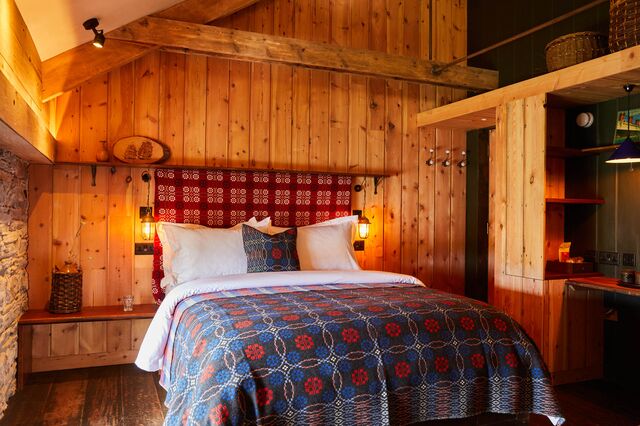
Cold at Night also runs a handful of ventures in Cardigan. I make time for a bite at Pizzatipi, a scattering of riverside picnic tables set under slats of corrugated roofing and a namesake tent, where guests tuck into wood-fired pies piled with ingredients such as spiced lamb, local watercress, and cider vinegar onions.
From there I take the small bridge across the river for a peek at Lynch’s just-completed Albion hotel, where about two dozen rooms fill a pair of 200-year-old stone-and-timber warehouses. In a few of them, you can see original graffiti that depicts tall ships in the nearby port, penciled by workers and sailors into the whitewashed walls.
It’s Lynch’s first foray into urban living in 20 years. Before buying Fforest in the early 2000s, he managed a successful studio designing commercial and residential space in London’s Shoreditch. Because so many people experience the country as I’m doing, wending across wide swaths of coastline by car or bike—there’s even an 870-mile biking trail, called the Wales Coast Path, that stretches along the entire seaboard—Lynch sees room to continue expanding his portfolio. He’s set his sights on rehabilitating dozens of disused churches and chapels across the country and refashioning them into affordable and unique overnight stays.
I find that same no-frills vibe at Paternoster Farm, a restaurant in an old storehouse hidden inside a working estate farther up the Pembrokeshire Coast. It’s run by Michelle Evans, a former divorce lawyer, and her husband, who decided to ditch their corporate lives to open a meat farm in 2016 and a weekends-only restaurant in 2020, despite having no formal food training. Diners reserve spots on her slapdash Facebook page; if you want to nab a table you’ll have better luck at Nobu.
I catch Evans in the midafternoon—almost too busy to chat, let alone help me with my Welsh—as she’s prepping her weekly Friday night feast in the kitchen, pickling cherries and washing lettuce. The meals are usually 8 to 10 internationally inspired courses highlighting meat from the farm, vegetables from the neighbors, and pie from a friend down the way.
Today it’s smoked oysters with miso butter, a whipped chickpea spread with seeds, and lamb chops with salsa verde, among other dishes. Devoted diners are mostly from the region, but word has begun to spread, “much to my dismay,” Evans says with a laugh; she’s more interested in celebrating local producers than fielding requests for reservations, which she scrawls into a spiral notebook smudged with soup stains.
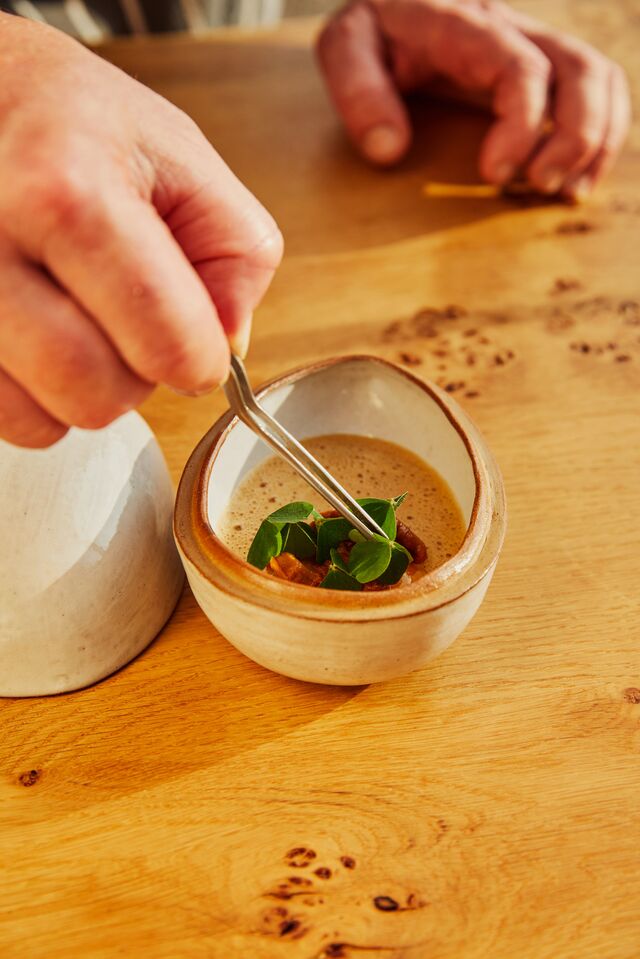
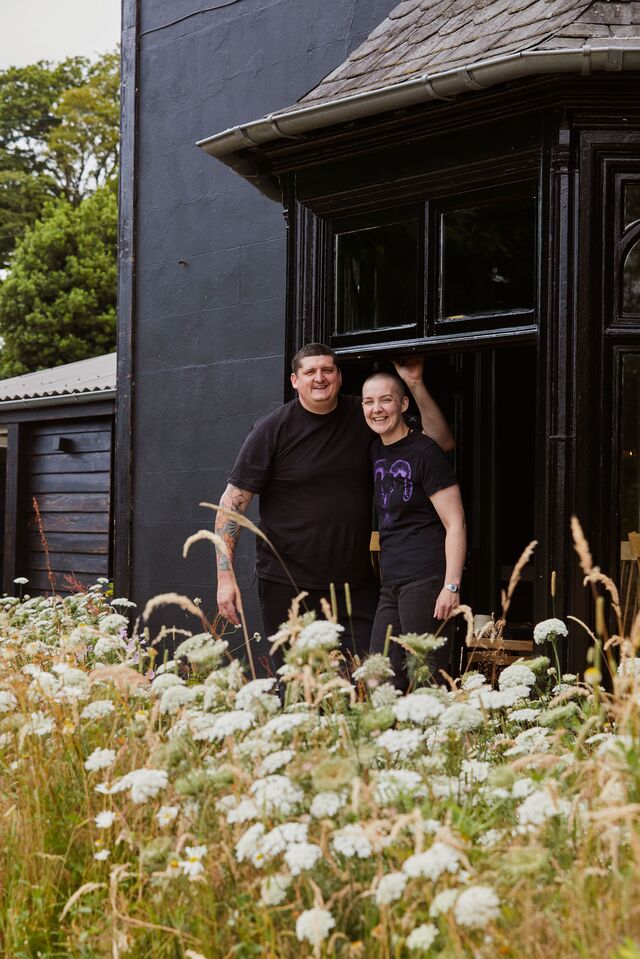
But Matt Powell, chef-owner at nearby Annwn, wants all the international attention he can get. After years working in Michelin-starred restaurants across Europe, he left fine dining in 2012 to live in a tent and lead foraging trips around the shores and dells of rural Wales. Now he’s found a compromise between the two extremes, serving a 10-course tasting experience set in a potter’s shed. It’s tiny, with just eight place settings and smooth Scandi-minimal wood accents.
Wales is more fecund than Denmark, Powell argues, referring to not just the country that’s inserted hygge into the English lexicon, but also a place that’s made itself a forager’s nirvana with acclaimed hyperlocal restaurants Noma and Geranium.
At Annwn, Welsh produce is gleaned from the mountaintops and the chilly waters of the Irish Sea—and served in dishes such as oyster purée, glazed hare loin with chanterelles, and asparagus accented with sea arrowgrass and chive flowers. Powell thinks his homeland has the potential to be the next “it” dining destination.
Momentum is building, certainly. It’s only been open a year, and Annwn has already garnered an “exceptional” rating—an almost faultless distinction—in the Good Food Guide’s scoring system.
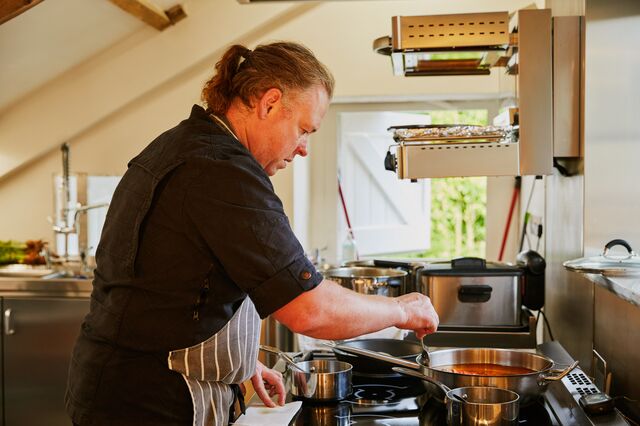
In June, for the first time, the National Restaurant Awards selected a Welsh establishment as the best restaurant in the UK. I happen to be driving through the area the day after the announcement, so chef-owner Gareth Ward and his partner Amelia Eiriksson are beaming when I show up at the two-Michelin-starred Ynyshir Restaurant and Rooms, which used to be an unassuming country inn halfway between Cardigan and Anglesey. Now it’s a destination dining experience with about a dozen chalet-style accommodations and a couple of cozy tents set among the herb gardens.
The first thing you see on arrival is a box built into the reception desk; it’s filled with a colorful array of top-shelf produce from around the world, like Thai kaffir limes and grade A5 beef from Japan. That all gets combined with Welsh ingredients for a five-hour parade of 30-plus courses—highlighted by herbs grown on-site and local seafood—and capped with a performance from the in-house DJ under disco lights during dessert.
Ward notes that he’d serve the exact same dishes even if his restaurant were in the center of London, but he credits his setting in the Welsh countryside as an essential element of the Ynyshir experience. “It’s all about the journey,” he says. “You’re probably traveling from at least two hours away, and the excitement builds as you make your way through mountains to the middle of a f---ing meadow. It becomes mystical.”
My favorite courses include a raw lobster tail from the nearby Dovey estuary in a puckery nahm jim sauce and a fire-charred rack of Welsh lamb still on the bone, topped with shiso confetti. But it’s an unscripted moment that becomes most indelible: a cameo appearance by Ward and Eiriksson’s young son, who sneaks into the kitchen halfway through the meal for a goodnight cwtch—a bear hug—from his father before bed. (Ward tells me it’s pronounced “kutch,” sort of like Ashton Kutcher. Much easier than Llanfairpwllgwyngyllgogery-chwyrndrobwllllantysiliogogogoch.)
After dinner, Ward invites his guests for digestifs in a dimly lit lounge with velvet furniture draped in animal skins. I opt for the Penderyn Sherrywood, a single malt Welsh whisky finished in sherry casks.
After being stamped out by the temperance movement of the 19th century, a 1,700-year-old style that’s lighter and more floral than its American counterpart has made a triumphant return. This year, five distilleries—four of them newly minted—banded together to file for GI status, led by the all-female makers at the 20-year-old Penderyn. Its spirits have been awarded dozens of international prizes, including double golds at the 2022 San Francisco World Spirit Awards, helping to revitalize a local tradition that’s even older than Scotch production.
The tipple inspires one last stop en route to my etymological Everest: Penderyn’s newest outpost, a distillery and tasting room in the northern seaside town of Llandudno. Set in an old boarding school and former city archive, the historical structure has been radically modernized to house an active lab with a coveted Faraday still and several stunning tasting spaces bedecked in mosaic tiles and conceptual art.
During an hourlong tour, guests can sample Welsh whiskies across a spectrum from peated notes to brighter bourbon accents, all trialed in different aging barrels. It’s a state-of-the-art experience that shows how far the business has come. Besides all the awards, Penderyn is now sold in more than 45 countries and set to double US sales of single malt whisky to more than 30,000 bottles in 2022—a huge leap forward considering not a single bottle existed for export before 2004.
From Llandudno it’s only a short drive to Llanfairpwll-gwyngyllgogerychwyrndrobwllllantysiliogogogoch, where I struggle to fit all 58 letters of the train station placard on my iPhone screen for a selfie. While trying, I find myself distracted by the heavy apple and cherry trees pingo-ing on the far side of the tracks. The approaching train hisses its brakes. A father gives his startled daughter a comforting cwtch.
I’m suddenly uninterested in the large boutique next door selling Llanfair PG magnets and bottle openers. To master the Welsh language is not to stumble through a parade of consonants. It’s seeing the world through the poetic conceits that only they can spell.
Where to stay ...
These Welsh hotels double down on the concept of hiraeth, a nostalgic yearning for home
Grove of Narberth
A whitewashed manse with prim grounds hides in a lush forest just beyond the town of Narberth. Expect an elevated farmhouse vibe in the rooms, which have deep soaking tubs and beamed ceilings. The Fernery restaurant artistically blends local produce using Asian techniques to offer a sort of Welsh kaiseki. From £220 per night
Roch Castle
Towering over the Pembrokeshire Coast, this relic dates to the 12th century, when the so-called landsker line divided Welsh and English speakers. Once home to the Norman knight Adam de Rupe and his descendants, the castle has been updated: Plush rooms now fill the turrets. From £210 per night (two- night minimum)
Harbourmaster
At the end of a colorful parade of portside row homes in the town of Aberaeron is the former harbormaster’s quarters, which have been transformed into 13 tiny rooms overlooking the bay. Even if you aren’t staying the night, stop by for dinner; chef Ludovic Dieumegard’s menu blends bistro classics with Welsh favorites. From £160 per night
... and what to drink
It will take a few more years for new single malt Welsh whisky makers to properly age their elixirs. In the meantime, seek out these local gins
Dyfi Distillery
Two brothers with decades of experience in wine have set the standard for Welsh gin, earning gold medals at the World Gin Awards. Their microdistillery is on the edge of a Unesco World Biosphere reserve; pick up the Pollination label for its hints of cucumber and herbs. £35
In the Welsh Wind
This distillery’s wholly made-in-Wales whisky comes from barley grown on-site, rather than the usual grain from Kent. But until it’s released in 2024 or 2025, the team is dabbling in gin, which has notes of orange and tea-soaked currants.
From £42
Penderyn
Since it’s been in business for 20 years, you can get great whisky from the unofficial ambassador of the Welsh variety. But at two state-of-the-art distilleries and tasting rooms, you can also try dozens of gins that are light and fruity and use the same water as their whiskies. From £20