Perfume’s Best Scents Are Being Snuffed Out
Global warming is rippling through the multibillion-dollar perfume industry, destroying the delicate flowers behind some of our favorite fragrances.
By Natasha White
October 26, 2022
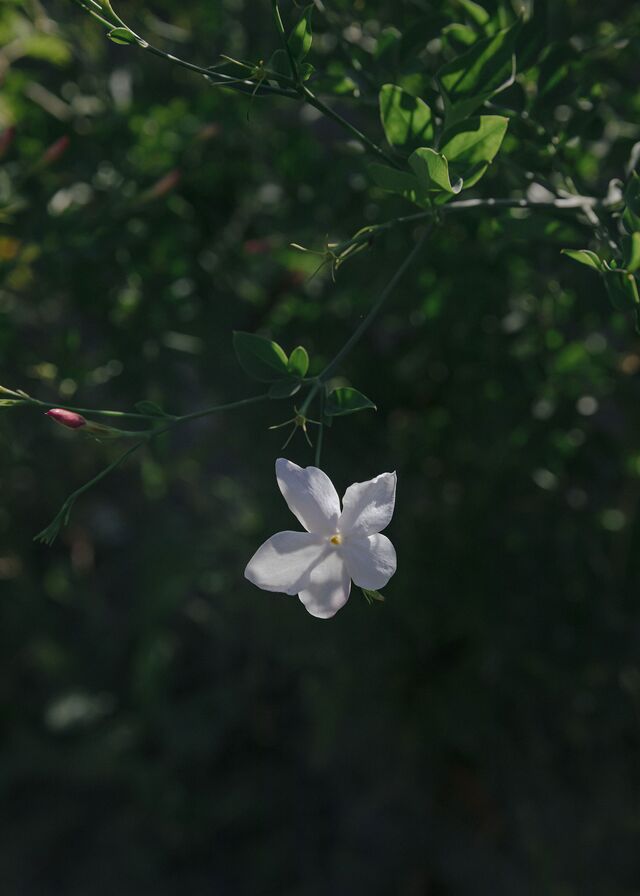
During harvest times, the town of Grasse bursts with aromas of roses, tuberose, and jasmine. The small hillside idyll on the French Riviera, often considered the capital of modern perfumery, is a flower source for the likes of Chanel and Dior. Although its contribution to the global industry is tiny, the quality of Grasse’s flowers—particularly jasmine, which sells for a higher price than gold—makes the region crucial to a high-end perfumer’s palette.
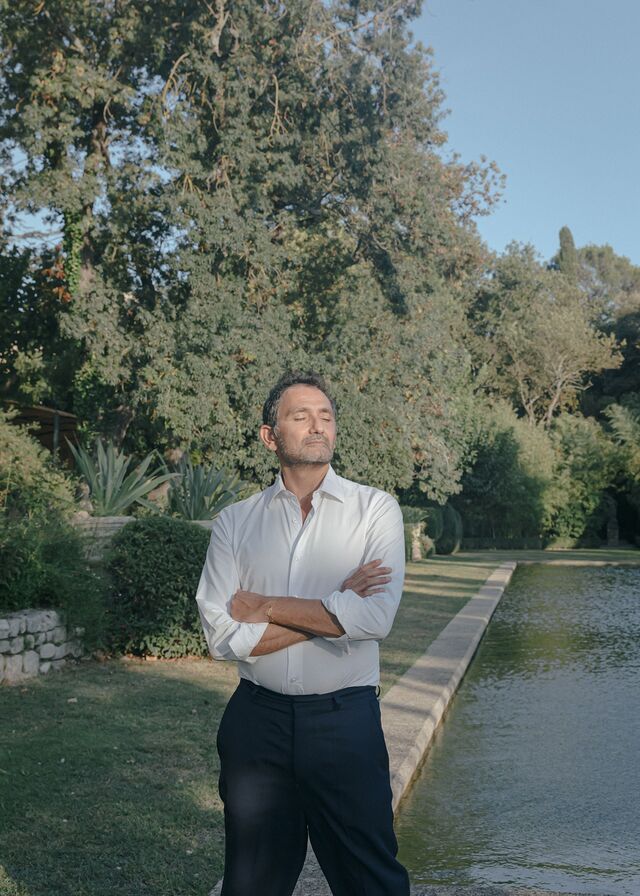
This year, though, Grasse took a hit. The town and region, along with much of western Europe, faced extreme drought, which wiped out swaths of flower crops. Carole Biancalana, who grows tuberose, rose, and jasmine exclusively for Dior, says her tuberose harvest was 40% less than last year. Farmers across the wider region saw flower yields down by as much as half, according to Grasse’s 45-year-old mayor, Jérôme Viaud.


“We’ve had a very challenging drought over a long, long period,” Viaud said in an interview in his office. Over the summer, he imposed the town’s first water restrictions, limiting farmers to irrigating at night and with less water. He’s asked the French government to declare a natural disaster, which would entitle those with livelihoods at stake to thousands of euros in compensation. The government has yet to make such a declaration, but the Ministry of Agriculture said in August that it would provide general agricultural support measures. “The reality is that the situation is so bad that it surpasses the classic designation,” Viaud said.
Subscribe to our newsletter to get the next story in your inbox.
Grasse isn’t alone: Climate change threatens the future of perfume as we know it. As the multibillion-dollar industry debates the potential of synthetic alternatives—which are easier to procure, control, and patent—global warming’s impacts aren’t making the case for natural scents more compelling. Drought, shifting seasons, and more frequent extremes of frost, rain, hail, and high temperatures are changing crop yields, ingredient quality, and even how much scent different plants produce. As those impacts continue, everything about how certain smells are made may need to be rethought.
Sensing Climate Change
For perfume houses such as Chanel and Dior, consistency is imperative. That’s why their perfumers, some of the most attuned “noses” in the world, are so particular about sourcing ingredients. Wearers of Chanel No. 5 can feel they smell the same as Marilyn Monroe, who once suggested she wore No. 5—and only No. 5—to bed.
Chanel’s most iconic scent has been made using jasmine from Grasse since Coco Chanel first set out to launch the fragrance in 1921, or so the story goes. Over at Dior, scents J’adore L’Or and Jasmin des Anges also use Grasse’s jasmine, which master perfumer Francis Kurkdjian says “strongly resembles fresh flowers.”
“It’s complex,” he says of Grasse’s jasmine. “It doesn’t have that animal facet, not too much banana, not too fresh.” He adds a detail most people don’t consider: “And it doesn’t smell of horse manure. It’s magical.”
Grasse is well-positioned to produce exceptional flowers because of its quality soil and delicate microclimate, in a hilly area that’s just the right distance from the Mediterranean. “I like to think about jasmine, roses, lavender as a wine connoisseur would do with terroir,” says Elise Vernon Pearlstine, author of Scent: A Natural History of Fragrance. “It’s the weather, soil, elevation—they all make a difference.”
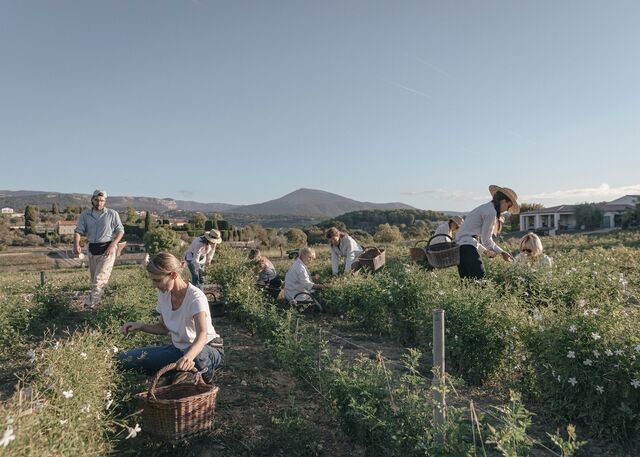
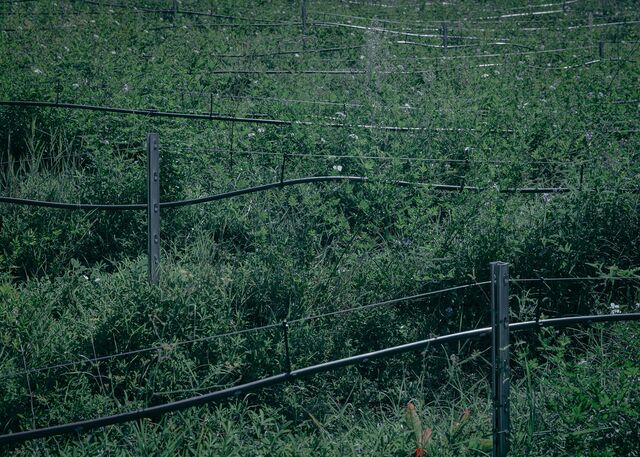
Sudden and dramatic weather events are now forcing growers to adapt rapidly. At her farm in Grasse, Biancalana uses drip irrigation to respond to the water constraints of recent years, and she’s introduced new predator bugs to combat a shifting ecosystem of pests. But it’s tough to keep up with increasingly unpredictable seasons. “Change has accelerated over the past few years, with periods of freezing later and more often in spring,” she says.
Read more: The Suburban Lawn Will Never Be the Same
At Switzerland-based Givaudan, one of the world’s largest fragrance houses, there’s particular concern about patchouli, a leafy member of the mint family. About 80% of the plant comes from the tropical island of Sulawesi in Indonesia, which in recent years has faced sudden and sporadic extremes of dry and wet weather. “With erratic dry-wet spells in 2020 and 2021, the survival rate of the plant and the distillation yield were lowered,” says Chee Ping Lee, Givaudan’s head of sourcing for Asia-Pacific.
There are also signs that global warming may be impacting ingredient quality. Alon Cna’ani, a postdoctoral researcher at the University of Copenhagen and co-author of a rare paper on the topic, says there is “strong evidence to suggest that a changing climate — rising temperature — will affect the aromatics of plants.” Cna’ani found that the genetic makeup of flowers — the machinery that produces the aromatic compounds we recognize as “fruity” or “floral” — decreases at higher temperatures.
Likewise, in Italy, scientists pinpointed a “clear correlation” between a decline in the scent production of bergamot and extreme conditions like heat waves and droughts. Over 95% of global production of cold-pressed bergamot essential oil comes from Calabria in south Italy, where the climate is getting progressively hotter and drier.
Perfume of the Future
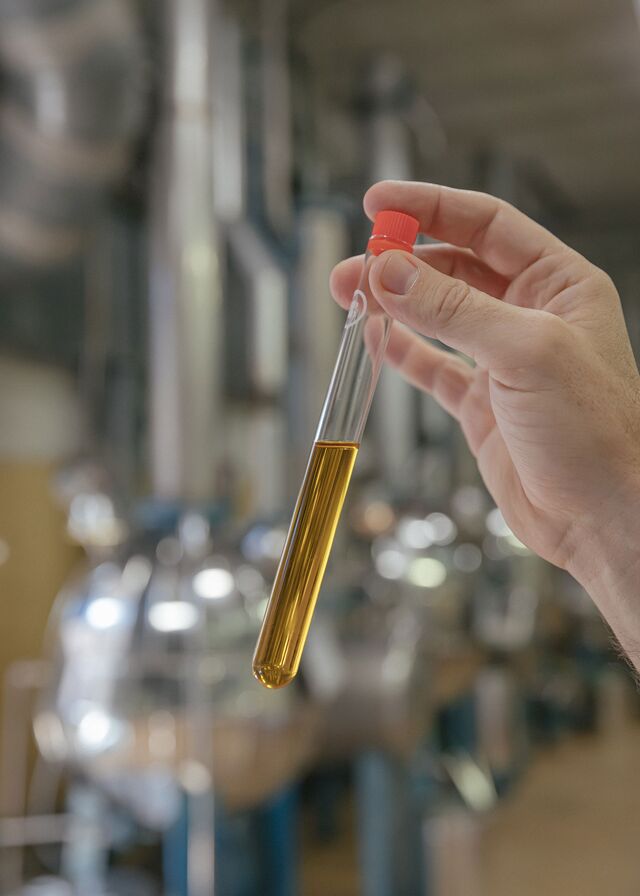
Since the late 1800s, the perfume industry has been looking to the lab to replicate or produce new scents—a trend that climate change could accelerate. As conditions in the flower fields become even less predictable and prices yo-yo in response, synthetic compounds produced in controlled environments can offer a cheaper and more reliable alternative for those looking for a consistent scent—and a consistent bottom line.
Synthetics come with their own environmental challenges. Many are byproducts of petroleum or paper and pulp—toxic, polluting, and hard to dispose of safely. But innovations in “green chemistry” are emerging to tackle those problems.
“If you want consistency, it’s best to look for a nice ethical supplier of aroma chemicals,” says Sarah McCartney, founder and perfumer at London-based 4160 Tuesdays. She gives the example of Stort Chemicals’ Ambrettolide HC, a musky scent. Synthetic Ambrettolide typically comes from the dung of lac beetles in India, but price and supply uncertainty led the company to come up with a vegan and biodegradable alternative made from fermented sugar. (Researchers have found that climate change has severely affected lac beetle populations.)
Big fragrance houses are also looking to biotechnology to breed more climate-resilient plant varieties. Givaudan and Firmenich are experimenting with vertical farms, where controlled artificial environments can help sustain certain varieties or produce new ones. One Firmenich-backed vertical farm, Jungle, announced a new ingredient developed from Lily of the Valley flowers last year, and has dozens of other perfume plants in development.
Traditionalists are skeptical. Pearlstine says lab experiments will never match up to the natural world. “Flowers are the masters of making perfume — jasmine or rose just have that little chemical factory that blends it exactly right,” she says. “People can’t do that; the replacement for the plant is not going to smell the same.”
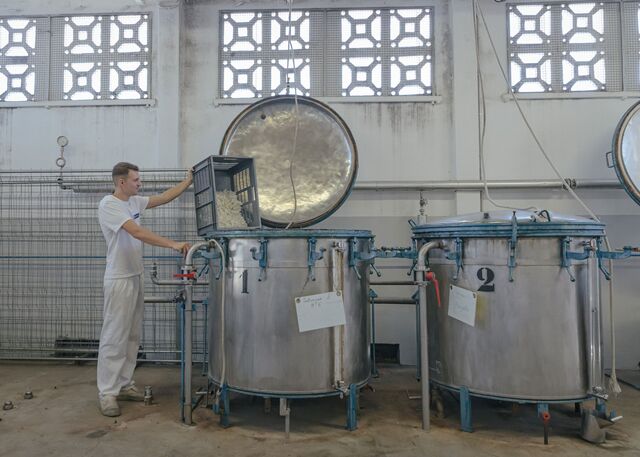
Yet the damage climate change is wreaking on natural scents — from quantity to quality — demands action.
For Grasse’s Viaud, this means doubling down, recognizing the importance of natural ingredients — for perfumes, jobs and local economies — and putting money and support measures behind this. Along with a group of mayors from other perfume towns across Europe, he’s on a mission to convince European policymakers to do just this.
“We’re looking to defend our tradition, our history, our culture — flower plant processing and natural products,” he says. “It’s about explaining that for us, politically, there are factors relating to agriculture, supply chains, employment, nature and the energy transition at stake.”