Misfits Market Hopes Scaling Up Sales Can Scale Down Food Waste
The online grocer specializing in unwanted organics, unusual meat cuts and overstock Fruity Pebbles has $525 million in VC to expand its offbeat supply chain.
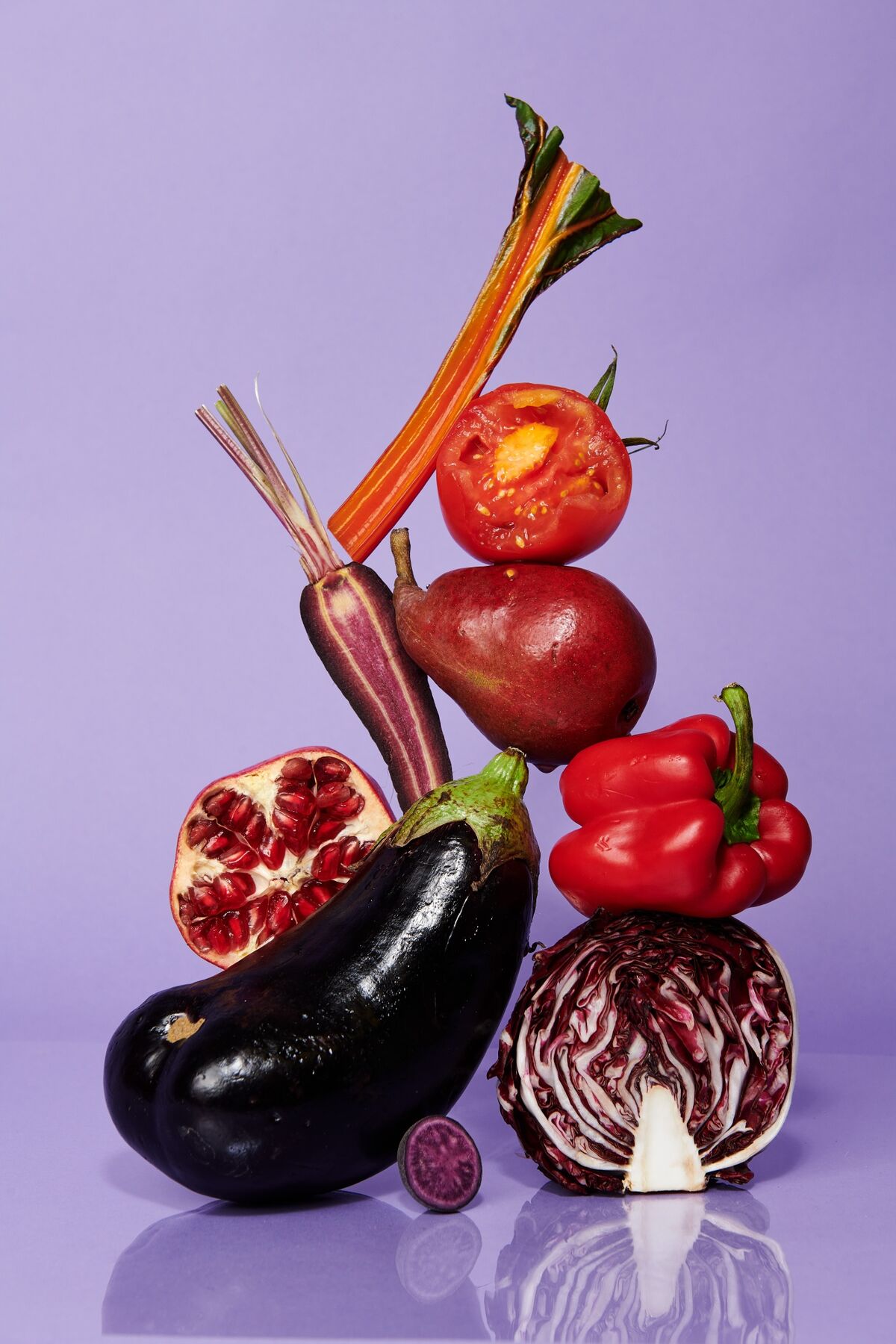
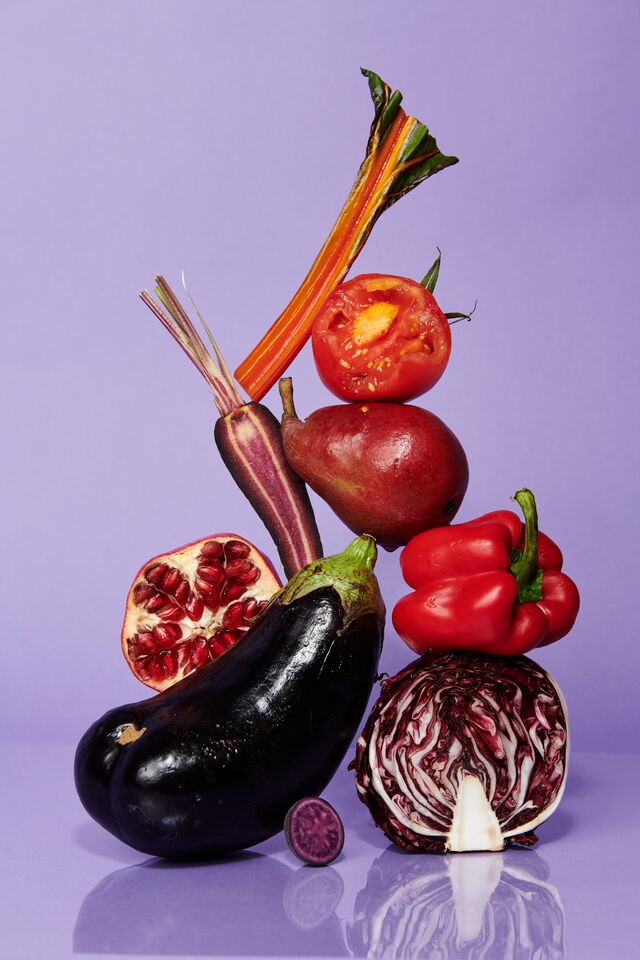
As pandemic business booms go, Misfits Market has had a particularly steep curve. The Philadelphia-based online grocer, which specializes in bruised, lumpen or otherwise screwball organic produce, was already growing nicely by March 2020. It had steadily climbed from 600 square feet of storage space, consisting of two industrial refrigerators tucked inside a tiny garage in North Philly, all the way to a 140,000-square-foot warehouse in South Jersey. It had 90,000 customers and was shipping boxes of food to people living as far north as Maine, as far south as Florida and as far west as Illinois. And then: the lockdowns. “My first thought was, ‘We’re going to have to shut down the warehouse, and our revenue’s going to go to zero,’ ” recalls Abhi Ramesh, Misfits’ 30-year-old founder and chief executive officer.
But of course grocers were an essential business, so the warehouse stayed open with safety protocols in place. Soon, Misfits was joining the ranks of the cloister-friendly enterprises—yeast growers, board game publishers, purveyors of lavishly expensive treadmills—that Americans were suddenly embracing. “It got to a point where one of our engineers called me and was like, ‘Hey, our servers are crashing. They cannot handle the amount of traffic coming in,’ ” Ramesh says. Over the next several months, almost 100,000 new customers signed up.
When Ramesh founded the company in 2018, his mission was twofold. He wanted to reduce waste by rescuing food that might otherwise get trashed. And he wanted to sell it at an affordable price. For $34 or less a week, his customers subscribed to get a box of irregular but edible organic fruits and veggies: pears, plums, peaches and more.
The pandemic boost seemed like thunderous validation, and Ramesh quickly sought to expand. By fall 2021 he’d raised $525 million, including $200 million from SoftBank Group Corp., to build fulfillment centers, expand operations and add products. Two more huge warehouses came online.
Misfits thereby girded itself to face the big question confronting pandemic-boom companies as normal life resumes: Will people keep paying? Ramesh is betting not only that the answer is yes but also that Misfits can become a significant, profitable participant in the notoriously unforgiving e-grocery business. “Our goal,” he says, “is to make this a no-brainer compared to driving to the grocery store.”
To do that he’ll have to significantly expand the company’s inventory. Misfits now delivers about 700 food items that go well beyond eccentric produce: maple syrup, eggs, salmon, rib-eye steak, even nonorganic, non-nutritious Fruity Pebbles. The aim is somewhere between 3,000 and 5,000 products.
Unlike Amazon.com Inc., FreshDirect LLC and other e-grocers, Misfits can’t just pour funding into any old product. But Ramesh says he can remain true to his original mission of targeting food waste and unaffordability. Overproduced, almost-expired, bizarre-looking—these qualities are at once the company’s primary challenge and its main competitive advantage.

Ramesh was born in Chennai, India, and immigrated to the US at age 7. His parents, both software engineers, moved to Atlanta for a job Ramesh’s mother had taken at a consulting company. “We were not very well off,” he remembers. “We had no real savings at the time, because both my parents were still early in their careers.” From a young age he was told wasted food is wasted money. “I would get yelled at if I threw out an apple without eating it all the way to the core,” he says.
The concept for Misfits came to him, perhaps not coincidentally, while he was picking apples at an orchard in Pennsylvania’s Amish country in 2018. He noticed that hundreds of apples had already fallen from trees and idly asked the farmer what he did with them. He learned that some were pressed into cider. Others were donated. Most were thrown out. Ramesh asked whether he could buy some of the fallen fruit. Sure, the farmer replied, for $20. That afternoon, Ramesh drove home with a crate full of organic apples. “I’m looking at them, and there’s nothing wrong,” he recalls. “Maybe one in 75 has a small bruise or something like that. And I’m able to purchase them at a substantial discount.”

Starting a grocery company was a departure for Ramesh, who’d studied finance at the University of Pennsylvania and spent time in private equity. But by cold-calling organic farms a few hours’ drive outside Philly, he discovered that many farmers had perfectly edible peaches, nectarines, onions, squash and more that they couldn’t sell. The distributors who supply big grocery chains are well aware that American shoppers generally equate how an apple looks with how it tastes, so they tend to buy only the best-looking produce, eschewing the dented, the pockmarked and the slightly discolored.
This concern for appearance is a problem for growers. Some unwanted produce can be repurposed for juices, pet food and other products that aren’t judged on aesthetics. But cosmetic considerations reign supreme. Between 161 billion pounds and 355 billion pounds of food are wasted annually in the US, according to an Environmental Protection Agency report published in 2021; among retailers and consumers, fruits and vegetables are the most wasted foods. “With organics it’s really challenging,” says Sarah Shepherd, executive sales representative at California’s Lakeside Organic Gardens, a farm that began working with Misfits Market in 2019. “The taste, the quality is there. It just looks different.”
Misfits aimed to turn this limitation into a selling point. It was more profitable for farmers to sell leftover food to Ramesh’s business, even at a discount, than to repurpose it. Those savings could then be passed on to customers. He started driving around to nearby farms in a rented Zipcar and loading up as much produce as he could. One time he hauled away 500 pounds of butternut squash. He stored everything in the studio apartment he shared with his future wife, relying on air conditioning to keep the food cold. A self-taught coder, he published a simple website using Shopify, restricted sign-ups to the Philadelphia area and began advertising on Facebook. During the first week, he got a couple of thousand email sign-ups, but his initial customer base was small: about 25 people. He assembled the first boxes in the apartment; the only branding was some packing tape that read “Misfits Market.”
The first shipments, in September 2018, included a truly arbitrary array of produce. Ramesh personally delivered his “mystery boxes” to his early customers—“sustainability-oriented suburban families,” as he describes them. Word spread, and within a month or so he was fulfilling hundreds of orders and turning to FedEx Corp. and UPS for delivery.
The appeal, he says, was the same thing Misfits pitches today. “If you simplify our entire business over the past four years, it’s two things: You’re saving stuff that shouldn’t be thrown away. But you’re also saving money.”

As Misfits grew, expanding into Boston, New York, Washington, DC, and eventually nationwide, Ramesh tinkered with its offerings and business model. He added flexibility to the mystery boxes, first allowing customers to select the number of leafy greens, fruits and vegetables they would receive, then which ones. (His own favorite is sweet potatoes, which he describes as “super grotesque and ugly” but also highly nutritious.) Then he phased out the mystery boxes entirely and expanded to new categories. Shoppers were still paying for a subscription, but the charge now fulfilled a mandatory order minimum. Any items beyond that cost extra.
With that shift, Misfits became less a fun way of getting fruits and veggies into customers’ diets and more a serious bidder for their grocery budgets. Today the company ships food to 250,000 customers in more than 40,000 ZIP codes. On average, each customer orders 20 to 30 items and spends about $58 per week including the mandatory minimum order, which now tops out at $40. That’s led to $386 million in revenue over the past two years. Ramesh wants Misfits on a path to $1 billion in sales—and with that, to profitability—in the next 18 months.
Getting there hinges on improving Misfits’ fundamentals: adding customers in denser areas, streamlining warehouse operations and especially reducing delivery costs by increasing the number of items per order. “The trajectory for us is very much how you get someone to order their full grocery basket. When someone’s ordering $150 worth of groceries, then the profit margins are a lot higher,” Ramesh says.
To fill a basket, though, you first have to stock the shelves.

On a typically hot August day, I find myself standing in a parking lot about half an hour from the Salt Lake City airport, carrying a heavy winter coat, a wool cap and gloves. The reason for the getup: Ramesh is giving me a tour of Misfits’ 200,000-square-foot Utah warehouse, one of the two the company brought online in the wake of the pandemic; the other is in Dallas.
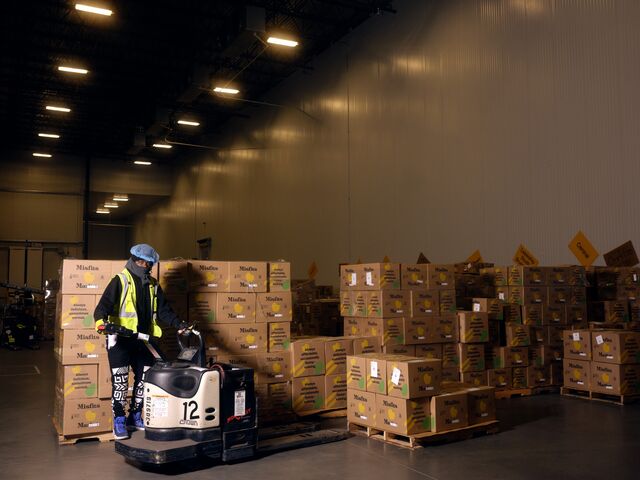
Indoors, it’s 36F. The operation is a sight: a cavernous, concrete-floored building with shelving units stretching to the 32-foot-high ceiling; hundreds of black crates containing all sorts of items; packers along a snaking conveyor belt grabbing ricotta cheese, reduced-fat milk and avocados. One box on the conveyor belt is filled with a dozen cans of Drink Vina prebiotic soda. We walk over as workers pick heads of cabbage out of bins and put them in brown boxes.
“Packing produce is incredibly hard, everything about it,” Ramesh says. “They’re different sizes and shapes. You can’t grab them with the same pressure.”
He takes me inside a separate freezer where meat and fish are stored. The air is so cold my pen stops working.
In some respects, the operation is similar to those of other e-grocers, with optimization algorithms that tell employees in what order to pull items and how to pack a box. Where Misfits really tries to differentiate itself is in what it packs and how. The inventory comes from about 150 individual vendors with items that fit the company’s mission. Instead of salmon fillets, Misfits gets 3-ounce end pieces from a supplier in Texas. It also has blueberries from Driscoll’s Inc., but they’re usually smaller than in the grocery store.
Misfits’ root vegetables tend to be the misshapen produce; imperfections in leafy greens and fruits are less noticeable. On occasion, the produce is actually too large. “We get feedback all the time from customers who say the food doesn’t look misfit,” Ramesh tells me later. “But it is.”

Sourcing atypical products saves money: According to a third-party data system Misfits uses, one of its imperfect tomatoes sells for about 20% less than another of the same type would in a store.
That Misfits’ staple fruits and vegetables are already in a sense “damaged” helps with packaging costs, too. They can go straight into the box, also burnishing the company’s environmental bona fides, as anyone who’s received a grocery box with a bell pepper mummified in a triple-shrink-wrapped Styrofoam tray can attest. Eggs and other fragile items get bespoke cardboard sleeves; refrigerated and frozen items get the more industry-standard recyclable gel packs. Custom software tells employees which of Misfits’ five discrete boxes to use, a measure to cut down on packing waste. And it calibrates, based on variables such as weather, delivery distance and food type, how many of those gel packs might be needed.
Notable throughout the warehouse is the high number of empty shelves—a nod to Misfits’ grand plan to add more products. As a private company, it doesn’t release official figures, but Ramesh says it makes “a few dollars” on a per-box basis, counting supply, packing and delivery costs but not overhead. The customers who order more are the ones who are bringing in the money.
This is why Misfits has to beef up its inventory by thousands of items: When you arrive at its website, you have to know you can get most, if not all, of your groceries. Ramesh says he believes he can achieve that sort of scale over the next two years. But buying enough food to meet that goal will be costly, taking a sizable bite out of the half-billion dollars the company has raised. Already, Ramesh has invested some of it by buying a competitor, Imperfect Foods Inc., which operated mainly on the coasts. Terms of the deal, which closed in November, haven’t been announced, but the acquisition comes with all of Imperfect’s inventory, its five warehouses and its 550 delivery vans.

Although the core of Misfits’ business has forever been misshapen fruits and vegetables, Ramesh knows that lumpy produce can take him only so far. “It’s always going to be a big part of our strategy,” he says, “but the mission has expanded to waste and inefficiency beyond just produce.”
The mission, as well as the ultimate aim of the company, is to be an online grocery store for the masses. Such a sweeping change will undoubtedly involve compromises. This is how Misfits came to offer Fruity Pebbles, sourcing it from its manufacturer, Post Consumer Brands LLC, whenever there’s overstock. As Ramesh attests, some people simply want their sugary cereal.
It’s also why, in a sharp turn from its founding days, Misfits has begun buying and offering conventional produce. Only about 14% of all produce grown in the US is organic. That leaves the company without much choice if it’s to sharply increase its inventory.
For Ramesh, preventing waste remains the key. But that’s a challenging proposition, too: Misfits will need to bring on hundreds, if not thousands, more vendors. And the company is intent on working directly with suppliers, rather than relying on middlemen. “It definitely by default takes longer,” says Daniel Litwin, the company’s vice president for procurement. “Rather than calling up a distributor and unlocking their catalog of thousands and thousands of SKUs, we’re taking the time to build direct relationships.”

That effort means sending people from its procurement division to trade shows and meetings with brand representatives. This way, in Ramesh’s view, Misfits can make itself the outlet of first resort when suppliers can’t unload on distributors. Items stamped with the wrong date or wrapped in outdated packaging fit this paradigm nicely. Misfits has previously done the latter with products such as olive oil and yogurt. “The second a major brand switches over to new packaging, all of your traditional retailers will want new packaging,” Litwin says.
Another challenge with this approach is the customer experience it produces. Shoppers mostly want to pick only the items they need, and the site’s dependence on salvaged food means there’s a chance a product that was there one week will be gone the next. Litwin admits there’s “a little bit of give and take” on that front. The main focus, he says, is “identifying the key basket builders and the core staples.” With those, you get a significant price cut; the trade-off for other products—what he calls “treasure hunt items”—is unpredictability.
Solving these issues would mean not only continued viability but the potential to expand Misfits’ customer base out of urban and suburban enclaves. Ramesh says the company saw “a ton of growth in ZIP codes that were a little bit more remote and isolated” when it went national in 2021. According to its own data, a majority of its shoppers live outside cities, with one-fifth of them in distinctly rural areas where grocery stores are in short supply. “There’s going to be a billion different companies that claim to deliver groceries in 20 minutes to your door in Brooklyn,” he says. “Who is solving online grocery delivery for everywhere else in the country?”
Trying to do that comes with certain challenges as well. Ramesh acknowledges that, in some rural areas, “we definitely lose money per box,” because the cost of shipping is much higher. Expanding inventory could help with that, too. Misfits is also trying to figure out how to allow the 41 million Americans who participate in the Supplemental Nutrition Assistance Program to use their benefits as payment.
It’s a lot for a startup founded on busted butternut squash to tackle. Companies as large and well known as Amazon and FreshDirect have found the e-grocery business challenging to crack at scale. But at least one person with significant expertise in the sector sees a window for Misfits to succeed, even if it never becomes a household name. Peter Relan, founding chief technology officer of Webvan—a dot-com-era e-grocer that went public in 1999, reached a customer base of almost 1 million and in 2001 went bankrupt—points out that his company’s mistake may have been going for too broad a market. Knowing your niche, he says, can be a significant advantage. In Misfits’ case, it might be that it can acquire only a smaller section of the market: people who plan out their grocery trips and don’t care about the serendipitous experience of browsing the aisles, for example. Gunning for a smaller portion of the market is a “reasonable” strategy, Relan says. “You may never become mainstream, but that’s OK. At least you’re not going to go broke.”

Yet for Misfits, the lure of something bigger beckons. Perhaps anticipating an opportunity to appeal to people who also appreciate brand loyalty, Ramesh recently started up Odds & Ends, the company’s own private label. It sources items such as organic pumpkin puree or bags of mixed nuts—even broken cashews, apparently, can’t find themselves a traditional home—and then offers them at the same discounted prices as other foods on the site.
At the fulfillment center in Salt Lake City, Ramesh shows me the new packaging, then invites me out back, where an additional 80,000-square-foot warehouse is under construction. He expects it to come online before the end of the year. That’s another capital cost, but given his plans, he’ll need the space. “The one thing I’ve learned with Misfits the last four years,” he says, “is that we always go too small.”