Jeff Bezos’ decision on Feb. 2 to step down as chief executive officer of Amazon.com Inc. could shake loose a lot of money. The second-richest person in the world—he’s worth almost $200 billion—says he plans to spend more of his time on philanthropy. If he does so, he’ll be following the model of John D. Rockefeller, Andrew Carnegie, and Bill Gates, all of whom got serious about their giving only after they stepped back from their businesses.

Bezos has been a billionaire since the late 1990s, and people have been asking for almost as long how he’d give some of that wealth away. “Long term, I have a responsibility to be a philanthropist,” he said on the Charlie Rose show in 2000. “Assuming we can make Amazon.com a lasting company, which we’re not done with yet.” He was in no hurry: His first public gift wasn’t until 2011, at which point he opened a trickle of philanthropy from what was starting to look like a bottomless fortune. 

Now about $7.2 billion of the Amazon fortune has been given away, but the largest chunk of that has come from Bezos’ ex-wife, MacKenzie Scott. Since their divorce in 2019, she’s become one of the most consequential philanthropists of her generation. Scott, who now controls one-quarter of the former couple’s combined wealth of more than $250 billion, gave away almost $6 billion last year to working charities—organizations that do good on a daily basis, rather than just steward philanthropic money.

That’s probably a record annual distribution for a living person, says Melissa Berman of Rockefeller Philanthropy Advisors. As notable as the size of that pile was where it went: to small charities and institutions such as historically Black colleges that are often passed over by big givers.

Meanwhile, Bezos made a commitment in 2020 to give away $10 billion to fight climate change. There’s no particular deadline for spending that money, but in November he announced the first $791 million worth of grants to outside organizations. Over his lifetime he’s distributed about $1.4 billion, including about $200 million donated as a couple with Scott. Bezos has indicated that he wants to give the money away thoughtfully to maximize the impact, though one could argue, and many do, that the problems his billions could help to address leave no time to waste. 

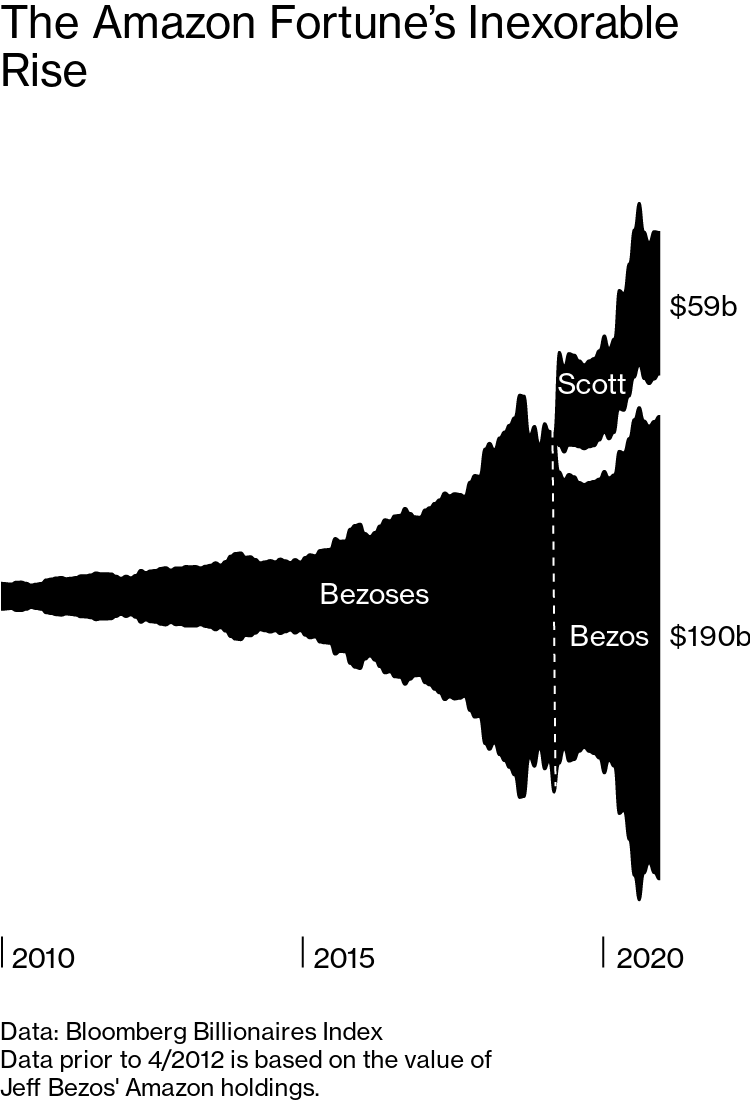
The Amazon Fortune’s Inexorable Rise

Data prior to 4/2012 is based on the value of Jeff Bezos' Amazon holdings.

Data: Bloomberg Billionaires Index

Bezos and Scott’s split shows how the personalities and priorities of the very rich affect how charities work and who gets help. Complicating it all is the source of their wealth. Amazon’s labor and environmental record has been harshly criticized by some of the same activists that Bezos and Scott have funded. Meanwhile, their wealth is compounding even faster than they’re giving it away: Last year the combined Bezos and Scott fortune, held largely in Amazon stock, grew by $97 billion as the world reeled from the coronavirus pandemic and lockdowns threw millions out of work. 

Here’s a look at how Bezos and Scott have approached their philanthropy as they’ve gone from mere billionaires to owners of one of history’s great fortunes. The annual tally of public gifts is based on money distributed and does not include larger multiyear commitments.

Phase 1
A Slow Drip
From 2000, when Bezos acknowledged his responsibility to give, until the late 2010s, the couple’s philanthropy builds gradually, with public gifts in the millions of dollars eventually going to a grab bag of different causes.
2000-2010
Public Gifts:
None
July 2010 Bezos

Bezos tells a television interviewer what he thinks about the Giving Pledge, a commitment by billionaires to give away the majority of their fortunes. He says he’s not ready to share his ideas on charity. “The pledge is an interesting idea. For me the most important thing is to figure out where—which models work the best. So for one thing, I’m convinced that in many cases for-profit models improve the world more than philanthropy models if they can be made to work.”

One world-changing for-profit project on his mind: space exploration and colonization. He’s spent years building private rocket maker Blue Origin LLC.

2011
Public Gifts
$25m
August
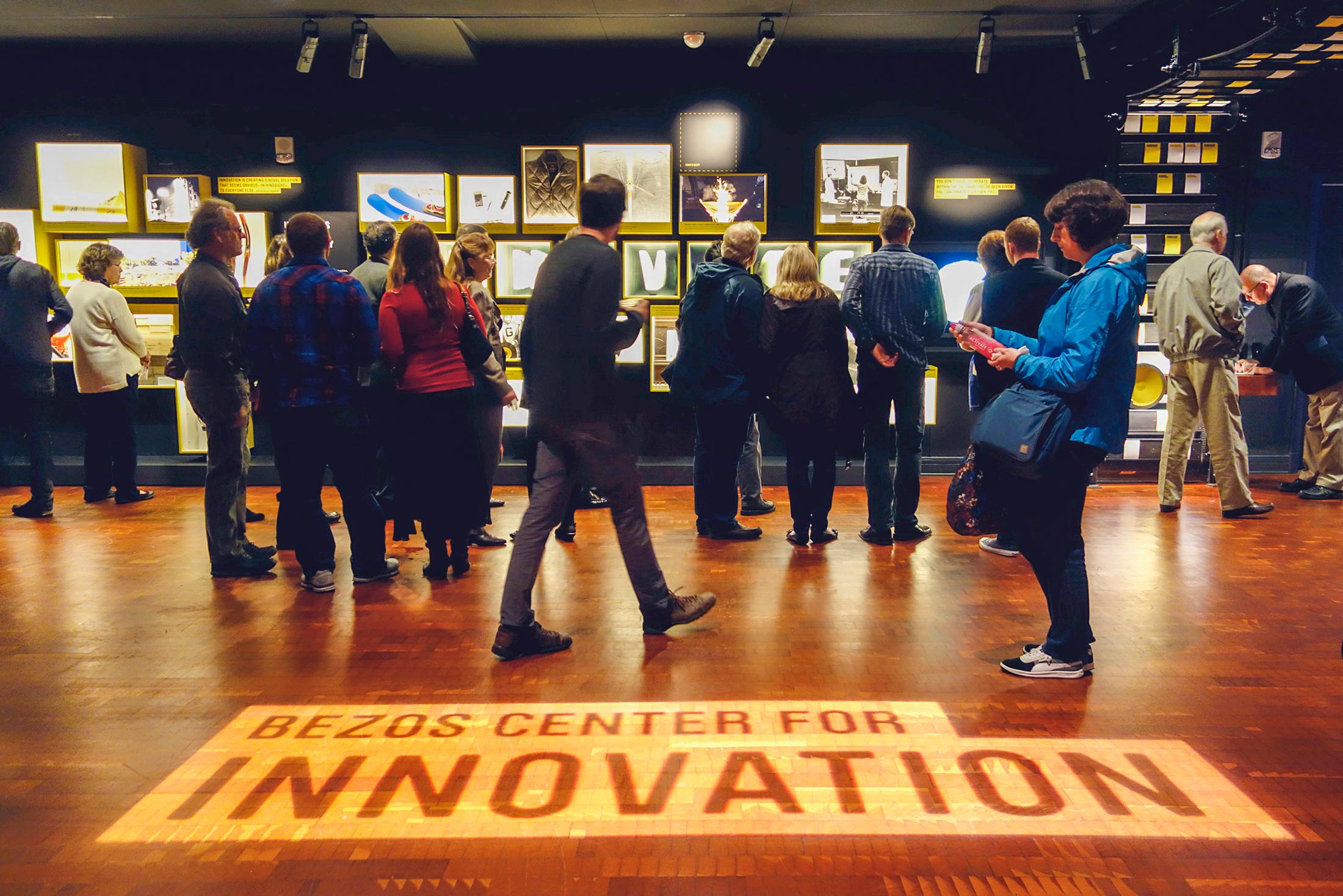
Bezos donates $10 million to the Museum of History and Industry in Seattle, creating the Bezos Center for Innovation. Bezos Center for Innovation gallery
December Bezos
A $15 million gift to the Princeton Neuroscience Institute establishes the Bezos Center for Neural Circuit Dynamics. Both Bezos and Scott went to Princeton. It’s the first major donation in both their names. (She’s MacKenzie Bezos at this time.) It’s unclear through the years of their marriage how much Scott was involved in giving decisions, says Elizabeth Dale, assistant professor of nonprofit leadership at Seattle University: “We really don’t know a lot about what their philanthropic conversations might have been together.”
2012
Public Gifts
$2.5m
July
Some $2.5 million goes to Washington United for Marriage, a group working to uphold the state’s law allowing same-sex marriage.
2013
Public Gifts
$0.5m
January
Bezos gives $500,000 to Worldreader, an organization co-founded by former Amazon executive David Risher that provides e-readers, including the company’s Kindle devices, to schoolchildren in developing countries.
August Bezos
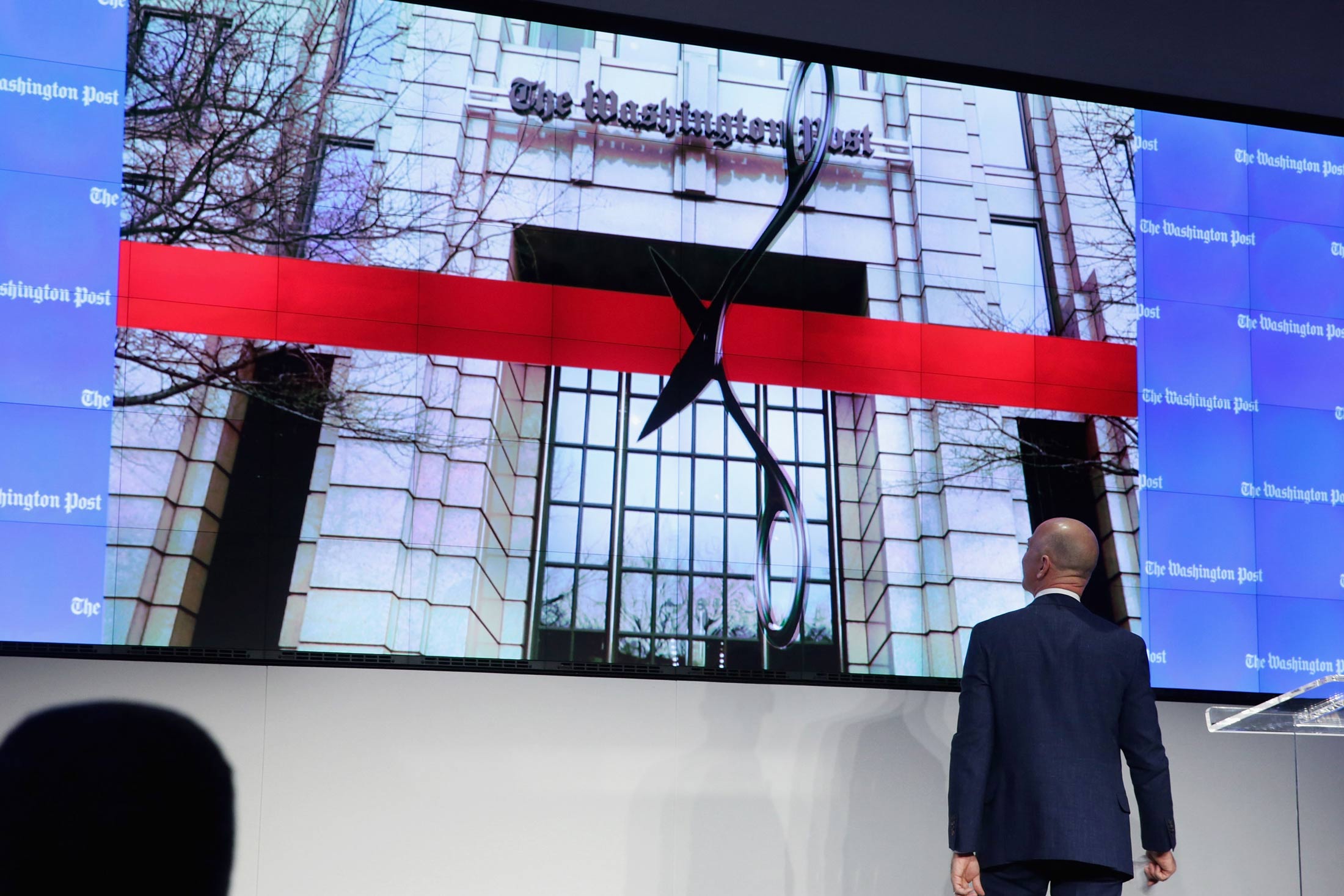
Bezos buys the then-struggling Washington Post. As with the space venture, it shows he has passion projects beyond philanthropy.
2014
Public Gifts
$2.25m
August Bezos
The couple donates $2.25 million to fund clinical food allergy research at Stanford.
2015
Public Gifts
<$2.13m
March
An unspecified amount goes to the Institute for Systems Biology. Bezos and Scott are among a group of donors who gave a total of $2.13 million.
2016
Public Gifts
>$2m
May Bezos
Bezos pledges $1 million to match donations to Mary’s Place, which operates shelters in the Seattle area for homeless women, children, and families. It’s the beginning of a long relationship between Mary’s Place and Bezos and Amazon. The donation started with conversations between the organization and John Schoettler, Amazon’s vice president for global real estate, about housing people temporarily in unused Amazon-owned buildings.
May
Bezos donates an unspecified amount to Code.org, which is dedicated to helping kids learn computer programming. He’s given between $1 million and $3 million based on his status as a “Gold Supporter” on Code.org’s website.
October Bezos
In an onstage interview, Bezos is asked again if he’ll become a philanthropist. “Well, yeah. If there is anything left after I finish building Blue Origin,” he responds, drawing laughter and cheers from the audience.
October
Bezos gives an unspecified amount to the Statue of Liberty Ellis Island Foundation.
2017
Public Gifts
$36m
March
Bezos and his family donate $35 million to the Fred Hutchinson Cancer Research Center.
May
Bezos donates $1 million to the Reporters Committee for Freedom of the Press.
June
Bezos tweets a solicitation for donation ideas: “I’m thinking about a philanthropy strategy that is the opposite of how I mostly spend my time–working on the long term. For philanthropy, I find I’m drawn to the other end of the spectrum: the right now.” He cites Mary’s Place as an example of the work that inspires him.
October
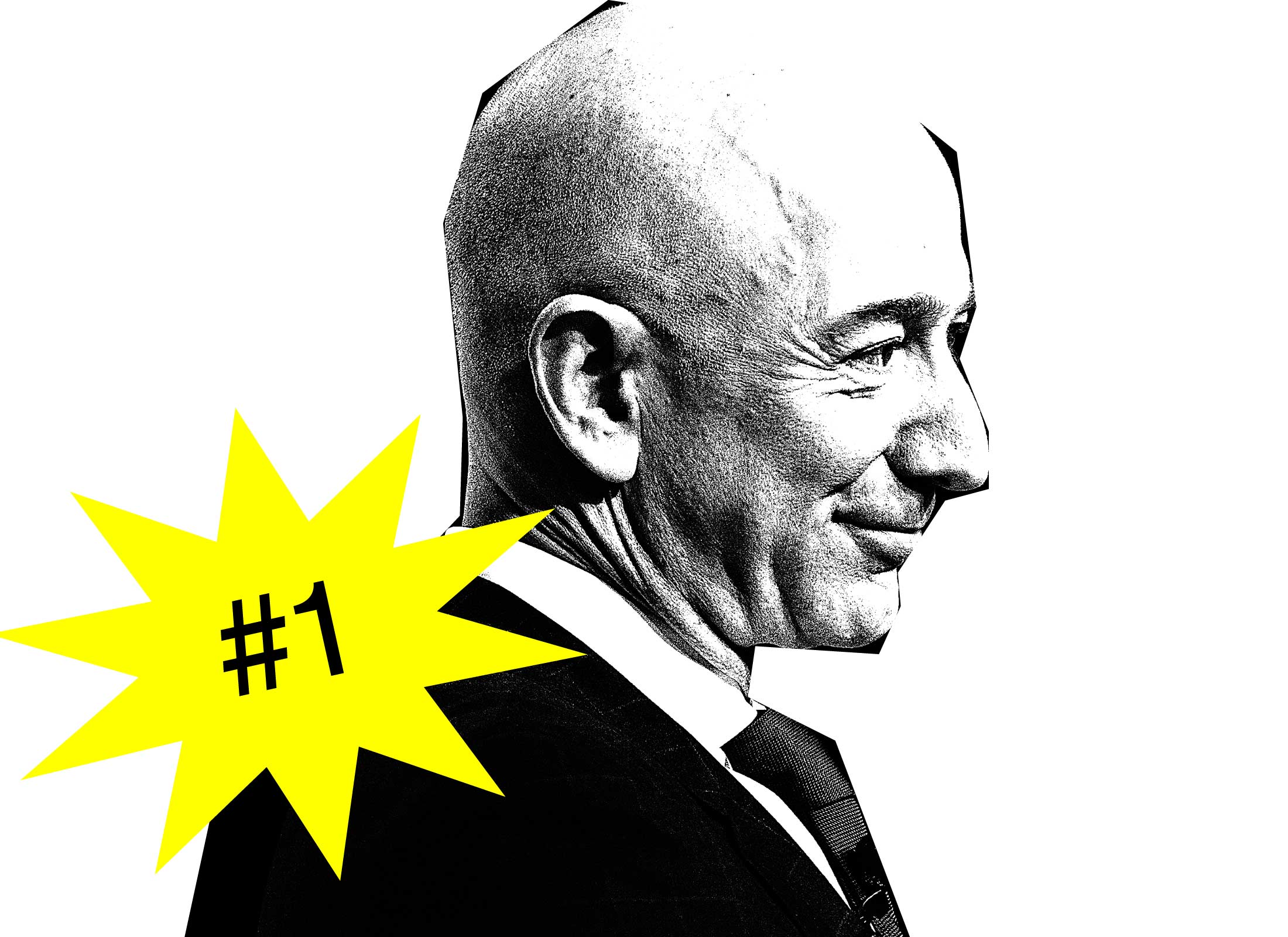
Jeff Bezos is #1 Bezos overtakes Gates to become the richest person in the world. He’ll hold that distinction until January 2021, when Elon Musk surpasses him.
Phase 2
Raising the Stakes
Bezos doesn’t only sit at the top of world’s-richest list. His company has a huge role in the global economy, bringing questions about its effect on climate change and economic inequality. Bezos and Scott’s giving ramps up.
2018
Public Gifts
$140.5m
January
Bezos and Scott donate $33 million to TheDream.Us, a group that offers scholarships to so-called Dreamers, undocumented people who were brought to the U.S. at a young age. It’s the largest single donation the organization has ever received.
September
The couple donates $10 million to With Honor, an organization that supports the election of veterans to Congress.
September
In the first Bezos giving promise that’s in the billions, Bezos and Scott make a $2 billion commitment for the Bezos Day One Fund, devoted to reducing family homelessness and setting up a network of preschools in low-income communities. They also announce they’ve chosen organizations to share $97.5 million with as one part of the pledge, via the Day 1 Families Fund. Bezos soon becomes No. 1 on the Chronicle of Philanthropy’s annual list of the 50 biggest donors. It’s his first time on the list.
2019
Public Gifts
>$98.5m
January Bezos
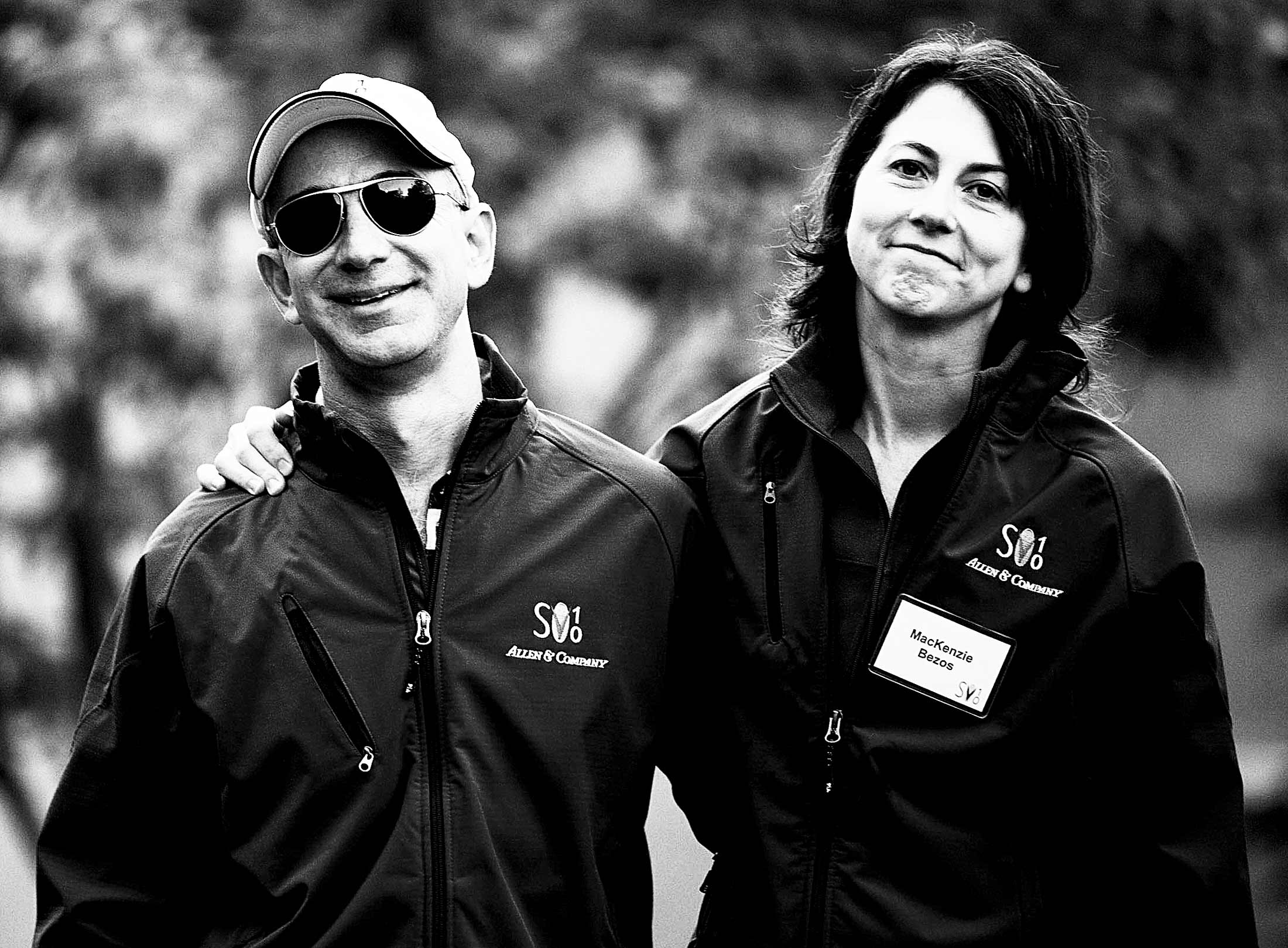
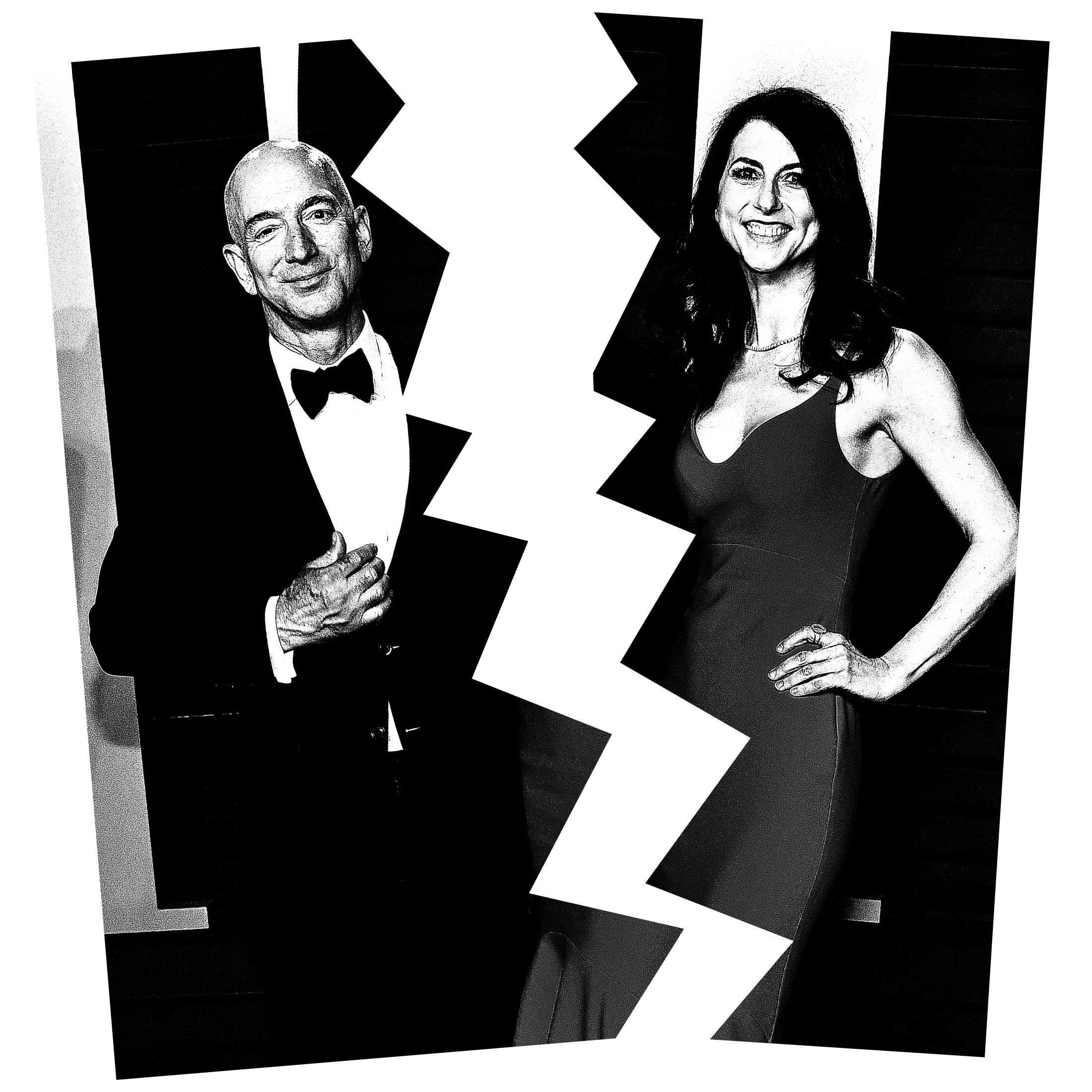
Bezos and Scott say they’re ending their 25-year marriage. “After a long period of loving exploration and trial separation, we have decided to divorce and continue our shared lives as friends,” they say in a tweet.
April
Bezos and Scott donate an unspecified amount to the Alzheimer’s Drug Discovery Foundation.
May
Scott signs the Giving Pledge to give away the majority of her fortune, which at the time means she’d have to give away at least $18 billion.
July
Almost 20 million shares of Amazon are transferred to Scott as part of the split, establishing her as one of the richest people on the planet in her own right. “Now that they’re divorced, we’ve gone from having one high-net-worth philanthropic household to two, so we can kind of see maybe where some of their different interests lie,” says Dale.
July Bezos
Morgan Paulett, a student at University College London, creates a Twitter account called Has Jeff Bezos Decided to End World Hunger? Every day it tweets, “Jeff Bezos has decided he will not end world hunger today.” The account quickly garners more than 100,000 followers.
November
Bezos donates an additional $98.5 million as part of the 2018 Day One Fund commitment.
Phase 3
Scott’s Big Move
During a tumultuous summer in the U.S., Scott comes into her own as a philanthropist with a series of massive donations. Bezos’ plans to fulfill his multibillion-dollar promises start to take shape.
2020
Bezos
Public Gifts
$1.05b
Scott
Public Gifts
$5.8b
February

“Climate change is the biggest threat to our planet,” Bezos says in an Instagram post, promising $10 billion to start what he’s calling the Bezos Earth Fund. Without elaborating on details, he says he’ll fund scientists, activists, and nongovernmental organizations. At the time of the announcement, none of the money had been put to work yet.

Compared with other environmental gifts, Bezos’ commitment is huge. The ClimateWorks Foundation estimates that less than 2% of global giving, about $5 billion to $9 billion, goes to climate-related causes each year. Nonetheless, “$10 billion is not going to solve climate change,” says Bruce Usher, a Columbia business professor who’s co-director of the Tamer Center for Social Enterprise. Bezos “is going to have to focus on specific barriers that he thinks he can unlock.”

Many on the left of the environmental movement are wary about the announcement. “The Earth Fund announcement is a pretty clear attempt at greenwashing—a way of distracting from what he’s actually accountable for, which is his own business practices,” says Matthew Miles Goodrich, fundraising director for the Sunrise Movement. Critics and employees alike often point to Amazon’s high-speed delivery and excessive packaging as major contributions to climate change. (The company has made a commitment to go carbon neutral by 2040.) Others point to the tangled issues of inequality and climate change. Despite Amazon having a relatively high starting wage, many warehouse employees depend on food stamps or are even homeless. “We encourage anyone to compare our median pay and benefits to other retailers,” says an Amazon spokeswoman, citing the company’s health and retirement benefits. Labor groups are pushing, so far without success, to unionize its workers.

If Bezos’ goal is to end climate change, “he probably could,” says Dale. “The question is, with an undertaking such as that, how much time, how much effort does he want to put behind his giving? And so far he’s really trusted established organizations to carry out that work for him, so he’s not offering a new idea or a new solution.”

April Bezos
Bezos gives $100 million to Feeding America, the largest single gift in the organization’s history.
May
Bezos makes a $25 million matching pledge to All in WA, a statewide Covid-19 relief effort.
July Bezos

Scott announces that over the past several months she’s given away a total of $1.7 billion to 116 different organizations with a wide range of focus areas, from racial equity to LGBTQ rights. Scott initially intended to keep her giving private, according to two people whose organizations received gifts. “I was completely prohibited from telling anybody who the donor was,” says Eliza Byard, executive director of GLSEN, an organization that supports LGBTQ students. “I wasn’t even in a position to tell my board who this person was.”

According to her blog post on Medium, Scott decided to share what work she’d been doing in part as a response to the events of “the first half of 2020,” an apparent reference to both Covid and police violence against Black people that inspired nationwide protests. “My own reflection after recent events revealed a dividend of privilege I’d been overlooking: the attention I can call to organizations and leaders driving change,” she wrote.

Philanthropy experts are impressed. Chuck Collins, director of the Program on Inequality and the Common Good at the Institute for Policy Studies, notes that cash went directly to charities, rather than sitting in a foundation. “The money hit the street,” he says.

Scott also seems to have absorbed a common critique of philanthropy, that it often involves a few wealthy White donors telling the rest of the world what to do and taking their time to decide where to give. “You’ve got to trust people who are on the ground doing this work,” says Edgar Villanueva, founder of the Decolonizing Wealth Project, whose Liberated Capital fund tries to steer dollars to promoting racial equity. “People often say it’s hard to give billions of dollars,” Villanueva says. Scott’s donation “weakens the case that giving away billions of dollars is difficult. It shows it can be done.”

Her gifts were unrestricted. “That says, ‘We trust in the leadership of the organization, and we believe in your programs and know that you will use this support to continue fulfilling your mission,’ ” says Jorge Valencia, executive director and CEO of the Point Foundation, an organization that supports LGBTQ students and received money from Scott in June.

September
Bezos makes an unspecified gift to the American Heart Association’s Bernard J. Tyson Impact Fund.
October

Bezos schedules calls with environmental leaders, often joined on the phone by his girlfriend, Lauren Sanchez. “He told me he was just learning, and he was very humble,” says Fred Krupp, president of the Environmental Defense Fund. But it’s clear, based on his questions, that “he knew a lot” about climate change, Krupp says. “He was already laser-focused on wanting to make sure his contribution had maximum impact.”

Bezos and Sanchez also speak to Gloria Walton, the CEO and president of the Solutions Project, an environmental justice group that funds community activism led mostly by women of color. “He said he didn’t know much about climate and said he wanted to listen and hear what I wanted to say—and I had a lot to say,” Walton says. She tries to persuade him to expand his giving beyond the large environmental organizations that “always get funded” and think about other nonprofits that represent disadvantaged groups.

“My challenge to him was really to disrupt the status quo,” she says. “Racial justice is not an add-on.” One more issue, she tells Bezos: Many of the communities she works with have a “complex relationship with him and Amazon,” so any funding couldn’t come with strings attached that might limit activists’ work.

November Bezos

Bezos announces the first round of grants from his Earth Fund, spreading $791 million across 16 organizations. Most recipients are traditional environmental charities. The ClimateWorks Foundation will use $50 million to push for zero-emission trucks and shipping and climate-friendly cement and steel. The Environmental Defense Fund gets $100 million for launching a satellite in 2022 to monitor methane emissions, as well as creating standards for natural solutions to climate change. The Nature Conservancy, Natural Resources Defense Council, World Resources Institute, and World Wildlife Fund also get donations.

A fifth of the total, $151 million, goes to five environmental justice groups, including $43 million for the Climate and Clean Energy Equity Fund, which gives money to community organizations serving people of color, and $12 million for NDN Collective, a South Dakota-based group focused on indigenous people.

Walton’s nonprofit, the Solutions Project, ends up receiving $43 million to redistribute to front-line organizations across the country, a huge haul for a group that gave just $700,000 in grants in 2019. Bezos places no restriction on the money, as she requested. “That’s a hard thing to do, but he must know it’s the right thing to do,” Walton says.

The grants mean Bezos is effectively funding some of his critics. “We give a nod to Bezos Earth Fund for rightfully shifting power and investing into sustainable solutions,” NDN President and CEO Nick Tilsen wrote in a blog post. But he added that “we will not tiptoe around” the fact that Amazon and Bezos have been criticized for their labor and climate records.

At the time Bezos first announced his $10 billion commitment, his net worth was $132 billion. As of Nov. 30, around the time these first grants are announced, his net worth is $186 billion. He made $54 billion in the time it took him to donate this $791 million to climate issues.
December
Bezos announces 42 recipients of a third round of grants from the Day 1 Families Fund, a part of the Day One Fund. This time around he gives away almost $106 million, bringing the total amount donated via the families fund to about $300 million.
December
Huge check falling

Scott announces that over the past four months she’s given away about $4.2 billion, setting an unprecedented pace for giving. On Medium, Scott says she asked her team to figure out how to give away her money faster.

Since she signed the Giving Pledge, her fortune has grown so fast that the goal posts have shifted: To give away half her fortune, she now needs to donate about $30 billion.

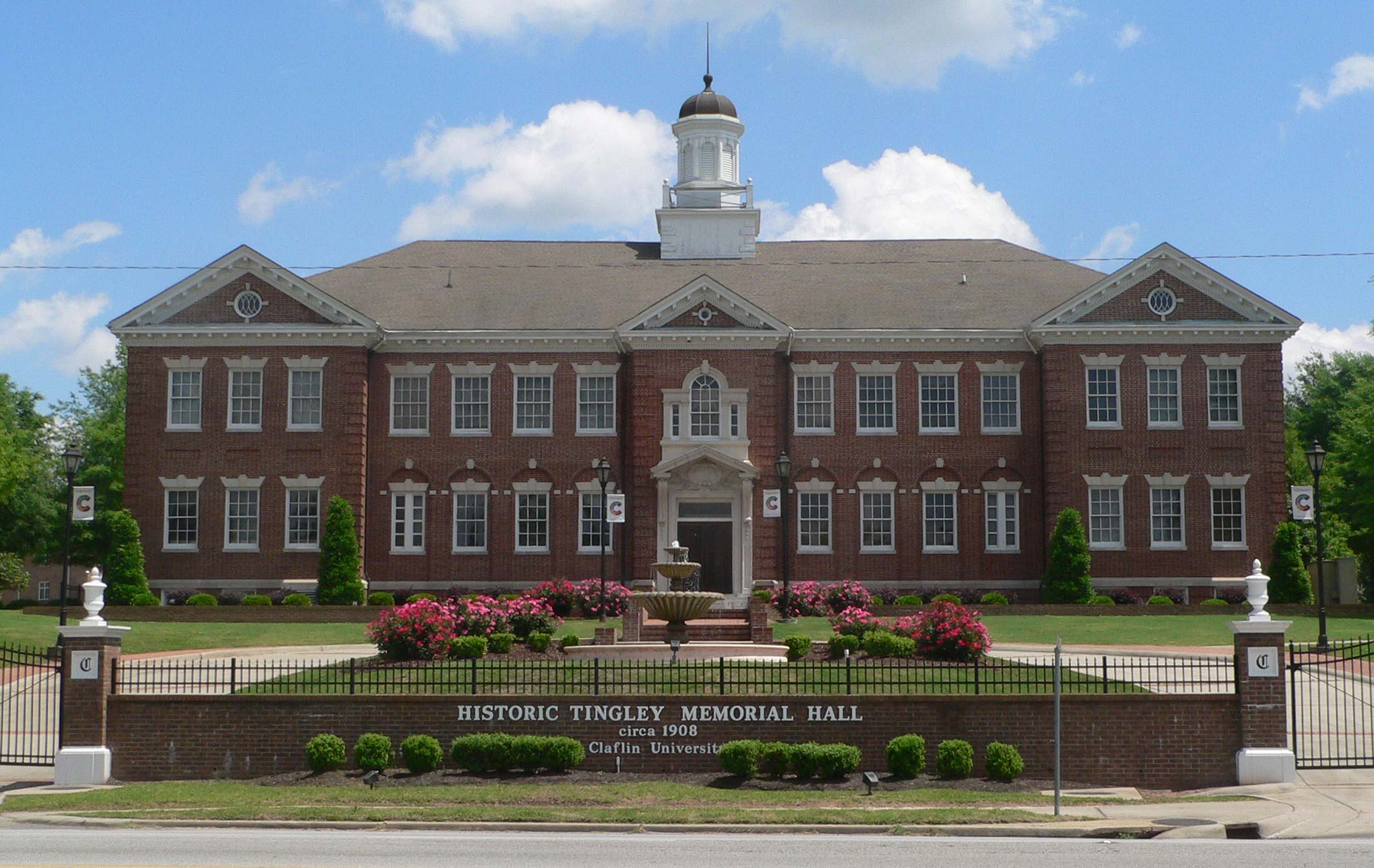
Seventeen historically Black colleges receive a total of $410 million from Scott, on top of $150 million she gave to six such schools in July. Her surprise gifts in December, ranging from $4 million to $50 million, were the largest individual donation in each of the recipients’ histories. “This gift is transformational,” says Dwaun Warmack, president of 151-year-old Claflin University. Scott’s $20 million gift will be used to expand scholarships, beef up academics, build up its endowment, and refresh the school’s aging campus.

Claflin University campus
December
Bezos pledges $25 million more in matching donations to All in WA, the Covid relief project. This brings his total giving in 2020 to more than $1 billion.
2021
February

Bezos announces he’s appointing a new Amazon CEO and will become executive chairman. In a letter to employees, he wrote: “I will stay engaged in important Amazon initiatives but also have the time and energy I need to focus on the Day One Fund, the Bezos Earth Fund, Blue Origin, The Washington Post, and my other passions.”

Bezos hasn’t said when the next round of climate funding would arrive—despite the urgency of the problem. “It’s really a race against time,” Columbia’s Usher says. “That’s where Jeff Bezos’ money can make a difference. That kind of funding can be focused on buying us time.” Scott also hasn’t made clear what she’ll be doing next. “What they share is a disinclination to be transparent,” says Rob Reich, a political science professor at Stanford who studies philanthropy. “We deserve some transparency into their plans, so we can scrutinize the exercise of their power.”

More On Bloomberg