Education
How Did I Get Here?
Christiane Amanpour
Chief international correspondent and anchor of CNN’s Amanpour
from 

-
-
New Hall School, Boreham, England, class of 1977
-
University of Rhode Island, Kingston, class of 1983
-
Work Experience
-
1983–90Foreign-desk assistant, writer, producer, New York bureau correspondent, CNN
-
1990–93Foreign correspondent for Eastern European and Persian Gulf conflicts, CNN
-
1994–2010Chief international correspondent, CNN
-
1996–2005Special contributor for 60 Minutes, CBS
-
2010–12Chief global affairs correspondent and anchor of This Week, ABC News
-
2009–10, 2012–PresentChief international correspondent and anchor of CNN’s Amanpour
-
Life Lessons
-
“Teachers matter. Who teaches young people really determines how well they do.”
-
“There isn’t any overnight success that is lasting and meaningful.”
-
“You have to be truthful, and that is not always neutral.”
-
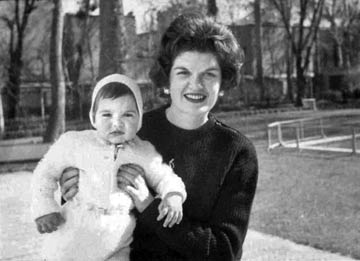 With her mother, Patricia, 1958“My upbringing in Tehran was magical—very free. There was never any question that anything was off-limits for my life.”
 -
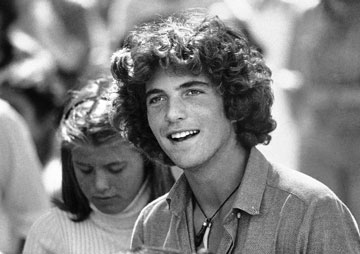
“John F. Kennedy Jr. was at Brown and wanted to live off campus. He was one of my roommates. It was fantastic.”
-
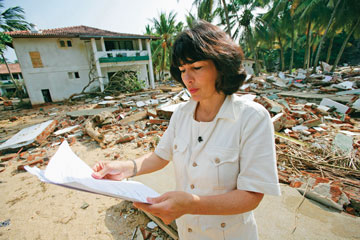 Covering the aftermath of the Indian Ocean earthquake and tsunami in Sri Lanka, 2004
 -
-
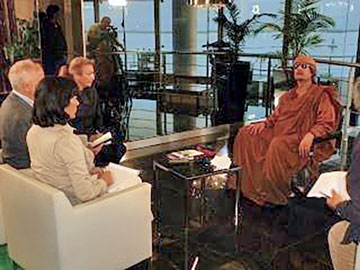 Conducting the final interview with former Libyan President Muammar Qaddafi, 2010
-
-
-
-
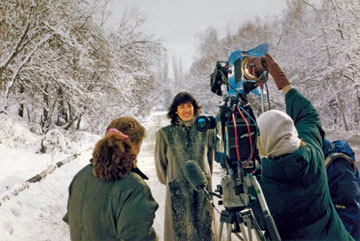 In Kazakhstan for the fall of the Soviet Union, 1991
 -
-
-