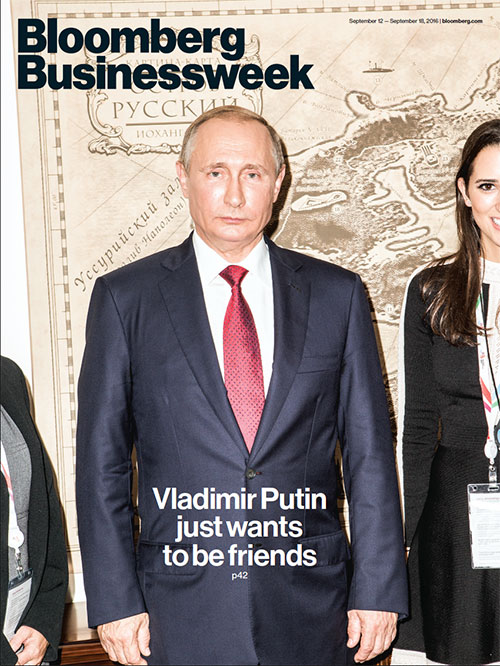
Vladimir Putin Just Wants to Be Friends
From 
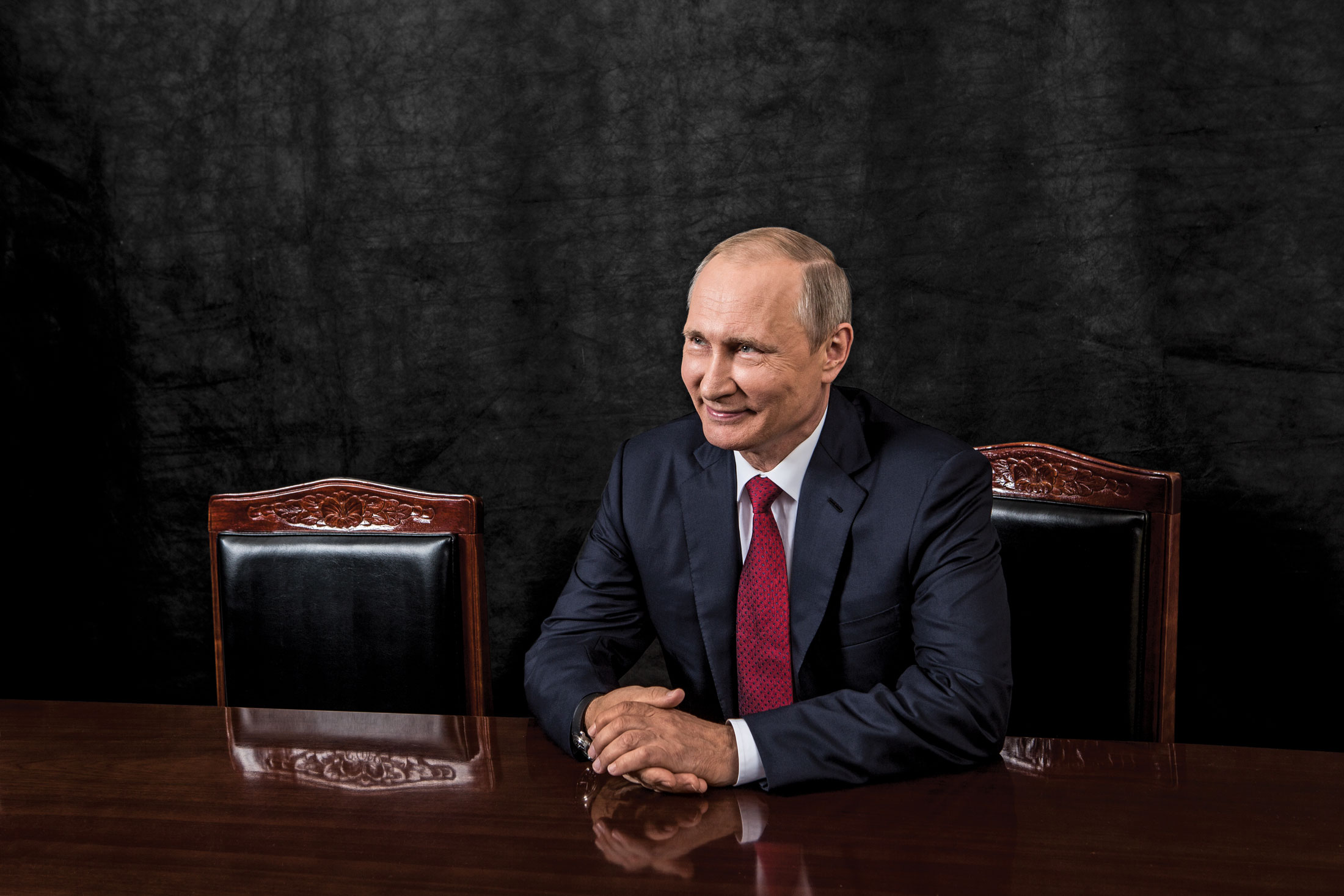
On Sept. 1, in the Siberian port city of Vladivostok, Russian President Vladimir Putin discussed a wide array of issues with Bloomberg Editor-in-Chief John Micklethwait. The two-hour interview ranged from islands disputed with Japan to the price of petroleum and the vicissitudes of Gazprom, the immense state-owned enterprise that supplies natural gas not only to his country but to much of Europe. Putin, the longest-ruling Russian leader since Leonid Brezhnev, weighed in on the U.S. election, as well as his relationship with Turkey’s Recep Tayyip Erdogan and Syria’s Bashar al-Assad. Here are excerpts from their conversation.
John Micklethwait: There seems to be the beginnings of a political deal with Japan where you might give up one of the Kuril Islands in exchange for greater economic cooperation. Are you open to a deal of that sort?
Vladimir Putin: We don’t trade in territories, although the problem of a peace treaty with Japan is, of course, a key one. And we would very much like to find a solution to this problem with our Japanese friends. We had a treaty signed in 1956, and, surprisingly, it was ratified both by the Supreme Soviet of the USSR and by the Japanese Parliament, but then the Japanese side refused to adhere to it, and then the Soviet Union basically nullified all the agreements within this treaty.
Several years ago, our Japanese colleagues asked us to return to a discussion of this topic. And we did, we met them partway. … We’re not talking about some swap or sale, we’re talking about finding a solution where neither party would feel defeated or a loser.
Do you expect the euro to survive?
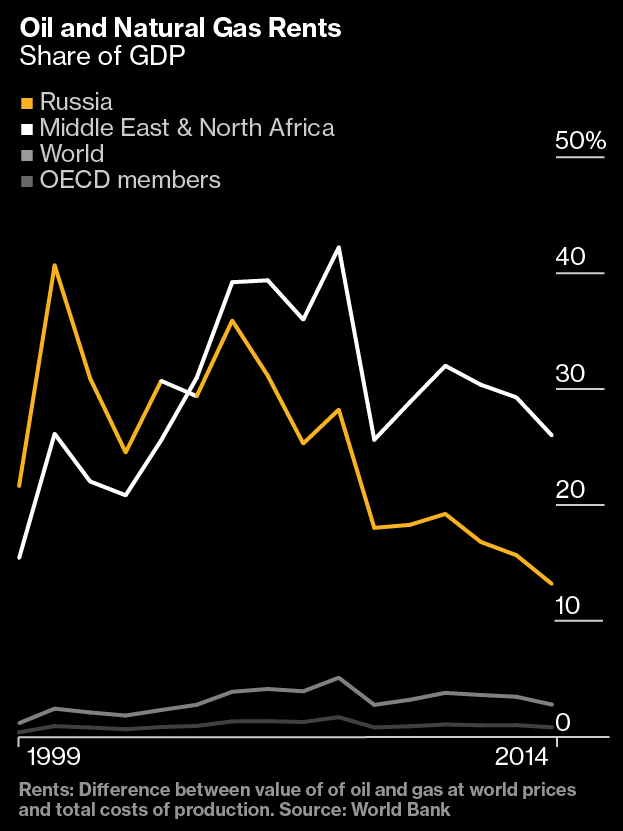
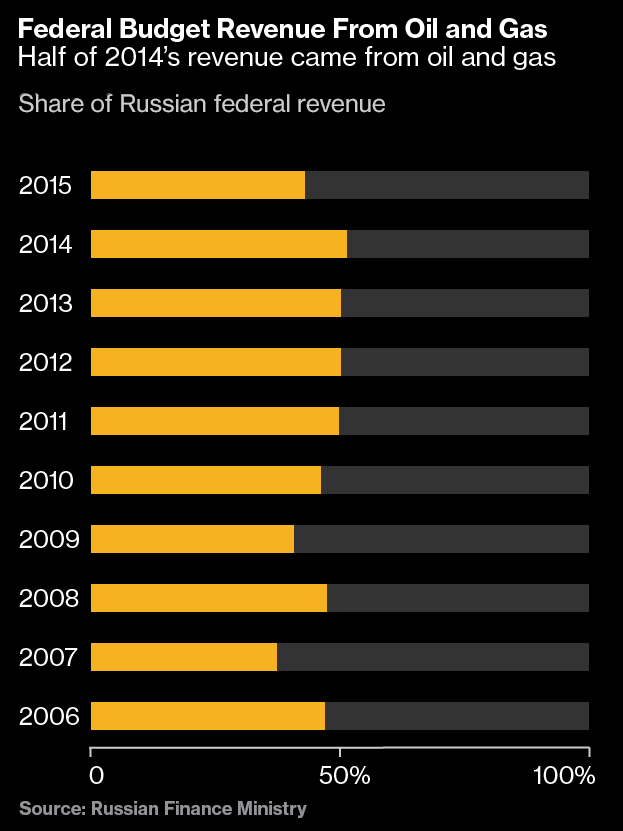
I hope so. I hope so because, first of all, we believe in the foundations of the European economy. We see that west European leaders in general—there are disagreements, of course, which is understandable, that we see, observe, analyze—but they stick to very pragmatic approaches to resolving economic issues. We can’t say whether they’re right or wrong. It depends on your perspective. They don’t misuse financial instruments or liquidity. They primarily strive for structural changes. In fact, the same problems are no less acute in our economy, perhaps even more so. I’m referring to a problem that we can’t overcome, specifically the dominant role of the oil and gas sector in Russia and, as a result, our dependence on oil and gas revenue. But in Europe, without dependence on oil and gas, they’ve also needed structural reforms for a long time. I think that the leading economies have taken a very pragmatic and intelligent approach to resolving the economic problems facing Europe. That’s why we hold about 40 percent of our reserves in euros.
You expect Europe to keep the existing membership? They’re not going to lose another country like they lost Britain?
You know, I don’t want to respond to your provocative question, even though I understand that it could be interesting.
Come on—many, many times you’ve criticized Europe.
I’ve been critical, but I’ll repeat: We hold 40 percent of our reserves in euros, and it’s not in our interest for the euro zone to collapse. Although I don’t rule out that there could be some decisions made that would consolidate a group of countries with equal levels of development and thereby, in my opinion, strengthening the euro. But there might be some other interim decisions in order to preserve the current number of euro zone members.
We have criticized many things and believe that our partners have made more than a few mistakes, as probably we have, too. Nobody is safe from these mistakes, but in regards to the economy, I’ll say it again: In my opinion, the European Commission and the leading economies of Europe are acting pragmatically and are on the right track.
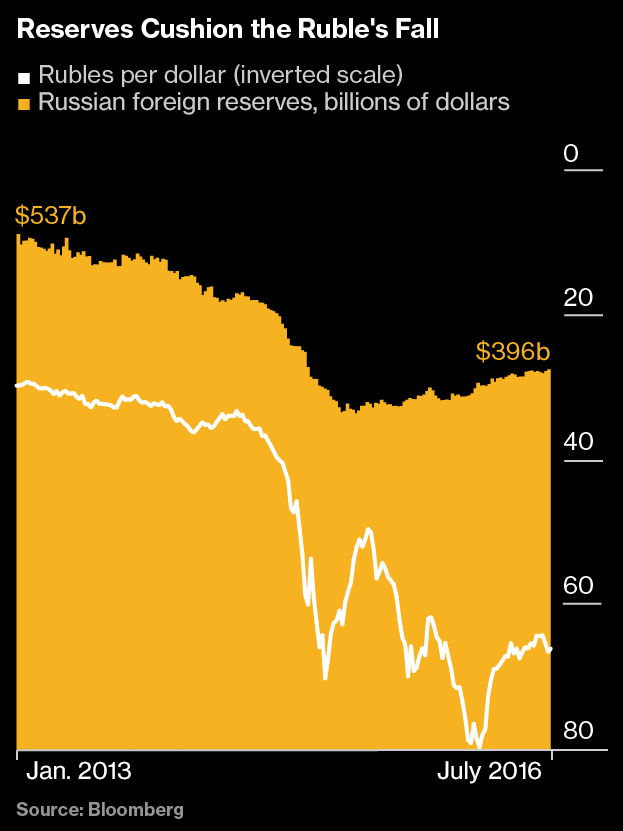
Russia used to have $500 billion in reserves. It is now down to $400 billion. You have this target to go back up to $500 billion. Should the central bank be buying more dollars to push the reserves back up?
You and I know about the necessary amount of central bank reserves, and the target is well-known. But for the general public, we can say that the point of the central bank’s gold and foreign-currency reserves isn’t to finance the economy but to ensure foreign trade. And for that we need a level that’s sufficient to support foreign trade of a country the size of Russia for at least three months. But we have such a level that we’re not only able to safeguard our foreign trade, but also stop working and live off the reserves for, at minimum, half a year, if not more. So that’s more than enough. From the viewpoint of safeguarding stability of the economy and foreign trade, we absolutely have enough gold and foreign-currency reserves. And everything else—the buying and selling of currency—is related to the regulation of the domestic-currency market. How the central bank reacts to this, and whether it will lead to an increase in the reserves, is so far difficult to say.
Almost two years ago you said that if crude oil fell below $80 a barrel, there would be a collapse in oil production. Well, the price is still below $50, and production hasn’t stopped. Has your thinking changed on that at all?
Well, if I said that oil output would cease, then I was mistaken. … I said that new deposits probably wouldn’t be commissioned at a certain oil price. Strictly speaking, that is what happened.
But perhaps even surprisingly, our oil and gas companies, mainly the oil companies, are continuing to invest. In the past year, the oil companies have invested 1.5 trillion rubles [$23.3 billion], and if you take the state’s investment in the pipeline network and electricity sector, then the overall investment in energy is 3.5 trillion rubles in the past year. That’s quite significant.
By the way, we are the world’s leader in terms of natural gas exports, with a global share of about 20 percent. In the export of liquid hydrocarbons, we’re also among the leaders. We’ve been first in liquid hydrocarbon exports. … On the whole, Gazprom is in great shape and is increasing exports to its traditional partner countries.
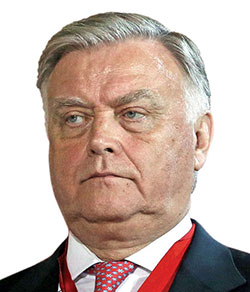
Changing of the Guard: Who’s Out
Would you still be in favor of a production freeze if the Saudis and Deputy Crown Prince Mohammed bin Salman want that?
He is a very energetic statesman, and we really have struck up a friendly relationship. This is a man who knows what he wants and knows how to achieve his goals. But at the same time, I consider him a very reliable partner with whom you can reach agreements and can be certain that those agreements will be honored.
But still, we weren’t the ones who rejected the idea of freezing output levels. It was our Saudi partners who, at the last moment, changed their view and decided to take a pause in taking this decision. But I want to repeat: Our position hasn’t changed, and if Prince Salman and I speak about this, then I shall, of course, put forward our position again. We believe that this is the right decision for world energy. That’s the first thing. The second thing is that everyone knows what the dispute was about. The dispute was that if production were to be frozen, then everyone should do it, including Iran. But we understand that Iran is starting from a very low level, related to the well-known sanctions against this country. It would be unfair to leave it at this sanctioned level. I think that from the viewpoint of economic sense and logic, then it would be correct to find some sort of compromise. I am confident that everyone understands that. The issue isn’t economic, it’s political.
Gazprom is worth less than a fifth of what it was 10 years ago, and it’s fallen from being among the top 10 companies in the world to 198th. And you’ve had the same manager running it for 15 years, Alexei Miller. You’ve now given him another five-year contract. What I’m saying is, you’re not as tough on businesspeople who are running the oil side as you might be on other people.
Listen, Gazprom is clearly undervalued. This is an absolutely obvious fact. We have no plan to sell it yet. And this is because of the peculiarities of the Russian economy, the social sphere, and Russian energy. Gazprom is part of Russia’s power system. One of Gazprom’s functions is to ensure the country gets through the peak periods of autumn and winter, to supply Russia’s big power companies. And it fulfills this function.
Of course, there are issues and there are problems. We see them. I know that Gazprom’s management is taking the necessary steps in order to resolve these issues and that it fights for its interests on world markets. Does it do it well? Poorly? That’s another question.
Many criticize it, they say that it needed to be more flexible, that it should have switched to a floating price depending on the current state of the economy, but the gas business is very specific. It’s not even like trading oil. It’s a separate business that’s linked to big investments in output and transportation, and this means that producing structures must be sure that they can sell at a certain price.
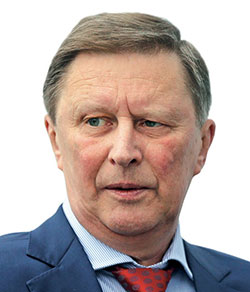
Changing of the Guard: Who’s In
I know you’re a generous man, but if you had a general who had lost 80 percent of his army, you might not keep him as a general. Gazprom still has the export monopoly. You wouldn’t think of taking it away from them, given that performance, because it’s worse than other gas companies?
Listen, that’s a different story. If we were talking about a general, then the general in this case has lost nothing, he’s sent troops into reserves, which can be called back at any moment and put to use.
There is an American election on the way, and as you well know there’s a choice between Hillary Clinton and Donald Trump. Who would you rather have at the other end of the telephone if there is a geopolitical situation—Donald Trump or Hillary Clinton?
I would like to work with a person who can be accountable for decisions made and implement any agreements that we reach. Surnames don’t matter at all. Of course, that person must enjoy the trust of the American people, so that they won’t just have the desire but also the reinforced political will to fulfill all those agreements. That’s why we never interfered, aren’t interfering, and don’t plan to interfere in domestic political processes.
Can I just push you on that? You’re really telling me that if you have a choice between a woman, whom you think may have been trying to get rid of you, and a man, who seems to have this great sort of affection for you, almost bordering on the homoerotic, you’re not going to make a decision between those two?
You know, I essentially already answered your question. I’ll reformulate it again, say it in different words. We are ready to work with any president, but, of course—I also said this—to the extent that the future administration is ready. If someone says that they want to work with Russia, we’ll welcome it. And if someone, as you said—although it may be an inaccurate translation—wants to get rid of us, that will be a completely different approach. But we will survive it, and it’s not clear who has more to lose with that approach.
But the thing is, I’ve repeatedly seen the anti-Russian card played during domestic political campaigns in the States. I think that it’s a very shortsighted approach. At the same time, they send us all sorts of signals from all sides that actually things are just fine. … It seems to me that it doesn’t fully meet the level of responsibility that lies on the shoulders of the U.S. I think that all this should be more dignified, calm, and more balanced.
As for the fact that someone is criticizing us, you know, criticism is leveled at us by Mr. Trump’s team as well. For example, one of the members of his team said that we paid, that Russia allegedly paid money to the Clinton family via some foundations. What’s that? Does that mean that we control the Clinton family? It’s complete nonsense. I don’t even know where Bill spoke and through which funds. So both one side and the other are using it as a tool, using it as a tool in a domestic political struggle, and that’s bad, in my opinion.
The other accusation you’ve faced, or heard a lot, is people connected with Russia or backed by Russia were the people who hacked into the Democratic Party database.
No, I don’t know anything about that. You know how many hackers there are today, and they act so delicately and precisely that they can leave their mark at the necessary time and place or even not their own mark, camouflaging their activity as that of some other hackers from other territories or countries? It’s an extremely difficult thing to check, if it’s even possible to check. At any rate, we definitely don’t do this at the state level.
And then, listen, does it even matter who hacked this data from the campaign headquarters of Mrs. Clinton? Is that really important? The important thing is the content that was given to the public. There should be a discussion about this, and there’s no need to distract the public’s attention from the essence of the problem by raising some side issues connected with the search for who did it.
And to be honest, I couldn’t even imagine that this sort of information is interesting to American society—specifically that the campaign headquarters worked in the interests of one of the candidates, in this case Mrs. Clinton, rather than equally for all of the Democratic Party candidates. It would simply not even occur to me that this could be interesting to anyone.
Turkey recently sent troops into Syria, and you did not protest too loudly. Do you think Turkey has now moved closer to your idea that the future of Syria has to involve President Assad staying in some way, or have you changed your mind about President Erdogan? A little bit ago, you were complaining that you were stabbed in the back and about the problems to do with the jet being shot down.
First off, we’re operating on the basis that Turkey apologized for the incident that took place and for the death of our people. It did it directly, without any reservations, and we value that. President Erdogan took this step. We see a clear interest on the part of Turkey’s president in restoring full-scale relations with Russia.
We have many common interests in the Black Sea region, and more globally and in the Middle East. We very much expect that we’ll be able to establish a constructive dialogue. We have many big projects, including Turkish Stream [a proposed gas pipeline from southern Russia across the Black Sea to Turkey] in the energy sector.
We have a large project to build a nuclear power station on unique terms. They consist of several elements: We will finance, own, and operate it. … This will be an economically beneficial project for both sides.
In addition to everything else, as I already said, we have a mutual desire to come to an agreement about the region’s problems, including the Syrian one. I continue to believe that nothing can be decided externally about the political regime or a change of power. When I hear someone saying that some president must go, not domestically but externally, it raises major questions for me. … I get this confidence from the events of the last decade, specifically the attempts at democratizing Iraq and attempts at democratizing Libya. We see that in fact led to the collapse of the state and the growth of terrorism.
It’s the same with Syria. When we hear that Assad should go for some reason someone peripheral thinks so, I have a big question: What will it lead to? Will it be in line with international legal standards, and what will it lead to? Wouldn’t it be better to be patient and facilitate changes to the structure of the society itself, to muster this patience, allowing changes to the structure of the society, waiting for when these changes happen naturally within the country?
I think the root of Western distrust is the idea that you want to expand Russian influence, in some cases geographically.
I think all sober-minded people who really are involved in politics understand that the idea of a Russian threat to, for example, the Baltics is complete madness. Are we really about to fight NATO? How many people live in NATO? About 600 million, correct? There are 146 million in Russia. Yes, we’re the biggest nuclear power. But do you really think that we’re about to conquer the Baltics using nuclear weapons? What is this madness? That’s the first point, but by no means the main point.
The main point is something completely different. We have a very rich political experience, which consists of our being deeply convinced that you cannot do anything against the will of the people. Nothing against the will of the people can be done. And some of our partners don’t appear to understand this. When they remember Crimea, they try not to notice that the will of the people living in Crimea—where 70 percent of them are ethnic Russians and the rest speak Russian as if it’s their native language—was to join Russia. They simply try not to see this.
In one place, Kosovo, you can use the will of the people, but not here. This is all a political game. So, to give reassurances, I can say that Russia has pursued and plans to pursue an absolutely peaceful foreign policy directed toward cooperation.
As far as expanding our zone of influence is concerned, it took me nine hours to fly to Vladivostok from Moscow. This is a little less than from Moscow to New York, through all of Western Europe and the Atlantic Ocean. Do you think we need to expand something?
Do you think Russia is getting easier to run or harder?
Simpler than when? Compared to Ivan the Terrible’s time, Nicholas II’s, Brezhnev’s, Khrushchev’s?
In your time.
I think it’s more complicated because, despite all the criticism of our Western partners, our domestic democratic process is developing. Significantly more parties are going to take part in these elections than in previous years, and this will obviously leave its mark on the course and result of the campaign. There is a practical dimension. We now see that the polling of our leading political force—the United Russia party—slid a little. … Clearly, it’s the start of a proactive election campaign. And the large number of parties that are now taking part in the election process, they are all on the television screens, in the media and the papers. … They look great on the television, they criticize and pour scorn on the representatives of the ruling party. But they don’t say if they are ready to take responsibility for taking some not very popular, but ultimately necessary, decisions.
Are you envious of the Chinese, who don’t have to go through these elections?
There is a different political system in China, and it’s a different country. I don’t think you’d like to see 1.5 billion people sense some sort of a disorder in their society and in their government. So let’s give the Chinese the right and the possibility to decide how to organize their country and their society. Russia is a different country. We have different processes, a political system that’s at a different level of development. … It’s becoming more complex. In fact, that only makes me happy, and I’d like for the system to become stronger so that we have a balance in our political system that would allow it to be always in an effective state and aimed at development.
People might say there are two ways in which Russia is very difficult to rule. One is it’s a very personal system, where many people vote for you rather than for your party. And the other reason is that Russia is still a fairly lawless place. You have things like the murder of politician Boris Nemtsov, which I know you condemned and you have brought people in, but the mastermind is still being sought. Is Russia a very, very hard place to govern at the moment?
Any country is hard to govern, believe me. Do you think the U.S. is easy to govern? Is it easy to solve what would seem to be simple tasks, such as, say, Guantánamo? President Obama said in his first term that he would close Guantánamo, but it’s still open. Doesn’t he want to close it? Of course he does. I’m certain that he wants to. But a thousand things come up that don’t let him completely settle the matter. Speaking of which, that’s actually bad, but that’s another topic.
Any country is hard to govern, even a very small country. It’s not a question of whether the country is large or small. It’s a question of how you relate to the work, to what extent you feel responsible for it.
Russia is also hard to govern. Russia is at the development stage of both its political system and the creation of a market-based economy. It’s a complicated process, but very interesting. Russia, actually, is not just a large country, it’s a great country. I mean its traditions and its cultural particularities.
Yes, there are particularities and traditions in the political sphere. Why hide it? We all well know that we had an absolute monarchy, and then almost immediately the communist period began. The base broadened a bit, but to a certain degree the country’s leadership became even harsher. It was only in the 1990s that we moved toward building a completely different system of domestic politics, a multiparty system, and that’s also a difficult, ambiguous process. You can’t skip over steps of it. You need the public to get used to it so that they felt their own responsibility when going to vote. So that they don’t put their faith in populist decisions or reasoning, or one group of candidates that’s just bashing another group. The public needs to carefully analyze what’s being proposed by the candidates. That goes for elections to Parliament, and it goes for presidential elections.
You look around the world at the moment. There are so many countries that become dynasties—the Clintons, the Bushes in America. You have children you’ve successfully kept out of the public eye. Would you ever want your daughters to go into politics?
I don’t think I have the right to wish something for them. They’re young but already adults. They should determine their futures themselves. On the whole, to the extent I see it, they’ve already made those choices. They’re doing science and some other things that are absolutely noble and needed by people. They feel needed, they get joy from their work, and that makes me very happy.