How Berluti Makes Its One-of-a-Kind Shoes

1. Measuring Up
On a customer’s first visit to the wood-paneled Paris workshop on Rue Marbeuf, a shoemaker traces the perimeter of the patron’s feet on a piece of paper. After measuring fit points and noting the numbers, the craftsman roughly fills in the rest of the sketch, drawing curved marks for a thinner foot, for instance, or sharp, jagged lines to denote the arch. It’s more art than science, says Casalonga, head shoemaker, or “master bootmaker,” at Berluti.
2. Sculpting
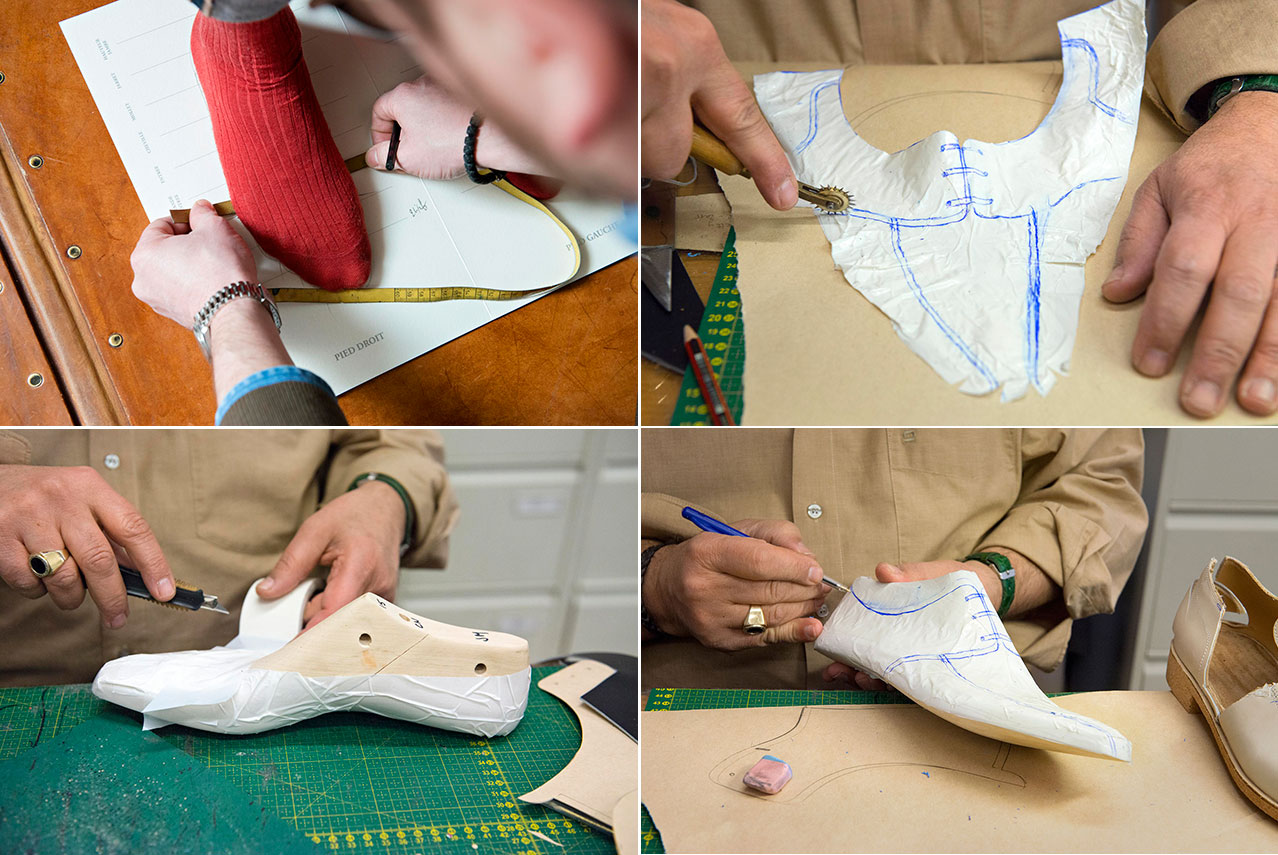
If these measurements form a paper portrait of the foot, the “last”—a piece of hornbeam—is the mold. Casalonga uses a paroir, a giant machete attached to a workbench, to sculpt the dense wood into shape. He focuses on the front (backs are almost identical for everyone), and refers back and forth to his sketch while filing, using a rasp, and sanding until the measurements match.
3. Making a Prototype
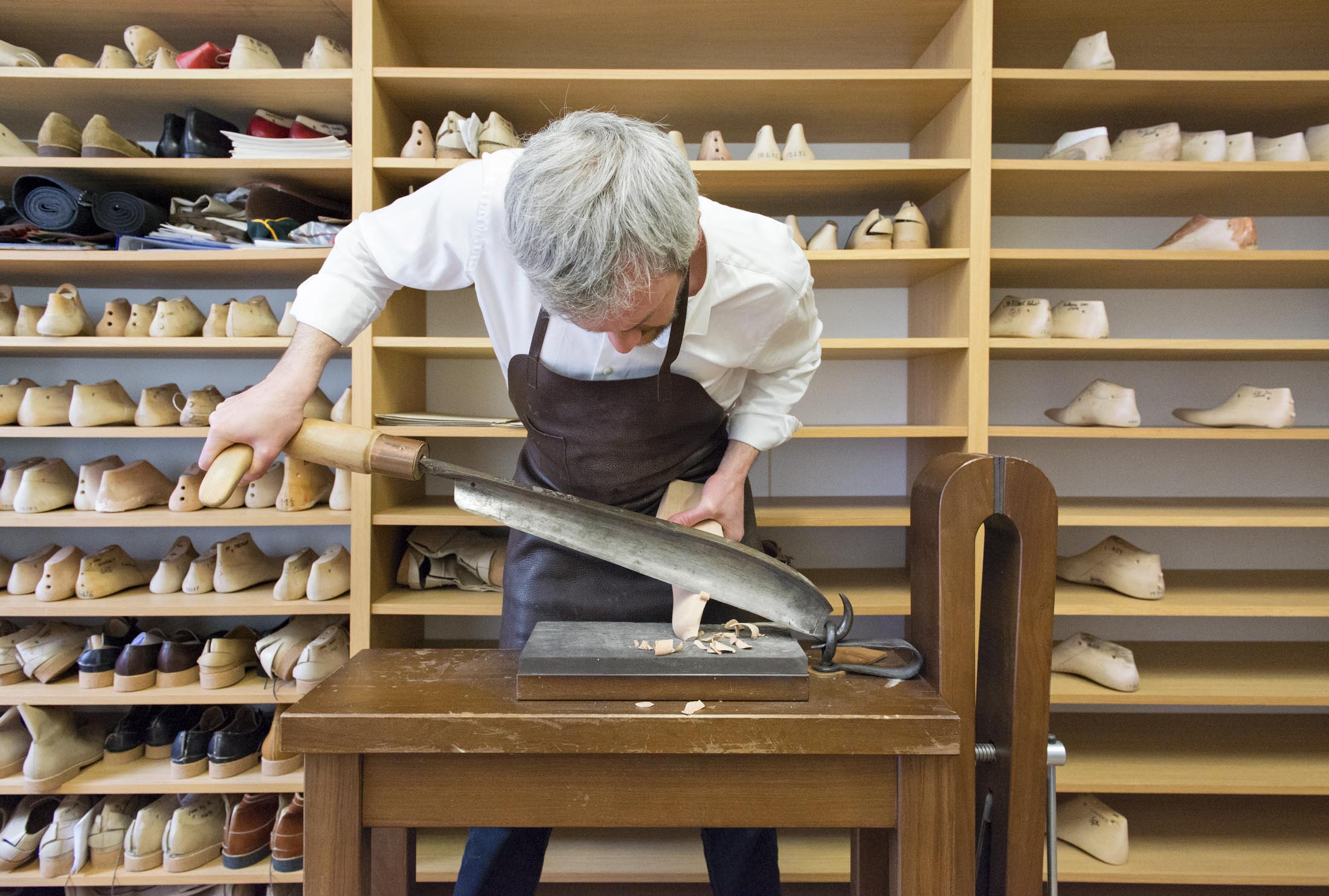
A “cheap” version of the shoe is built using throwaway leather. A pattern cutter covers the last with adhesive tape, marks the measurements, then peels it off and traces them flat on cardboard. “We are constantly going back and forth between two dimensions and three,” says Julien Fouache, manager of the brand’s bespoke division. The sole, made out of cork for this version, is also stitched at this point.
4. Trying on Again
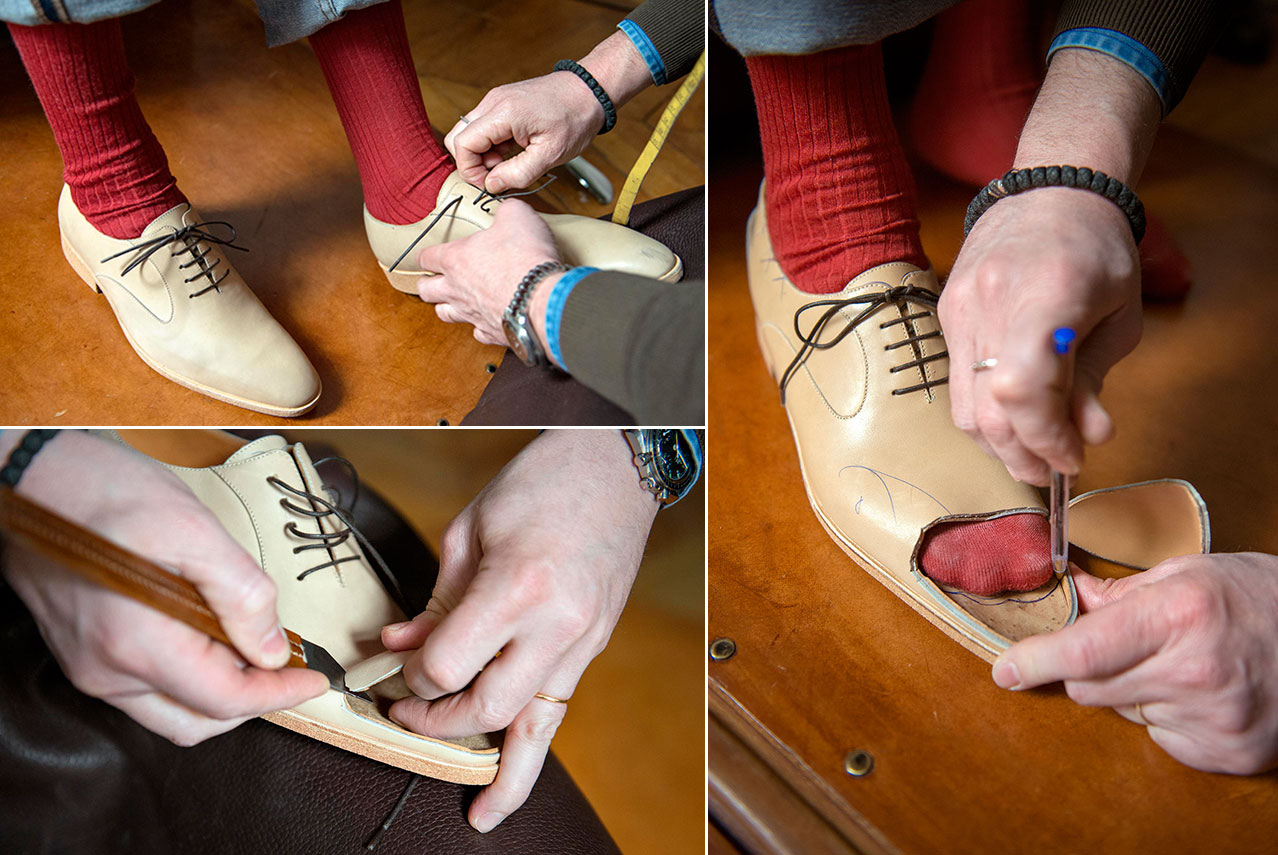
About three months after the customer first came in, he returns for a fitting with the trial pair. Once the shoe’s tested, Casalonga removes it and cuts into the prototype, destroying it in the process, to remeasure. He then adds changes to the last.
5. Nailing and Stitching
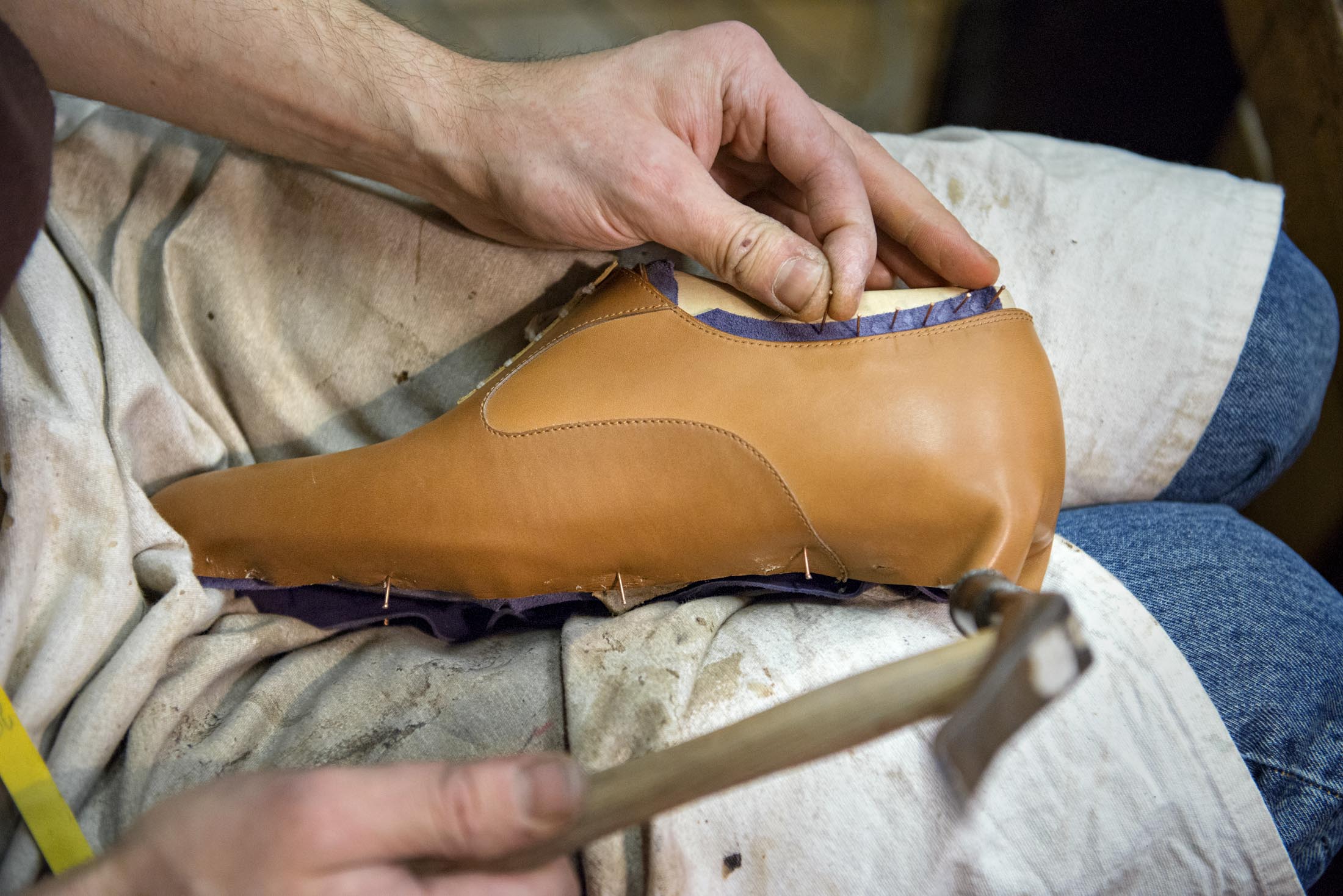
To build the final shoe, Casalonga nails the first layer of the leather sole to the last and stretches the upper—often using Venezia leather—around the top into place. (The upper is kept wet so it will keep its shape once dry.) He then hand-winds the individual thread fibers and, using an awl, stitches the upper and sole together. He adds layers to the sole and threads them together again. The heel is hammered in a succession of layers, as high as the customer wishes. The entire shoe is then brushed and stained, and the soles are stamped.
6. Burnishing
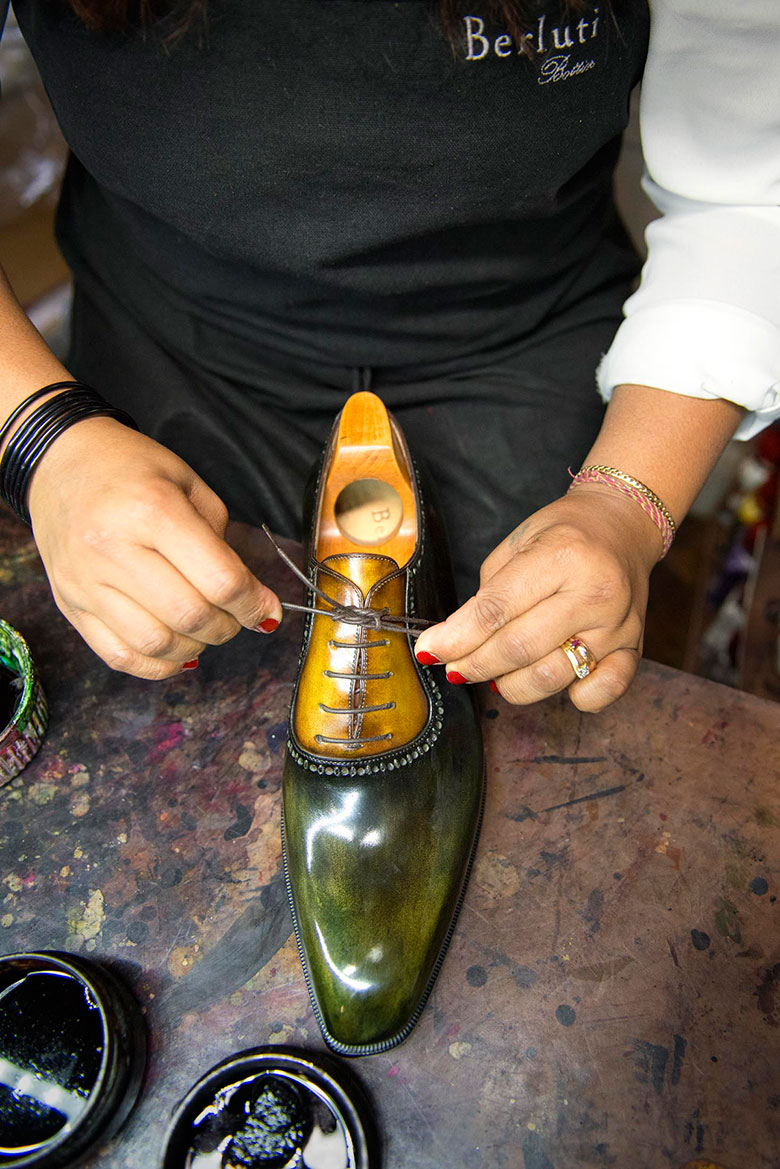
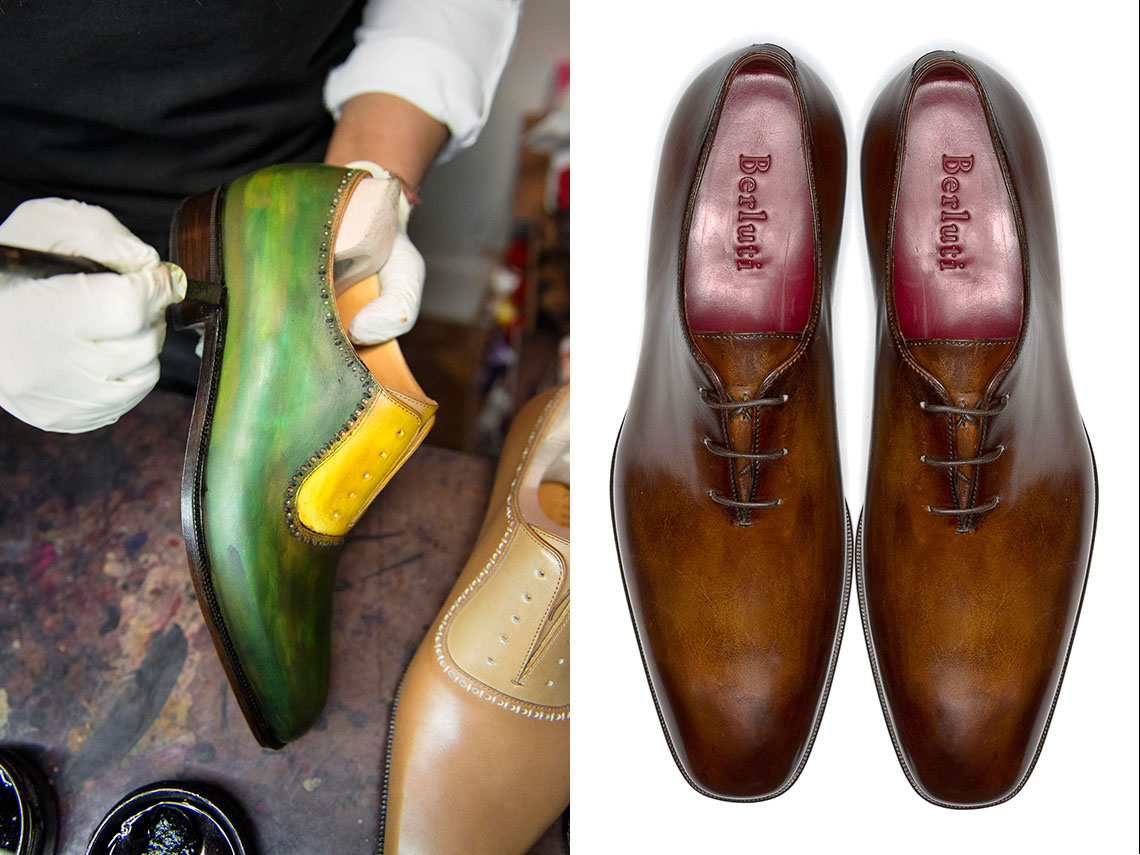
Once the leather has dried—“hours and hours,” says Fouache—the shoe is turned over to the master colorists, who use a collection of horsehair brushes to burnish it into any number of shades. Tattoo artist Scott Campbell is offering a collection of patterns later this year that can be added on.
7. Delivery
After an almost nine-month process, the shoes are packaged with a custom box and shoe trees—a necessary accessory, Casalonga says. Each pair is hand-delivered as well, when possible. “We want to see it and make sure we did a good job,” he says. “It’s bottle service.”
Berluti bespoke oxfords (above right), from $7,000; 212 439-6400